



Antique Ladies Jewellery Box
These antique ladies jewellery box examples span Georgian mahogany to Victorian coromandel and tortoiseshell, offering fitted interiors designed to safeguard precious trinkets.
Antique Ladies Jewellery Box
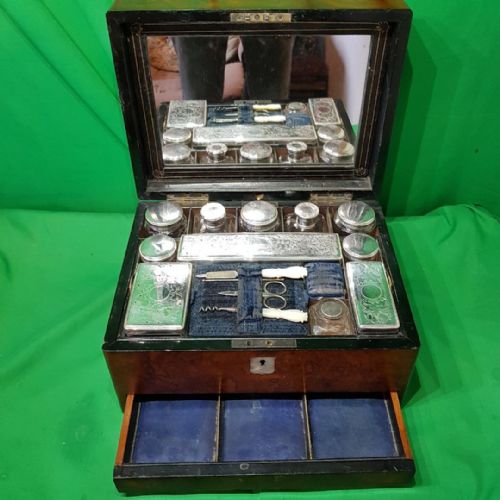
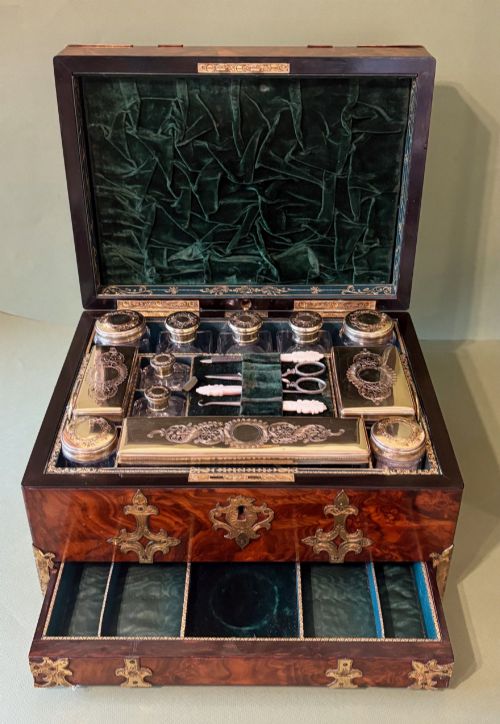
When searching for an antique ladies jewellery box, buyers encounter an array of fitted dressing cases, travel sets, and tabletop keepsake chests spanning the Georgian, Regency, and Victorian eras. These containers were constructed to house personal valuables, sewing implements, and grooming accessories during periods when travel and daily toilette required dedicated portable storage.
The pieces appearing most frequently on this page are Victorian designs executed in rich timbers such as burr walnut, rosewood, and mahogany, often featuring fitted interiors with velvet linings. Alongside these timber caskets, examples emerge in brass, tortoiseshell, glass, and Italian lacquer, demonstrating the varied forms collectors acquire.
Dressing boxes and vanity cases frequently incorporate secret drawers, compartments for writing slopes, and lift-out trays designed for specific accessories. Whether selecting a small tabletop trinket box or a substantial travelling set, collectors engage with objects that combine domestic utility with decorative craftsmanship.
Materials and construction
Cabinet makers utilised dense hardwoods including mahogany, rosewood, burr walnut, and coromandel as the structural foundations for these caskets. Surfaces were frequently enhanced with mother-of-pearl inlay, brass stringing, tortoiseshell panels, or intricate Tunbridge Ware mosaic decoration.
Interiors relied upon plush velvet, silk, and leather to line compartments and protect delicate items from damage. Metal components such as brass locks, hinges, and carrying handles were integrated to secure the contents during travel.
Antique Ladies Jewellery Box Retail Price Guide 2026
Typical asking prices for ladies jewellery box among the pieces listed under this phrase on Sellingantiques today, from the lower quarter to the upper quarter. They describe what is for sale here now, not the wider market.
Listings feature natural materials such as tortoiseshell, mother-of-pearl, and brass alongside timbers like rosewood, burr walnut, and mahogany across multiple centuries.
Factors of quality
The upper tier of the range is distinguished by the integrity of the cabinet work, the complexity of the timber grain, and the completeness of the internal fittings. Superior examples retain their original velvet linings, secret compartments, and matching glass or silver-topped jars within the fitted tray.
Subtleties in decorative technique, such as precision in mother-of-pearl inlay, fine Tunbridge Ware geometric patterns, or the clarity of tortoise shell work, separate standard caskets from exceptional ones. The retention of functioning locks and original keys further elevates a piece.
The Antique Ladies Jewellery Box Glossary
- Tunbridge Ware
- A form of decorative woodwork originating from Kent, characterised by tiny mosaic tiles assembled from different coloured woods to create pictorial or geometric designs.
- Coromandel
- A dense, heavy timber imported from Asia, valued for its rich dark brown colour and striking black grain figures used on luxury Victorian boxes.
- Writing Slope
- A desk accessory incorporated into many larger dressing boxes, featuring a slanted hinged surface lined with leather for correspondence.
- Secret Drawer
- A concealed compartment built into the interior framework of a box, accessed by releasing a hidden spring or sliding panel.
- Tortoiseshell
- The mottled shell of certain marine turtles, polished and applied as veneer over a wooden core on high-status Georgian and Victorian caskets.
Antique Ladies Jewellery Box: Frequently Asked Questions
What is an antique ladies jewellery box?
These pieces are decorative and functional containers built from the Georgian period through the twentieth century to store personal ornaments, grooming tools, and letters.
They range from compact tabletop trinket caskets to large fitted travelling dressing cases housing glass jars and velvet compartments.
How were these boxes used originally?
Owners utilised them on dressing tables to organise rings, brooches, and pins, or packed them for travel when moving between residences.
The fitted trays and secret compartments kept precious items secure and separated from grooming accessories during transit.
How do I identify the period of a box?
Stylistic markers such as Georgian mahogany construction, Regency brass inlay, or Victorian burr walnut and coromandel finishes indicate the era of manufacture.
Internal hardware, lining materials, and construction techniques provide further evidence to distinguish between early nineteenth-century work and later revival pieces.
How do I care for wooden and shell boxes?
Keep these items away from direct sunlight and extreme humidity fluctuations to prevent timber warping and veneer lifting.
Dust gently with a dry cloth and avoid applying modern polishes that might damage antique wax finishes or delicate tortoiseshell.