






Antique Lacquered Tea Platter
An antique lacquered tea platter is a durable service piece combining rich paintwork with dark gloss, prized for its decorative presence.
Antique Lacquered Tea Platter
When you search for an antique lacquered tea platter, you encounter serving trays and decorative trays shaped in oval, kidney, or rectangular forms. These pieces span the eighteenth century, the Regency era, and the Victorian period, reflecting evolving domestic tastes.
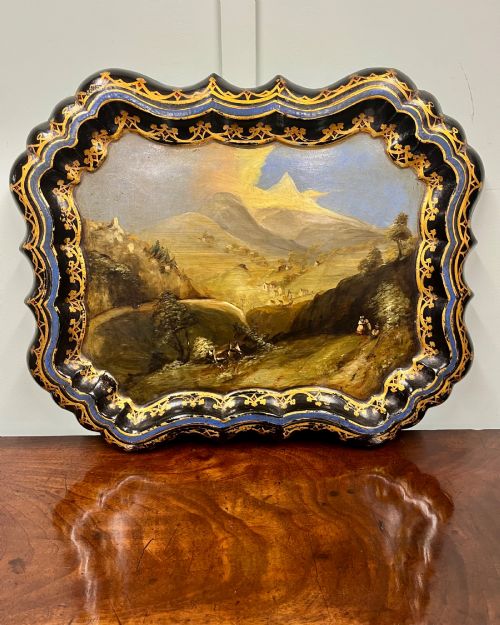
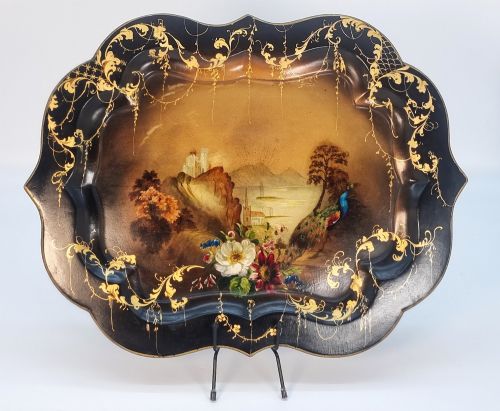
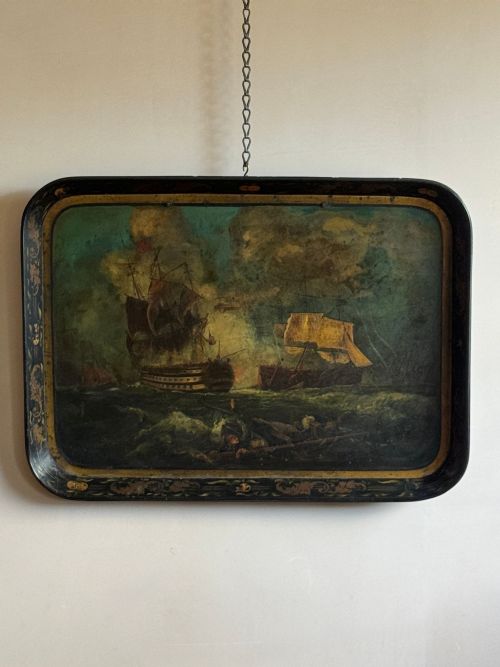
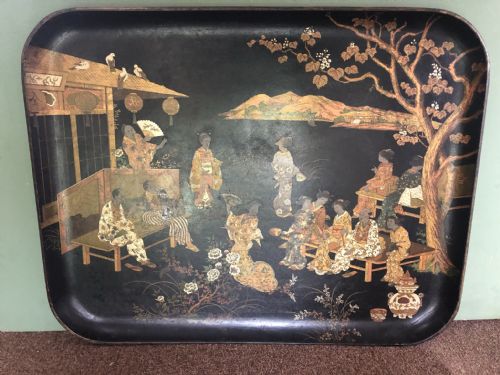
The version most commonly met on this page is the large nineteenth-century papier-mâché tray, often enriched with Chinoiserie scenes, landscapes, or fishing subjects. Alongside these, examples in toleware and painted metal appear from British and Swedish origins.
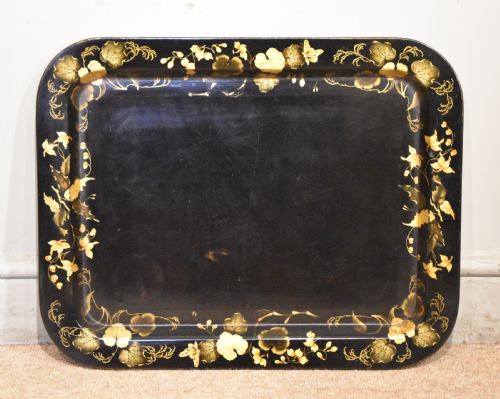
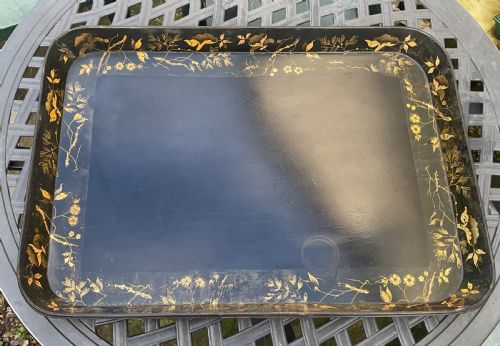
Early nineteenth-century examples frequently display the bold scale and gilded borders characteristic of Regency design. Later Victorian items tend toward Japanese export influences or naive pictorial themes.
How they were made
The foundation of the typical piece relies on papier-mâché or metal toleware, built to withstand heavy service while maintaining a lightweight structure. Artisans applied layers of dark lacquer to seal the surface before embellishing the body.
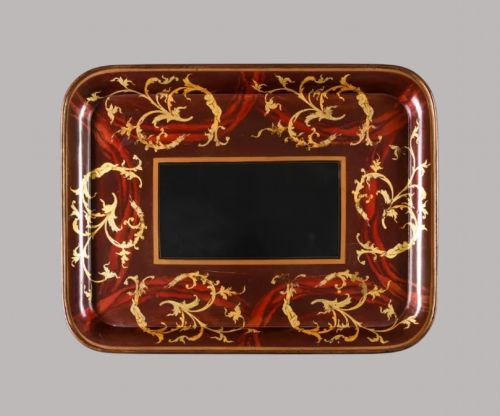
Decoration involved hand-applied paint, intricate gold leaf work, and occasional mother-of-pearl inlay to create luminous depth. This combination of materials yielded a resilient, glossy finish capable of holding warm vessels.
Antique Lacquered Tea Platter Retail Price Guide 2026
Typical asking prices for lacquered tea platter among the pieces listed under this phrase on Sellingantiques today, from the lower quarter to the upper quarter. They describe what is for sale here now, not the wider market.
Several trays shift the domestic mood from polite tea parties directly to enthusiastic fishing expeditions.
What varies in quality
Quality rests upon the crispness of the painted detail and the preservation of the original gilt borders. Trays bearing distinct landscape hunting scenes or intricate Chinoiserie motifs demonstrate superior artistic execution.
The structural integrity of the papier-mâché core and the depth of the dark lacquer finish define the preservation standard. Workshops known for signed production or distinct provenance display higher refinement in edge shaping and surface polish.
Jennens and Bettridge·Clay
The Antique Lacquered Tea Platter Glossary
- Papier-mâché
- A composite material made from paper pulp or layers of paper bound with glue, pressed and dried to form a rigid body. This medium allowed makers to shape large, curved serving trays.
- Japanned
- A European imitation of East Asian lacquerwork, created by applying successive coats of varnish and heat-curing them. It produced a hard, dark, glossy surface finish.
- Toleware
- Painted or lacquered metalware, typically iron or tin, shaped into household vessels and trays. It provided a sturdy alternative to papier-mâché during the nineteenth century.
- Chinoiserie
- A European artistic style reflecting Chinese motifs and landscapes, popular in decoration throughout the eighteenth and nineteenth centuries. It frequently appeared on lacquered tea trays.
- Gilded
- Coated with a thin layer of gold leaf or gold paint to accentuate borders and pictorial elements. This technique added reflective brilliance to the dark lacquer background.
Antique Lacquered Tea Platter: Frequently Asked Questions
What are antique lacquered tea platters?
These items are large serving trays fashioned from papier-mâché or painted metal, finished with dark lacquer and detailed artwork.
They served primarily in wealthier households for carrying tea services and displaying decorative objects during social gatherings.
How were these trays used historically?
Domestic staff utilised them to transport cups, teapots, and porcelain vessels from kitchens to receiving rooms.
Their sturdy construction and waterproof lacquer surfaces protected fine wooden furniture from heat and spills.
How do I live with a lacquered tray?
Place the piece flat on a low table or mount it safely on a wall to display the painted surface.
Keep them away from direct sunlight and excessive moisture to preserve the delicate gold leaf and lacquer.
How can I tell Regency from Victorian pieces?
Regency items typically exhibit restrained classical gilding, bolder proportions, and deep black lacquer grounds.
Victorian examples often incorporate more diverse pictorial subjects, including Japanese export influences and elaborate landscape hunting scenes.