





Antique Kurdish Bag
An antique kurdish bag brings nomadic woven art into a room, offering heavy wool textures and tribal motifs created for practical rural storage.
Antique Kurdish Bag
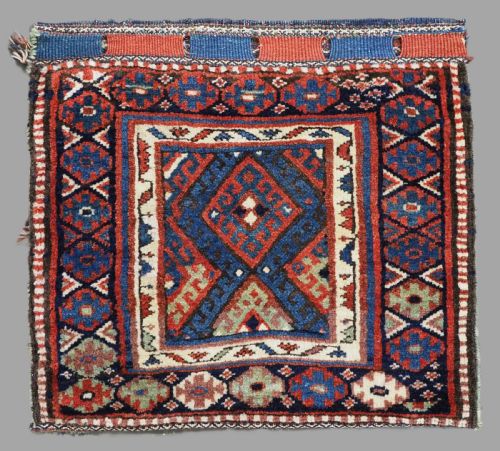
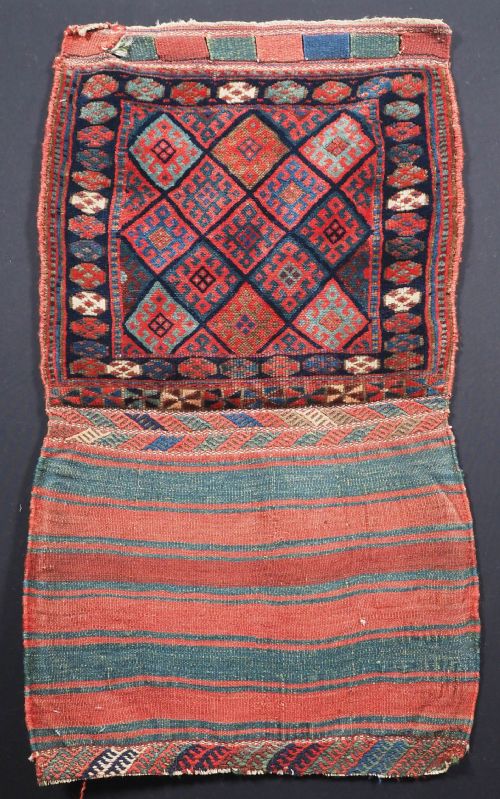
When you search for an antique kurdish bag, you encounter utilitarian woven pieces made by tribal and nomadic groups across Persian and Anatolian regions. These textiles take several distinct forms, from complete saddlebags and storage faces to salt-bags, wheat sacks, and smaller vanity bags known as chantehs.
The pieces appearing here span from the late nineteenth century into the early twentieth century, specifically between 1880 and 1920. Among these, Jaf sub-tribe bag faces and complete saddlebags with plain weave wool backs emerge most frequently on this page.
Makers ranged across the broader Kurdish regions, including specific groups like the Sanjabi and Jaf tribes, alongside related nomads in the Char Mahal valley and the Varamin region. Collectors often find smaller fragments such as mafrash panels alongside functional household items.
Materials and construction methods
These textiles rely principally on wool and hand-spun wool, providing the dense pile and durable flatweaves necessary for daily nomadic transport and storage. Goat hair and cotton also appear in the structural elements, reinforcing edges and adding structural integrity to heavy saddlebags.
Weaving techniques combine pile knotting on bag faces with plain weave backs and sides, utilising natural dye palettes to achieve deep colour tones. Nomadic artisans constructed these items to endure hard everyday use while displaying traditional tribal and floral boteh designs.
Antique Kurdish Bag Retail Price Guide 2026
Typical asking prices for kurdish bag among the pieces listed under this phrase on Sellingantiques today, from the lower quarter to the upper quarter. They describe what is for sale here now, not the wider market.
Recorded periods span from 1880 to 1920, encompassing Jaf, Sanjabi, and Bakhtiari tribal traditions.
Assessing quality in nomadic weaving
Quality rests primarily on the tightness of the weave, the resilience of the hand-spun wool, and the clarity of the tribal patterns. Pieces featuring complete original plain weave backs or intact structural elements command greater appreciation among collectors than isolated fragments.
The handling of natural dyes and the precision of geometric or boteh motifs separate standard utility pieces from exceptional tribal examples. Condition plays a role, though minor signs of age reflect the genuine nomadic use inherent in these textiles.
The Antique Kurdish Bag Glossary
- Chanteh
- A small tribal vanity bag or personal pouch woven by nomadic women. These compact bags typically feature intricate face designs and were used to carry small personal items.
- Namakdan
- A traditional salt-bag with a distinctive bottleneck shape designed to keep salt dry during nomadic migration. These pieces are characterised by narrow necks and wider, densely patterned bodies.
- Khorjin
- A traditional double saddlebag used for transport on animals. One side often survives independently as a bag face after the connecting web wears away.
- Mafrash
- A large rectangular storage bag used for bedding and household goods during transit. Surviving panels show long, flat-woven or piled designs intended for stacking in tents.
- Jaf
- A prominent Kurdish sub-tribe known for distinctive repeating geometric patterns on saddlebags and storage faces. Their weaving is easily identified by specific diamond and lattice motifs.
Antique Kurdish Bag: Frequently Asked Questions
What were antique kurdish bags used for?
Nomadic groups utilised these bags for daily storage, transporting salt, wheat, bedding, and personal belongings across camps. Saddlebags carried goods on pack animals, while smaller pouches served household or personal functions.
Over time, many complete double bags separated into individual bag faces as the connecting central webs deteriorated through heavy use and age.
How do I date an antique kurdish bag?
Dating relies on wool quality, natural dye palettes, and structural characteristics typical of late nineteenth and early twentieth-century tribal production. Pieces from this era generally show hand-spun materials and traditional village motifs.
Comparing structural types, such as Jaf saddlebag faces or Sanjabi salt-bags, helps place items within the active weaving periods recorded between 1880 and 1920.
How should I display an antique kurdish bag at home?
Smaller bag faces and chantehs work well mounted on walls as textile art or framed behind glass for protection. Larger complete bags and cushions can be placed on flat surfaces or used decoratively in low-traffic areas.
Keeping textiles away from direct sunlight preserves the hand-spun wool and natural dyes over years of indoor display.
What is the difference between a bag face and a complete bag?
A complete bag retains both sides of the original container, often including a plain weave back and the original opening. These pieces demonstrate how the textile functioned in a nomadic setting.
A bag face is just the decorated front panel of a saddlebag or storage pouch, surviving after the plain back wore out or was cut away for ease of transport.