


Antique Kitchen Shelving
Antique kitchen shelving brings together the heavy timber dressers and open wall racks that once held domestic earthenware in Georgian and Victorian homes.
Antique Kitchen Shelving
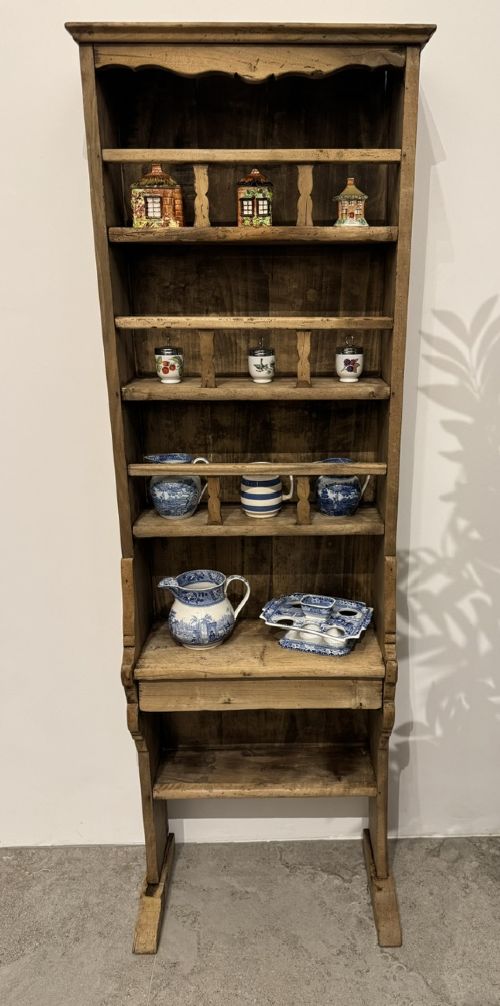
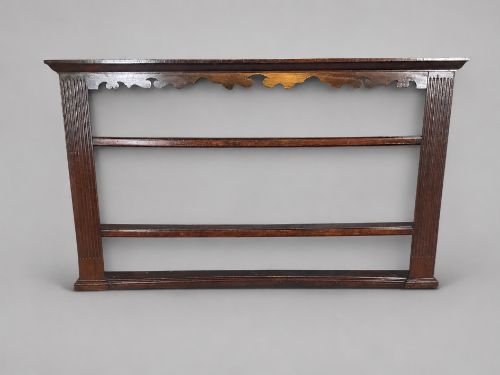
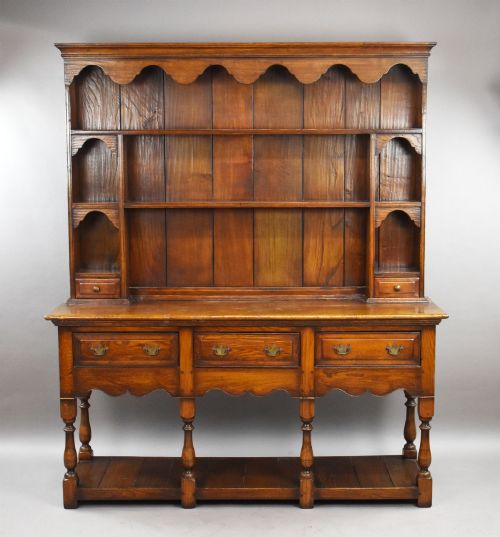
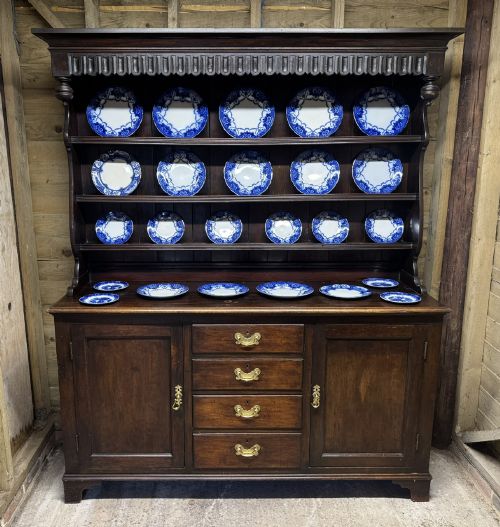
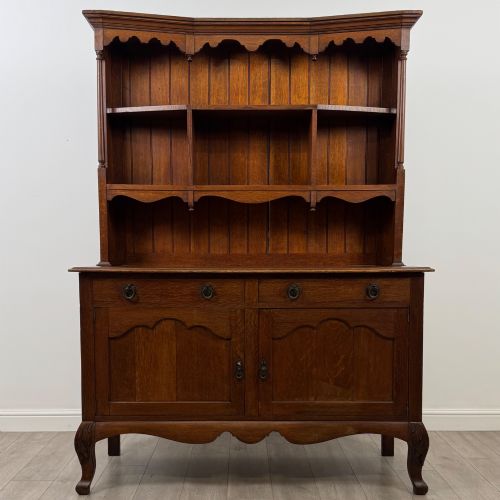
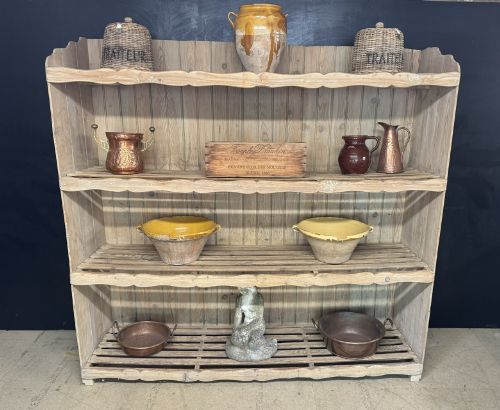
When you search for antique kitchen shelving, you encounter two main forms: the fitted wall-mounted plate rack and the substantial freestanding dresser base paired with upper open shelves. These pieces range from simple 18th century oak hanging wall shelves to large 19th century Welsh dressers with tiered plate displays and lower potboards.
The material traditions lean heavily on native hardwoods like oak and pine, alongside industrial metal baker racks originating from French provincial settings. You find regional variations such as the Welsh Talwrn dresser, Georgian Shropshire dressers, and French country potboard units designed for daily domestic use.
Materials and construction methods
Makers built these pieces primarily using solid oak, pine, and elm, relying on pegged joints, hand-planed boards, and traditional drawer construction. Metal variants utilise wrought iron, steel, and brass frameworks, often featuring stamped foundry marks and heavy wire mesh or slatted metal shelving.
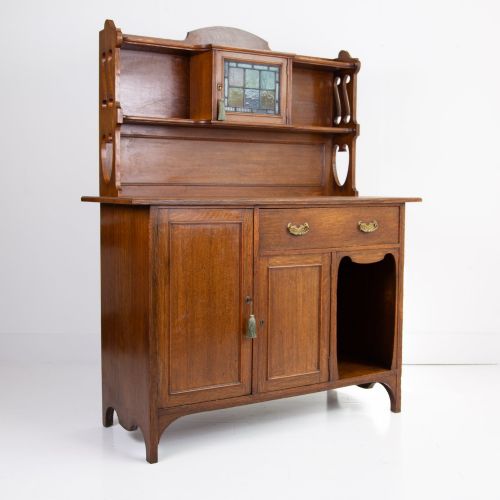
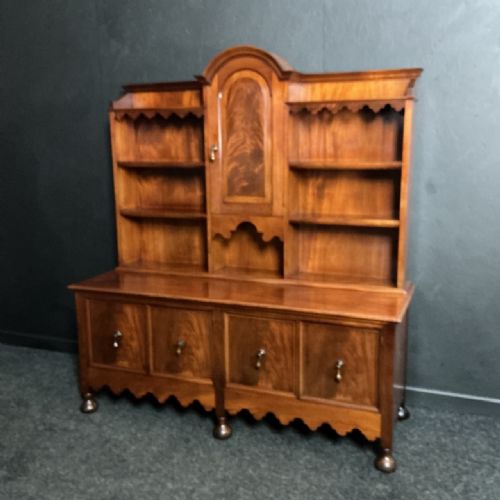
Surface preparation involved plain waxed timber finishes, occasional painted or distressed metal treatments, and glazed door sections set into tiger oak or flame mahogany cabinetry. The structural integrity relies on substantial timber framing designed to support heavy collections of ceramic plates and cookware.
Antique Kitchen Shelving Retail Price Guide 2026
Typical asking prices for kitchen shelving among the pieces listed under this phrase on Sellingantiques today, from the lower quarter to the upper quarter. They describe what is for sale here now, not the wider market.
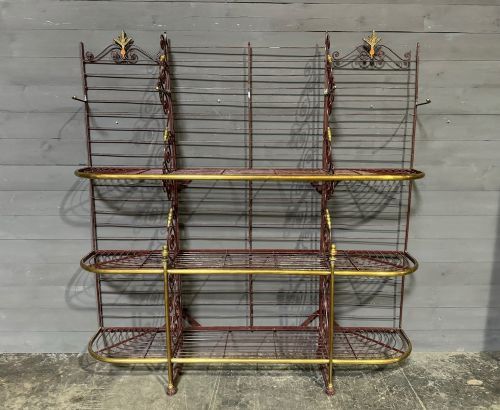
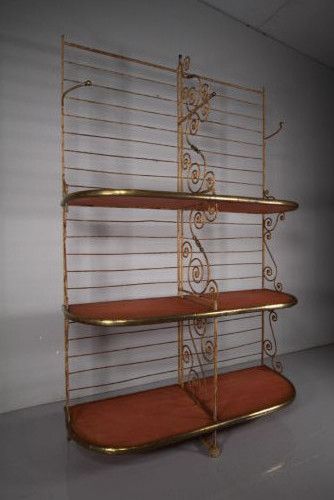
Several heavy iron baker's racks bear the original foundry stamps from Lyon, built to endure intense French provincial kitchens.
Distinctions in construction and origin
The grade of antique kitchen shelving depends heavily on the originality of the timber surfaces, the integrity of the joined elements, and whether the upper rack matches the lower dresser base. Pieces retaining their original patinated oak boards and traditional turned legs command greater interest than heavily altered examples.
Makers' marks, specific regional cabinet-making traits, and scarce material choices like burr walnut or flame mahogany elevate certain specimens above standard provincial pine or oak utility furniture. The presence of period hardware, such as brass pulls and hinges, further distinguishes finer workshop output.
Dubois of Lyon
The Antique Kitchen Shelving Glossary
- Potboard
- A lower open shelf built into the base of a dresser specifically for storing heavy pots and pans. This platform sits just above the floor, resting on the lower stretchers.
- Delft rack
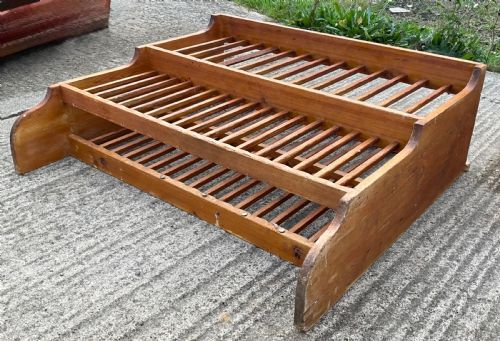
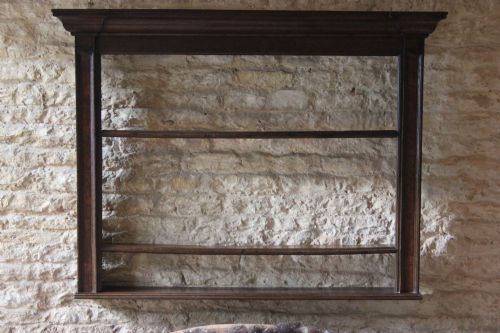
- A wall-mounted wooden shelving unit featuring narrow display grooves and protective front rails designed to hold plates upright. These racks prevent ceramic dishes from sliding forward into the room.
- Welsh dresser
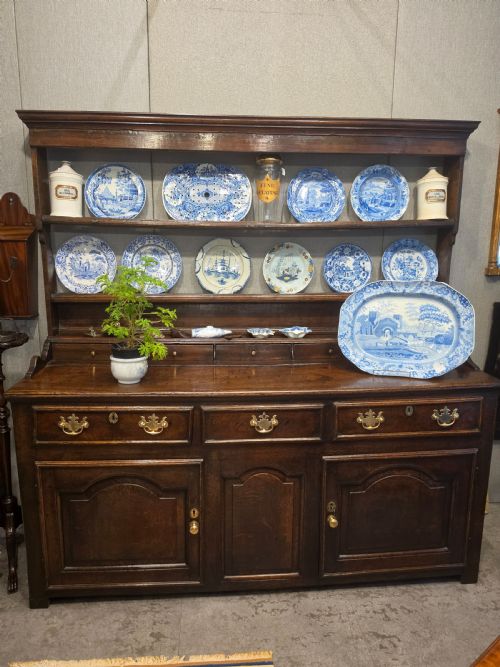
- A two-part provincial furniture form combining a lower storage base of drawers and cupboards with an open shelved superstructure above. They served as the central storage hub for rural kitchens.
- Baker's rack
- A heavy metal or iron freestanding shelving unit originating in commercial French kitchens for cooling bread. They incorporate sturdy wire mesh or slatted metal tiers within a forged frame.
- Tiger oak
- Quartersawn oak timber displaying distinctive medullary ray figuring resembling tiger stripes. Cabinetmakers utilised this cut to highlight the natural grain on prominent furniture panels.
Antique Kitchen Shelving: Frequently Asked Questions
What is a Welsh dresser?
A Welsh dresser is a traditional two-part kitchen unit featuring a solid lower cabinet or potboard base with an open-shelved rack mounted on top. These pieces combined everyday storage for dishware with a display area for ceramic plates.
They evolved as practical farmhouse furniture where families kept their earthenware within easy reach of the cooking area.
How do I date an oak dresser?
Dating relies on observing construction methods, timber selection, and hardware styles across the piece. Early 18th century examples often show pegged joinery, hand-carved details, and boards shaped with hand planes.
Later Victorian and Edwardian iterations introduce machine-sawn elements, glazed doors, and turned legs that reflect changing industrial manufacturing techniques.
Where were baker's racks used?
Baker's racks originated in French commercial kitchens and field bakeries as heavy-duty metal shelving units. Their iron and steel construction allowed hot baking trays to cool safely on open mesh tiers.
Over time, these industrial racks transitioned into domestic spaces for storing kitchen equipment and displaying plants.
Are plate racks and dressers separate?
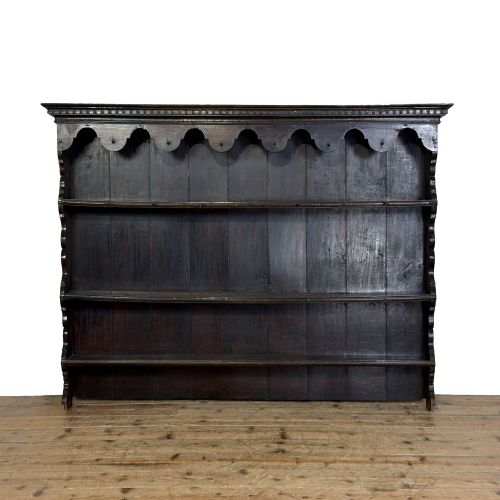
Plate racks can exist either as independent wall-mounted shelving units or as the upper half of a two-part dresser. Many Georgian and Victorian examples were built as separate hanging racks positioned above serving tables.
Surviving pieces sometimes show signs where upper racks and lower bases were joined or separated during their working life.