
Antique Kingwood Chest
An antique kingwood chest brings rich timber grain and sculptural French design into a room, spanning grand 18th-century commodes and neat 20th-century bedside cabinets.
Antique Kingwood Chest
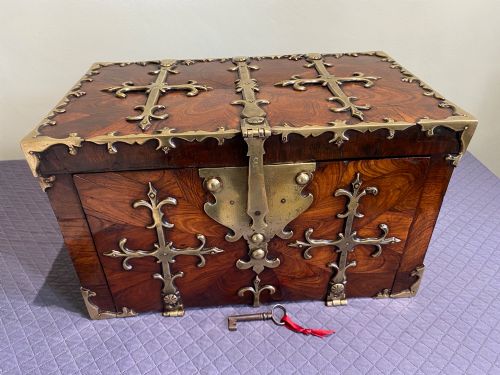
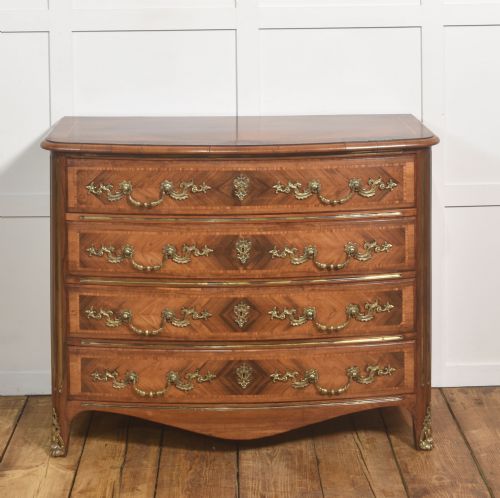
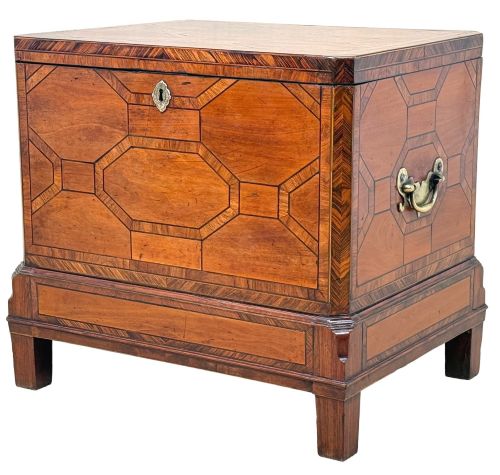
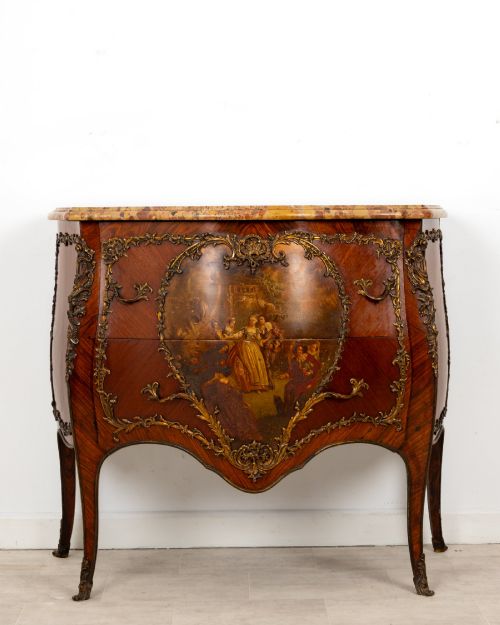
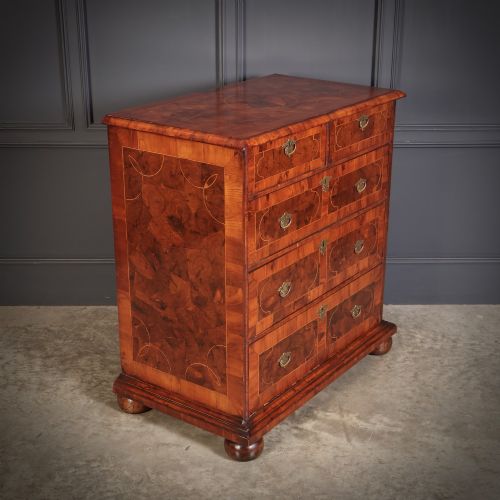
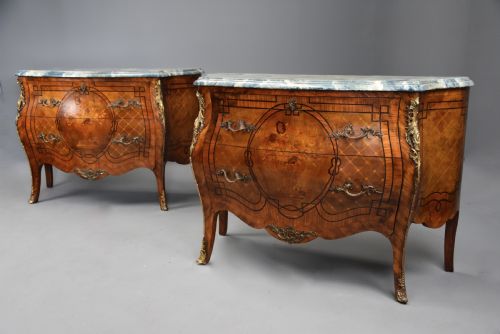
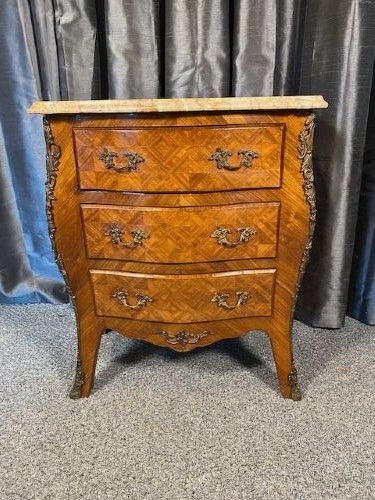
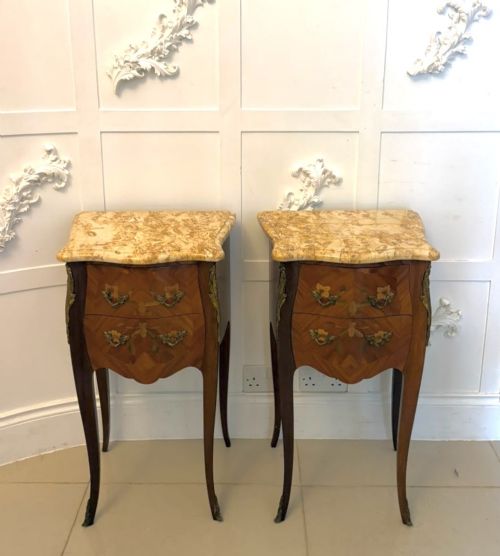
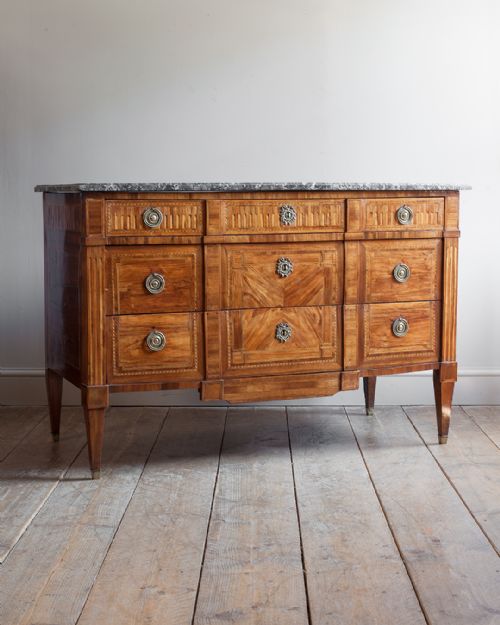
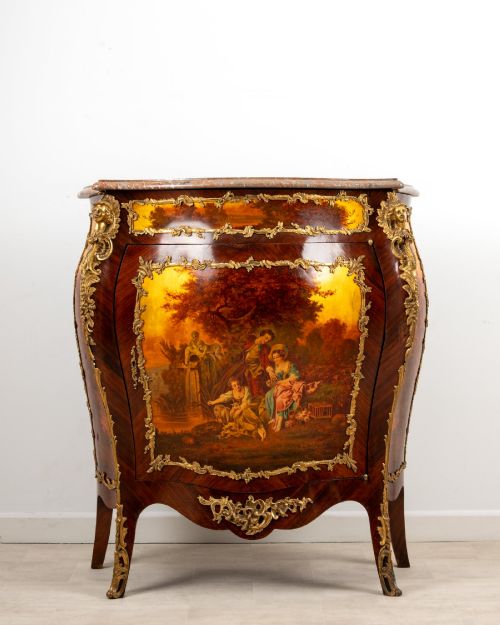
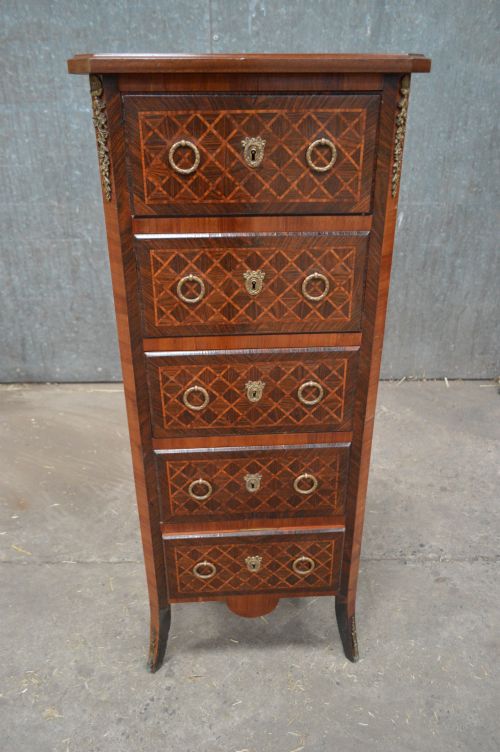
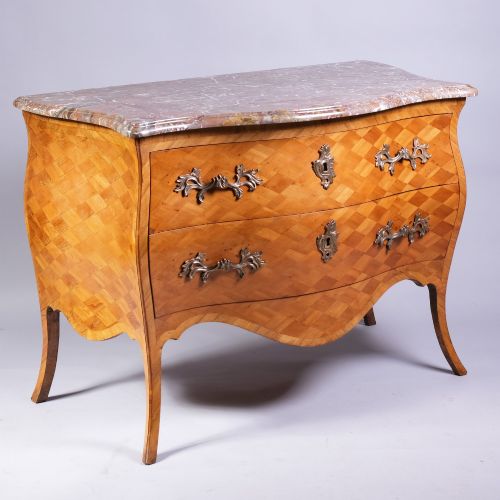
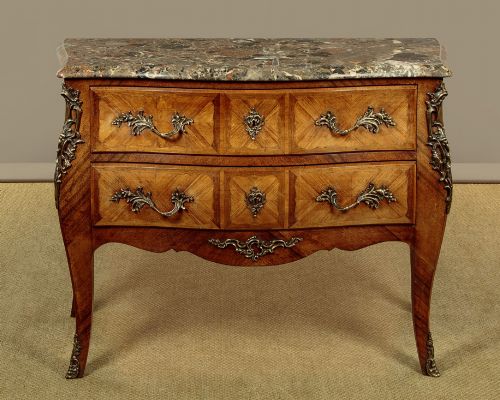
An antique kingwood chest encompasses a varied group of storage furniture, primarily French commodes, bedside cabinets, and tall chests dating from the seventeenth century through the early twentieth century. Buyers encounter serpentine shapes, bombe profiles, and straightforward drawer arrangements alongside specialised forms like coffres fortes and cellarettes.
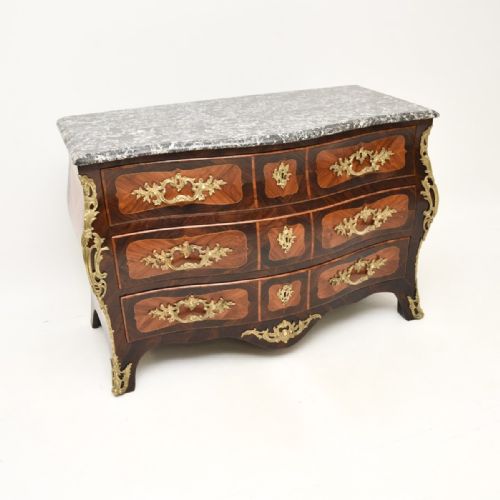
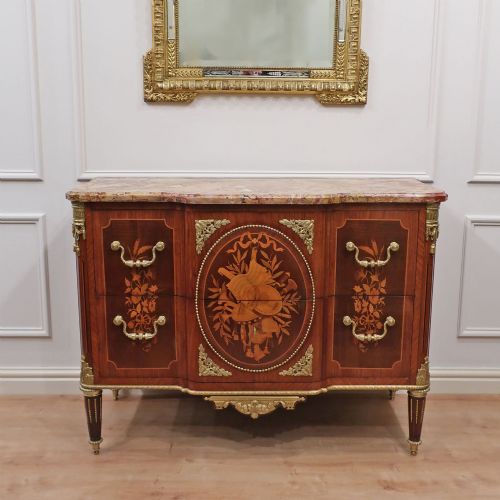
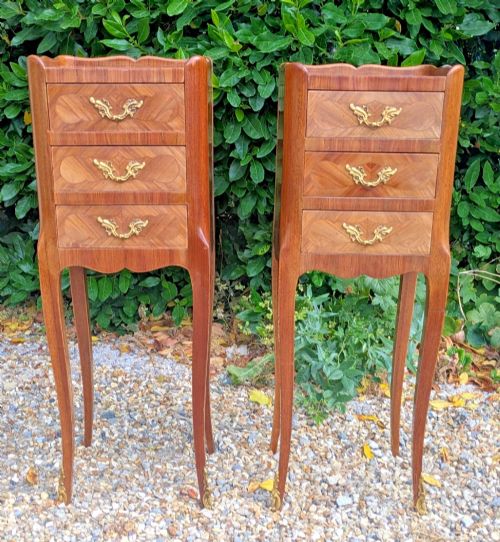
The selection leans heavily toward continental European cabinetmaking, particularly French Louis XV and Louis XVI styles, executed in kingwood veneer. Pieces range from grand marble-topped commodes designed for formal reception rooms to smaller bedside nightstands and semainieres intended for private chambers.
How they were made
Cabinetmakers utilised kingwood, a dense and richly figured timber, sliced into fine veneers to cover structural carcases of oak or walnut. These veneers were arranged in intricate parquetry or marquetry patterns, exploiting the natural grain variations of the wood.
Metalwork played a defining role in construction, with cast ormolu and gilt bronze mounts secured to corners, handles, and aprons. Many pieces incorporated shaped marble slabs fitted to the top surface, requiring precise stone-masonry to match the complex serpentine or bombe contours of the wooden base.
Some diminutive bedside cabinets hide secret compartments beneath their marble tops, built for storing midnight treasures.
What varies in quality
The standard of a piece rests heavily on the crispness of the bronze or ormolu mounts and the precision of the veneer work. Superior examples display seamless parquetry alignment across complex curved surfaces and heavy, finely chased gilt bronze rather than light, mass-produced metal fittings.
Structural integrity and the retention of original components dictate value at the upper end. Pieces retaining their original shaped marble tops, fire-gilded mounts, and untouched interior drawer construction command greater respect than those assembled from mismatched elements or subjected to heavy modern restoration.
Jacques Birckle·E Kahn·Sormani·Bruneau
The Antique Kingwood Chest Glossary
- Kingwood
- A dense, heavy timber imported from Brazil, prized for its violet-brown heartwood and contrasting golden streaks used extensively in French veneer work. It is distinct from rosewood, though belonging to the same botanical family.
- Commode
- A low French chest of drawers, standing on legs, which became popular during the reign of Louis XIV and evolved through various revival styles. These often feature marble tops and elaborate mounts.
- Bombe
- A swelling, outward-curving cabinet shape typical of French Rococo and Louis XV furniture. Achieving this contour required immense skill from the joiner.
- Ormolu
- Gilt bronze ornamentation applied to furniture, cast and chased by hand before receiving a layer of gold amalgam. The quality of the chasing separates standard work from master craftsmanship.
- Marquetry
- The art of forming decorative patterns by fitting together thin veneers of different coloured woods. Cabinetmakers used subtle tonal shifts to create elaborate floral or geometric designs.
- Coffre Forte
- A strongbox or reinforced chest designed for securing valuables, often heavily banded with iron or brass. Seventeenth-century examples showcase early mechanisms and robust timber construction.
Antique Kingwood Chest: Frequently Asked Questions
How do I care for kingwood veneer?
Kingwood furniture requires a stable environment away from direct sunlight and heat sources, which can dry out old timbers and crack delicate veneers. Maintaining consistent indoor humidity prevents the wood from warping or shrinking.
Dusting should be performed with a soft, dry cloth, avoiding silicone-based polishes that build up over time. Occasional application of quality beeswax feeds the grain and preserves the historic lustre of the timber.
Are bedside cabinets original antiques?
Many smaller bedside cabinets and nightstands date from the late nineteenth and early twentieth centuries, reflecting later revivals of earlier French styles. Cabinetmakers during the 1900s and 1920s frequently produced matched pairs of bedside chests to complement larger bedroom suites.
Examining the interior secondary woods, drawer dovetails, and backboards helps determine whether a compact cabinet originates from the 1700s or a later revival period. Construction methods and wood ageing provide clear indicators of true age.
What distinguishes Louis XV from Louis XVI style?
Louis XV furniture relies on asymmetrical curves, cabriole legs, and flowing rococo mounts that emphasise organic movement. The overall aesthetic feels dynamic, rounded, and playful.
Louis XVI design marks a return to classical straight lines, symmetrical parquetry, and tapered, fluted legs influenced by archaeological discoveries. This later period prioritizes geometric restraint over the exuberant curves of the earlier reign.