

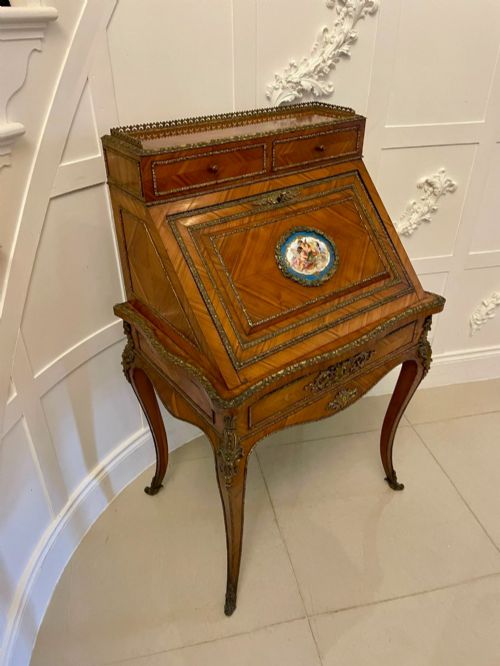
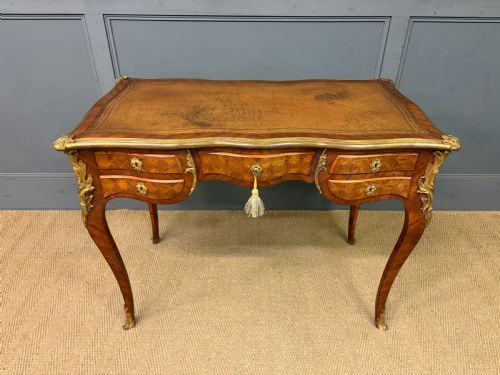
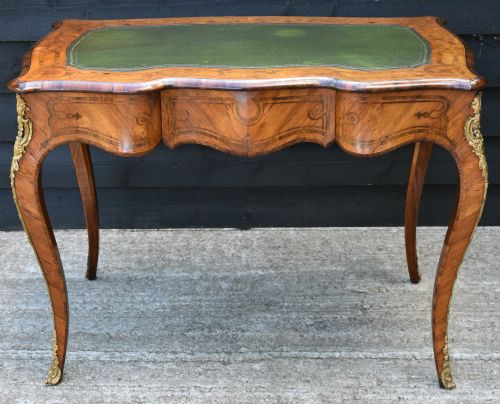
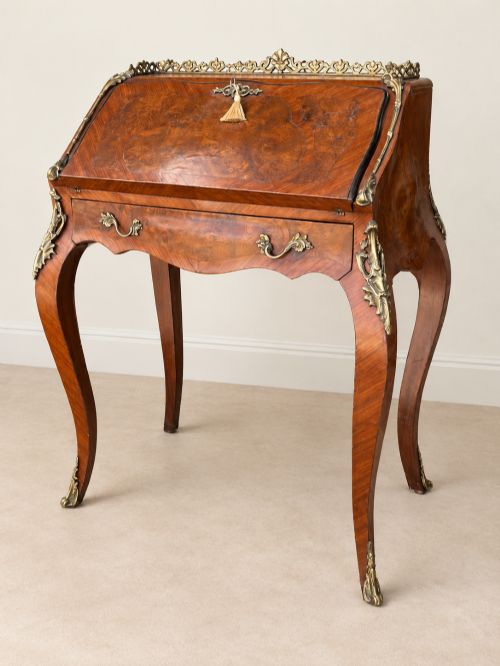
Antique Kingwood Bureau Desk
When you want an antique kingwood bureau desk, you are looking at fine French and Victorian craftsmanship defined by rich timbers and gilt mounts.
Antique Kingwood Bureau Desk
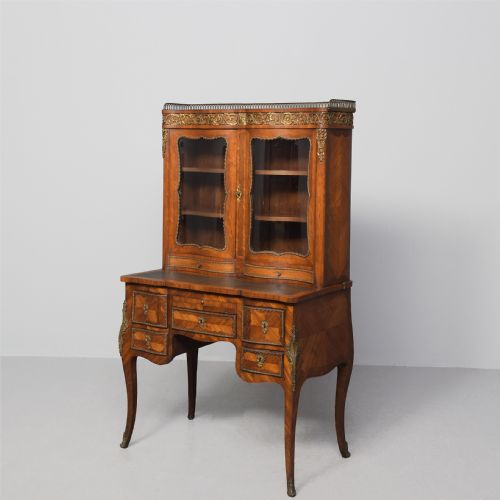
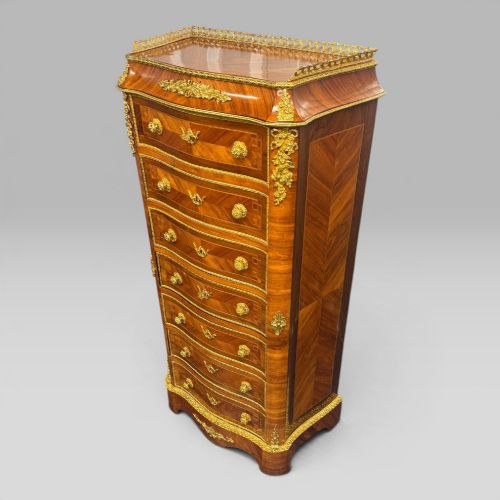
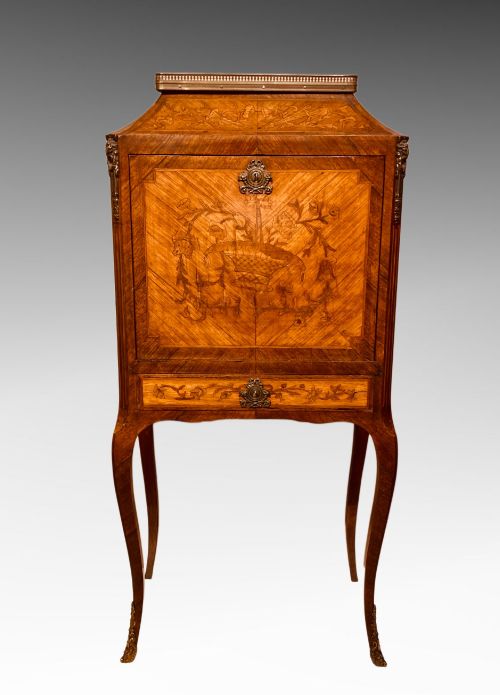
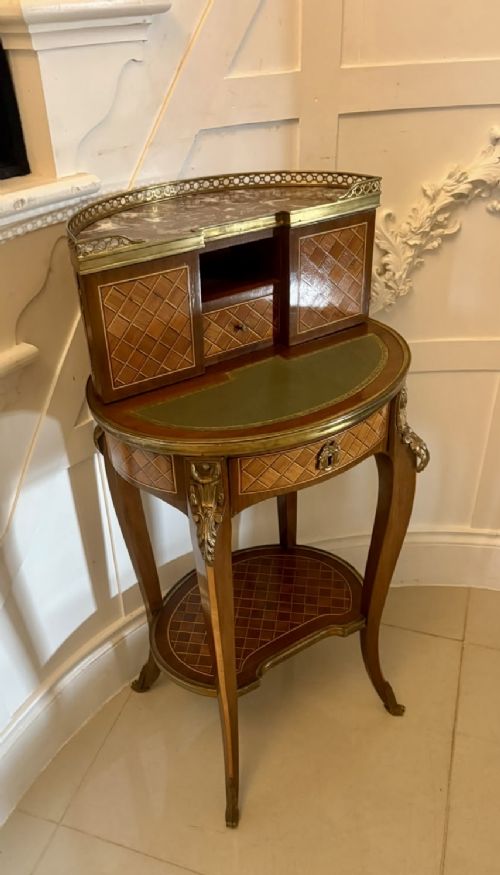
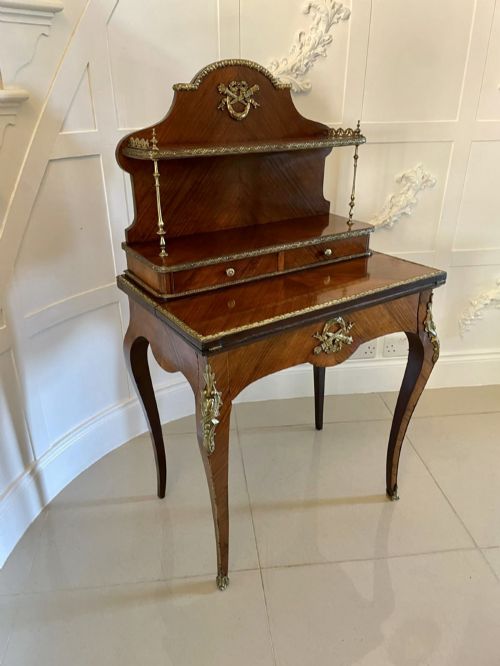
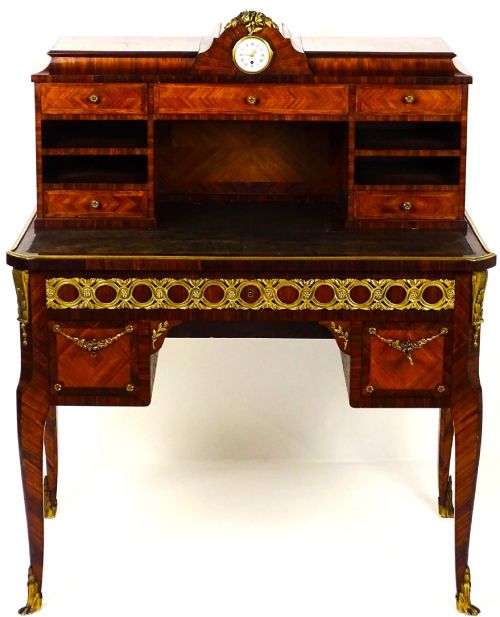
An antique kingwood bureau desk brings together practical writing surfaces and decorative cabinetry, often taking the form of a bureau plat, a cylinder desk, or a delicate bonheur du jour. These pieces span the eighteenth, nineteenth, and early twentieth centuries, with a heavy concentration of nineteenth-century French revival pieces inspired by the Louis XV and Louis XVI periods.
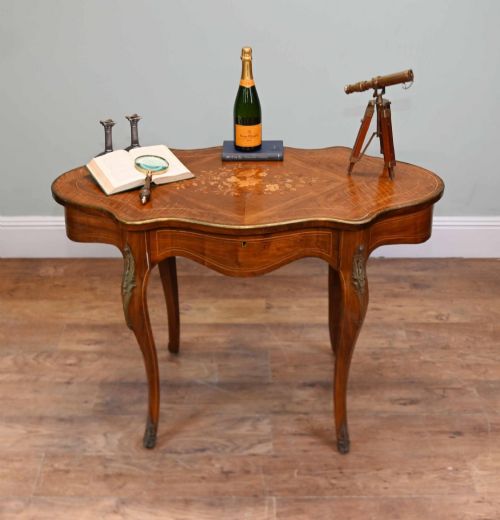
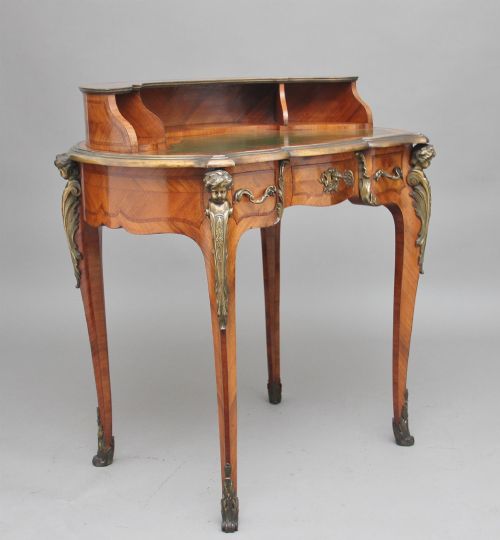
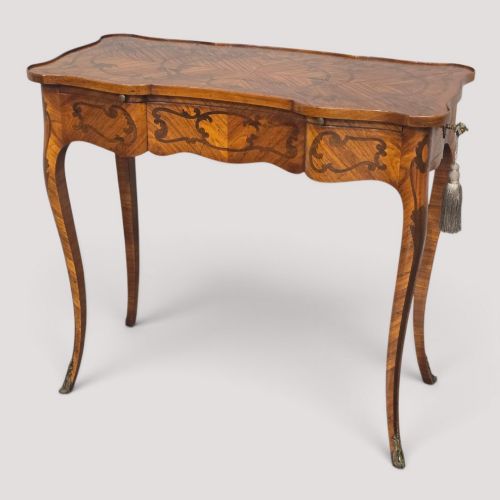
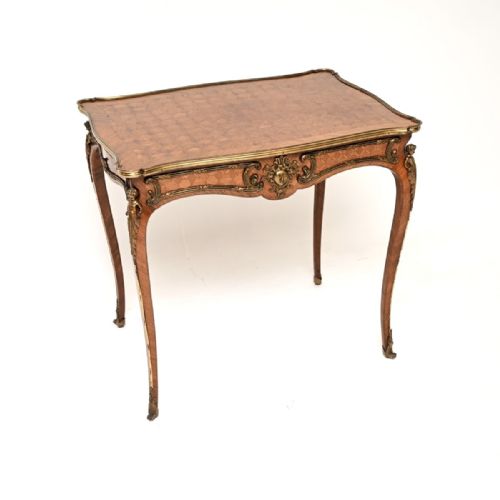
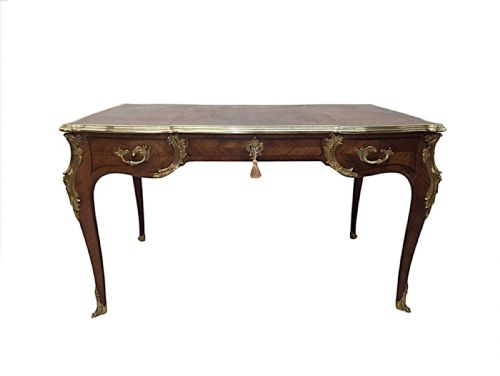
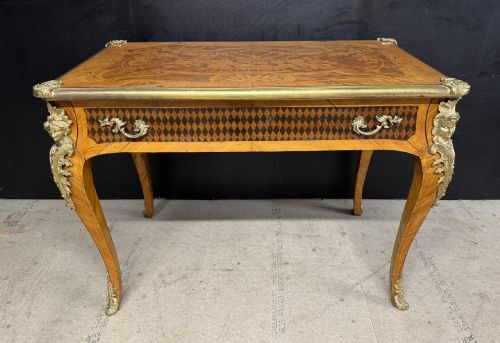
The version you are most likely to encounter here is the freestanding bureau plat or writing table, finished on all sides with intricate marquetry and parquetry patterns. Many incorporate shaped serpentine top surfaces, bronze ormolu mounts, and fitted writing compartments designed for elegant correspondence.
Makers from the nineteenth century often produced these writing desks to echo earlier royal court aesthetics, combining utility with visual splendour. Whether you examine a small ladies writing desk or a larger partner table, the form remains rooted in classic European cabinetmaking traditions.
Materials and construction methods
Cabinetmakers constructed these desks using dense tropical kingwood veneers, often arranged in geometric parquetry or floral marquetry patterns over secondary woods. Tulipwood, rosewood, and walnut frequently appear alongside kingwood to create contrasting colour palettes within the wood grain.
Gilt bronze ormolu mounts frame the edges, corners, and drawer fronts, cast and chased by hand to accent the curves of the woodwork. Leather writing inserts, marble tops, and porcelain plaques complete the construction, bringing together metal, stone, ceramic, and timber.
Antique Kingwood Bureau Desk Retail Price Guide 2026
Typical asking prices for kingwood bureau desk among the pieces listed under this phrase on Sellingantiques today, from the lower quarter to the upper quarter. They describe what is for sale here now, not the wider market.
The object forms range from cylinder desks and escritoires to freestanding partners desks and serpentine writing tables.
Assessing quality in execution
Quality rests in the crispness of the ormolu mountings and the precision of the wood inlay. Superior examples display sharply chased bronze work that fits snugly against the contours of the carcase, alongside tight, stable veneer joints without lifting.
The complexity of the marquetry design and the depth of the wood grain selection also separate standard production from master workshops. Workshops known for high-end cabinetmaking achieved fluid serpentine lines and balanced proportions that hold the eye from any angle in a room.
Francois Linke·Edwards and Roberts·Paul Sormani·CH. Jeanselme and Co·Durand
The Antique Kingwood Bureau Desk Glossary
- Kingwood
- A dense, heavy timber featuring rich violet-brown tones with darker streaks, prized for veneering fine furniture. It was heavily utilised by elite cabinetmakers in eighteenth and nineteenth-century France.
- Bureau Plat
- A freestanding writing table fitted with one or more drawers beneath the top. These desks were designed to stand in the centre of a room rather than against a wall.
- Ormolu
- Gilt bronze mounts applied to furniture for decorative enrichment. The process involves coating cast bronze in a layer of gold leaf or gold amalgam.
- Marquetry
- The art of applying small pieces of veneer to a structure to form decorative patterns or pictures. Craftsmen cut contrasting woods like rosewood and tulipwood to achieve tonal variation.
- Bonheur du Jour
- A light ladies writing desk featuring a small cabinet or set of shelves superstructure on top. The form gained popularity during the Louis XV period and remained a staple of nineteenth-century revival styles.
Antique Kingwood Bureau Desk: Frequently Asked Questions
What is a bureau plat?
A bureau plat is a flat-topped writing table with drawers in the frieze, designed to be placed in the centre of a room rather than pushed against a wall. These tables provide a large surface area finished on all sides.
Cabinetmakers during the nineteenth-century revival periods built these forms to emulate earlier royal court pieces, adding rich veneers and gilt bronze mounts.
How do I identify kingwood?
Kingwood is a dense, heavy hardwood known for its distinctive dark brown and violet colouring with striking grain patterns. It takes a high polish and was frequently used as a veneer.
On desks, it is often laid in geometric parquetry arrangements or combined with lighter tulipwood to create strong visual contrast.
Where should I place a bureau desk?
Because many of these desks are finished on all sides, they sit comfortably in the middle of a study, library, or drawing room. Freestanding forms allow you to walk around the piece and appreciate the parquetry and bronze mounts from every angle.
Keep them away from direct sunlight and strong heat sources to protect the delicate wood veneers and leather writing surfaces.
What is a bonheur du jour?
A bonheur du jour is a small, light writing desk featuring a raised cabinet or shelving superstructure on top. Victorian makers often decorated these with porcelain plaques and ormolu mounts.
They were originally designed for ladies to write letters or read in private chambers, combining compact proportions with decorative elegance.