




Antique Khorjin
When you search for an antique khorjin, you are looking at tribal woven luggage made by nomadic and village weavers across Persia and the Caucasus.
Antique Khorjin
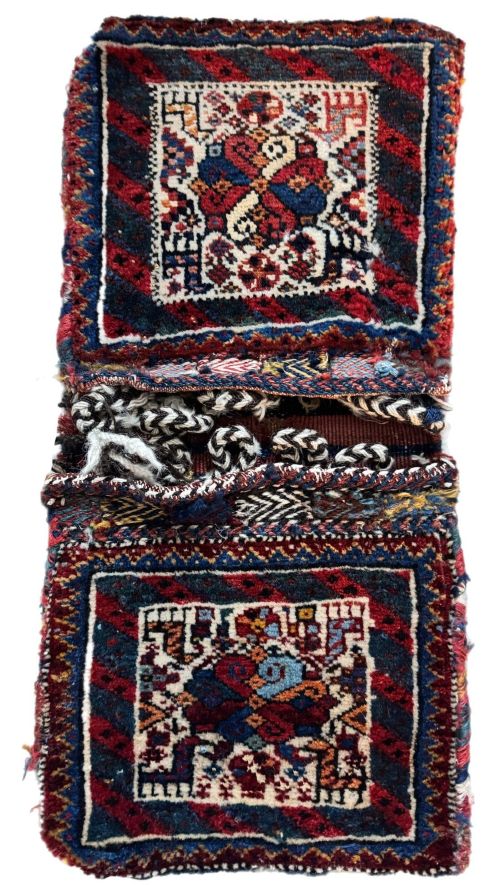
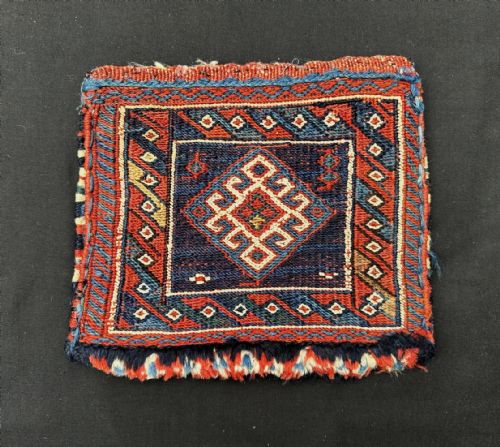
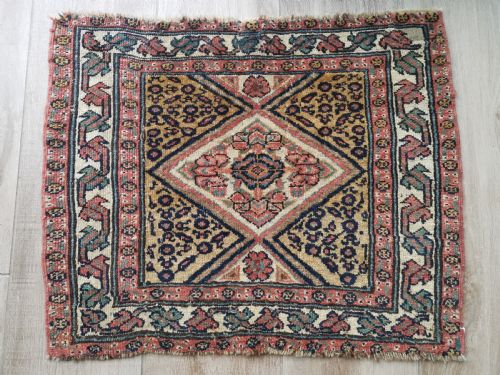
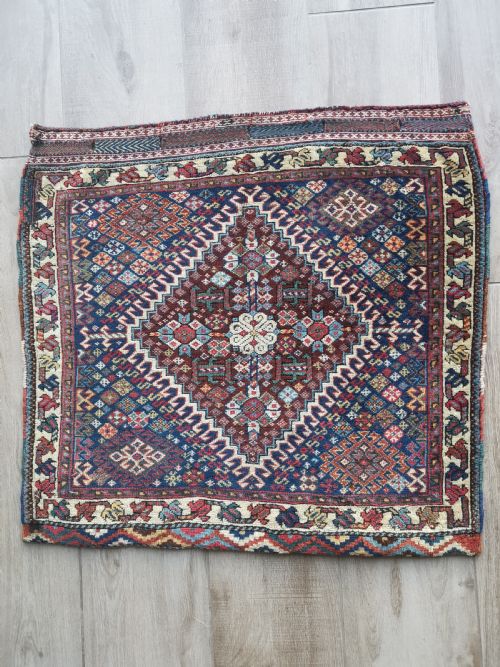
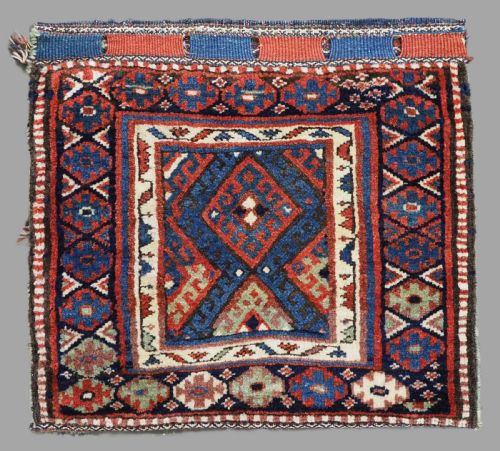
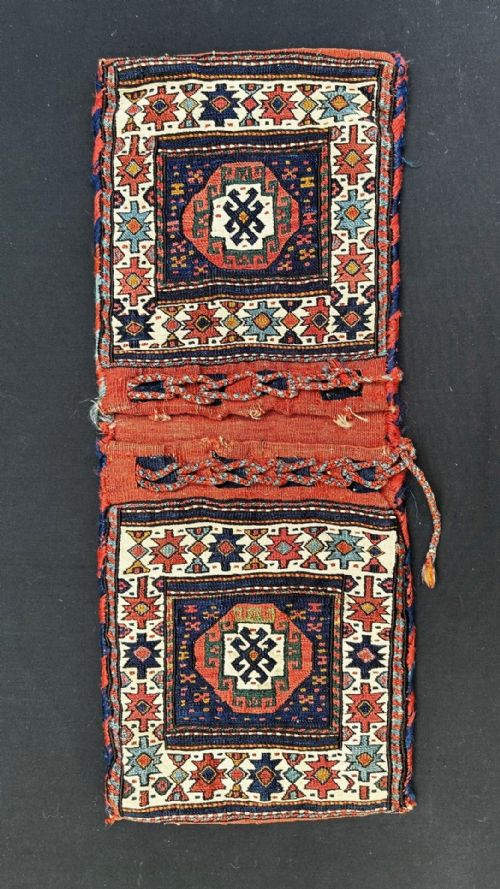
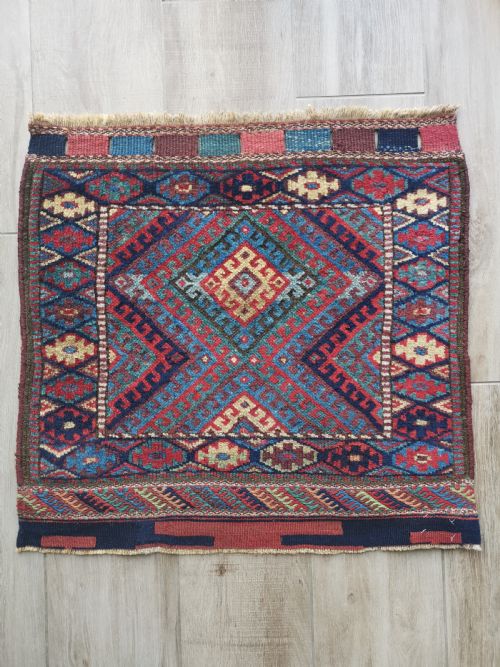
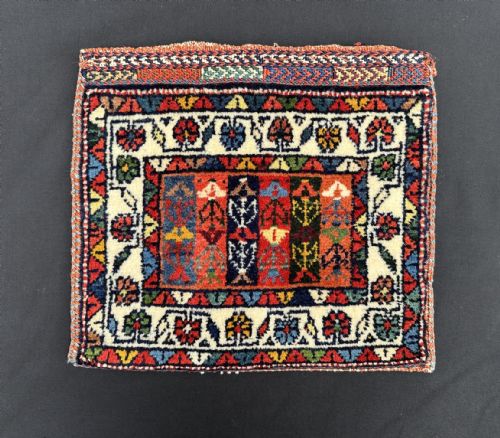
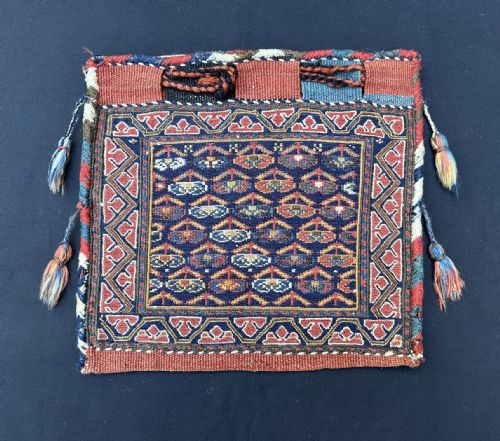
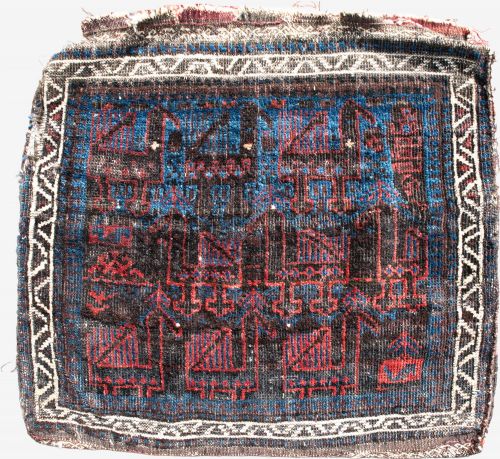
An antique khorjin is a traditional double-sided saddlebag used by nomadic groups for transport and storage, though surviving examples often appear as single bag faces or halved pieces. You will frequently encounter complete pairs, individual bag faces, and storage bags originating from tribal confederations such as the Qashqai, Afshar, Shahsevan, and Baluch.
The form developed to serve practical needs during seasonal migrations, carrying personal possessions, household goods, or vanity items across rugged terrain. Weavers produced these items in various dimensions, ranging from small storage pouches to substantial saddlebag carpets intended for pack animals.
Regional weaving traditions dictate the specific motifs and structures found on an antique khorjin, connecting each textile directly to the nomadic group that made it. Tribal weavers utilised distinctive geometric patterns, boteh designs, and animal or bird motifs to identify their specific lineages.
Materials and construction
Makers constructed an antique khorjin using hand-spun wool for the pile and foundation, often combining goat hair for durability along the edges and structural warps and cotton for supplementary foundations in later pieces. Natural dyes provided the deep reds, blues, and browns that define the palette of these tribal textiles.
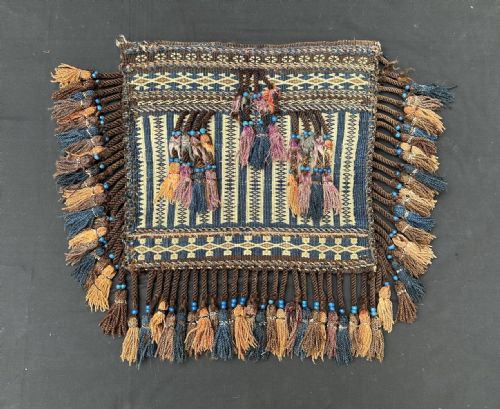
Nomadic weavers employed various techniques including pile knotting, plain weave flatweaves, and intricate soumac wrapping to strengthen the utility areas of the bags. Artisans occasionally embellished the textiles with glass beads or cowrie shells for added decoration.
Antique Khorjin Retail Price Guide 2026
Typical asking prices for khorjin among the pieces listed under this phrase on Sellingantiques today, from the lower quarter to the upper quarter. They describe what is for sale here now, not the wider market.
Some nomadic weavers tossed cowrie shells and glass beads into the woolwork to ward off the evil eye while bouncing along mountain tracks.
Quality variations
The refinement of the knotting and the tightness of the weave separate the finest examples of an antique khorjin from simpler utilitarian pieces. Superior items display meticulous precision in intricate geometric or figurative patterns alongside well-balanced natural dye palettes.
The survival of original plain weave backs, closure loops, and structural integrity significantly elevates the standing of a textile. Pieces that retain their complete structure offer a clearer record of the original nomadic function.
The Antique Khorjin Glossary
- Bagface
- The decorative front panel of a storage bag or saddlebag that remained visible when the item hung against a pack animal or tent wall. This section typically carries the complex pile-woven design while the reverse utilises plain weave.
- Khorjin
- The traditional Persian term for a double saddlebag used by nomadic tribes for transport and domestic storage. These textiles divide into two pouches connected by a central web.
- Soumac
- A flatweave technique involving wrapped weft threads that create a textured, durable surface without producing a cut pile. Shahsevan nomads frequently utilised this method on storage bags.
- Boteh
- A stylised almond or pear-shaped motif representing a floral spray, cypress tree, or flame, commonly found across Persian tribal weaving. This pattern appears frequently on Afshar and Qashqai bags.
- Plain weave
- A simple, unpiled weave structure formed by alternating warp and weft threads, often seen on the back panels of storage bags. This technique provided a lightweight yet strong backing for the heavier pile face.
Antique Khorjin: Frequently Asked Questions
What is an antique khorjin used for?
Nomadic groups originally used these double saddlebags across pack animals to transport personal belongings, grain, or household goods during seasonal migrations. They also served as interior storage containers within tents.
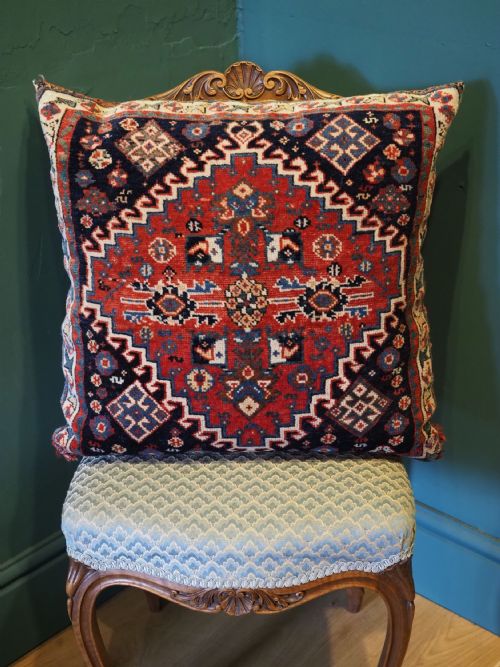
Today, collectors mount single bag faces as wall hangings or adapt them into decorative cushions for domestic interiors.
How do you distinguish tribal groups?
Tribal attribution relies on specific structural characteristics, wool qualities, and signature design repertoires associated with particular geographic regions and confederations. For instance, Shahsevan pieces often feature soumac wrapping, while Baluch works display distinctive dark palettes and banded weft work.
Examining the border arrangements and secondary colours helps clarify whether a piece originates from the Fars province, Kerman, or the Caucasus.
Are complete pairs common?
Complete double saddlebags connected by their original central webbing survive less frequently because many pieces were separated into individual bag faces over time. Usage patterns and wear often caused the central bridge to tear or degrade.
Intact pairs or halves with surviving original plain weave backs represent scarcer survivals from the nineteenth century.
How should I care for a textile?
Preserving these antique textiles requires keeping them out of direct sunlight to prevent natural dye fading and gently vacuuming with a mesh screen covering the nozzle. Avoiding high-humidity environments protects the organic wool and goat hair fibres.
Professional cleaning by a specialist in antique oriental rugs ensures structural safety if washing becomes necessary.