
Antique Jewellery Albert Chain
An antique jewellery albert chain brings substantial metalwork from the Victorian, Edwardian, and Art Deco eras directly into modern wardrobes as a versatile necklace or bracelet.
Antique Jewellery Albert Chain
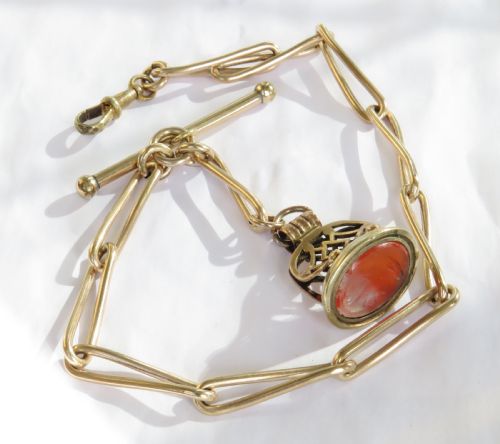
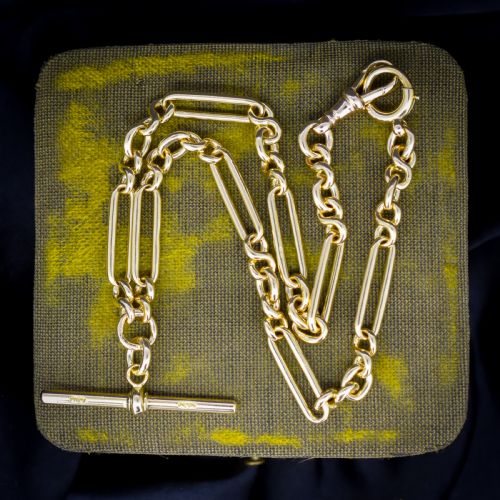
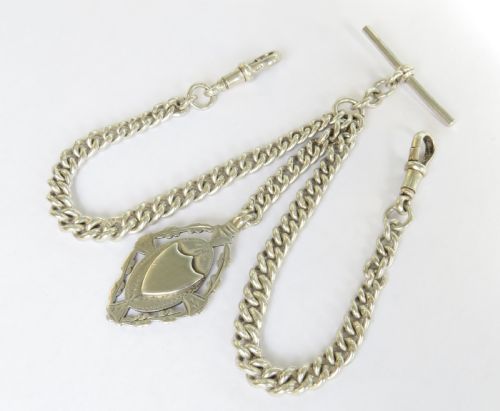
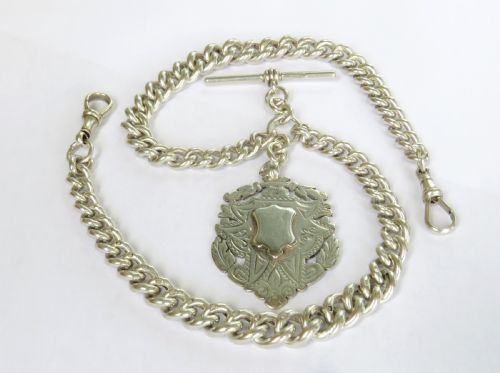
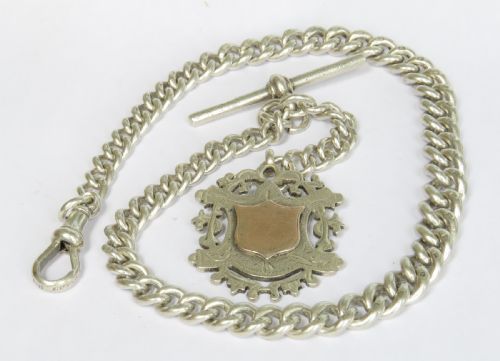
An antique jewellery albert chain originates as a practical mechanism for securing pocket watches to waistcoats during the nineteenth and early twentieth centuries. Surviving examples span the Victorian, Edwardian, and Art Deco periods, encompassing both single lengths and double strands fitted with T-bars and dog clips.
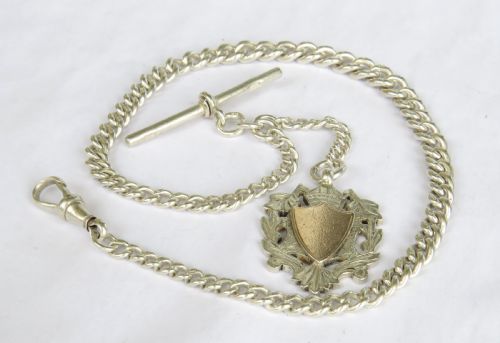
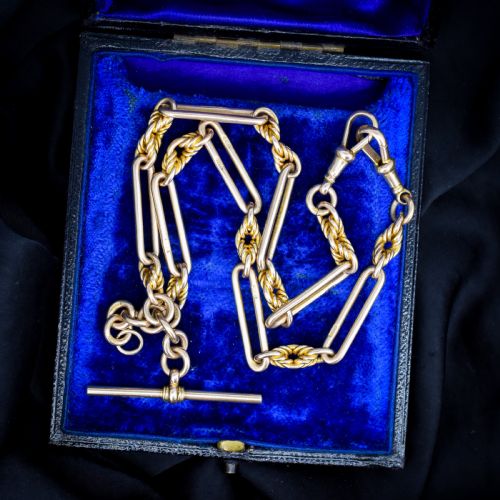
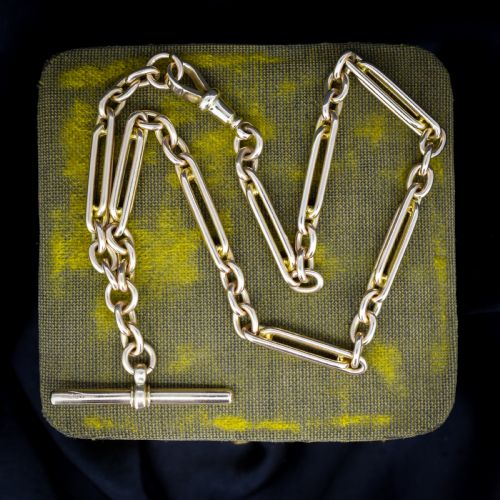
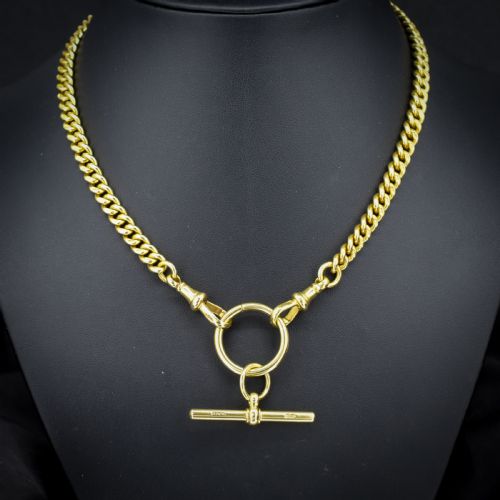
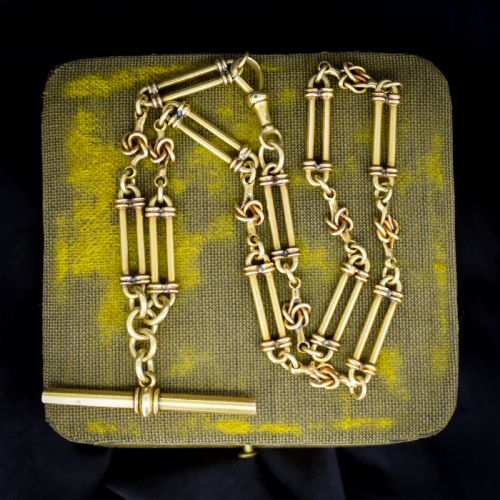
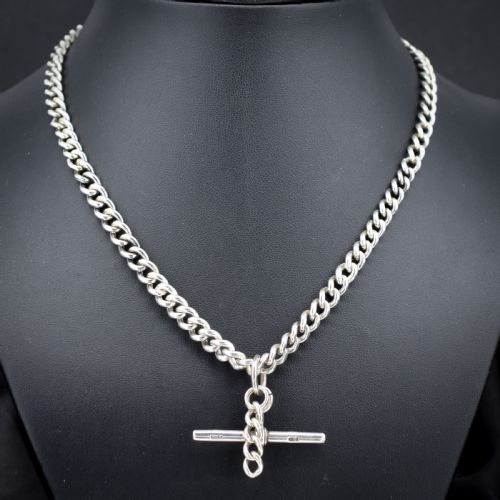
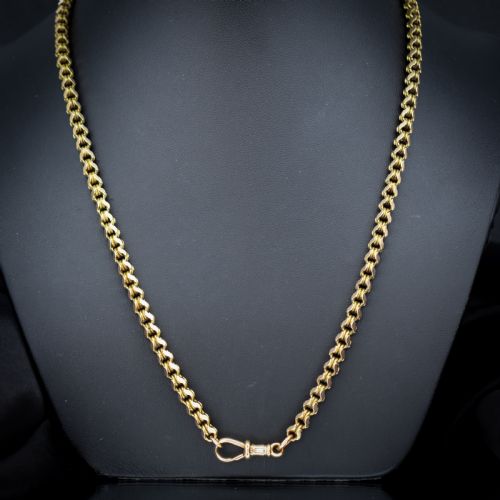
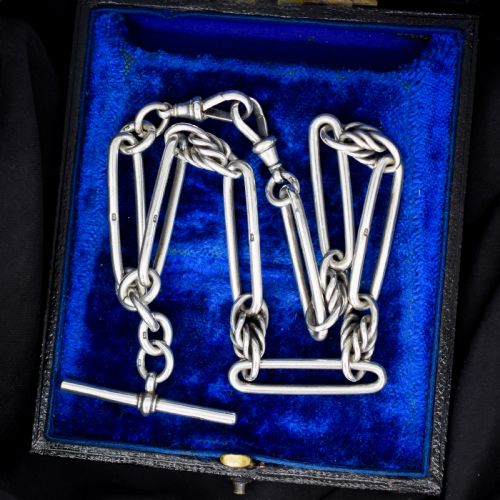
Modern wearers repurpose these items primarily as necklaces or wrap bracelets, utilising the original swivel clips to attach pendants or wear them standalone. The selection includes substantial curb links, intricate trombone patterns, and romantic love knot configurations created across decades of British craftsmanship.
Pieces from this category appear in varied metals, reflecting the shifting preferences of the 1880s through to the 1920s. Buyers encounter everything from heavy sterling silver hallmarked in regional assay offices to warm 9ct and 18ct yellow and rose golds.
Materials and Construction
Goldsmiths and silversmiths constructed these chains from sterling silver, rolled gold, and various purities of gold including 9ct, 15ct, and 18ct variants. Many components display individual hallmarks on every single link, demonstrating rigorous oversight by British assay offices such as Birmingham and Chester.
Link construction combines stamped, drawn, and hand-assembled elements like hollow trombone bars, solid curb links, and delicate love knots. Mechanisms rely on spring-loaded dog clips and swivel connectors designed for daily security.
Surface finishes range from polished yellow gold to textured rose gold and oxidised silver patinas accrued over more than a century of existence. Durability is built into the gauge of the wire and the integrity of the soldered jump rings.
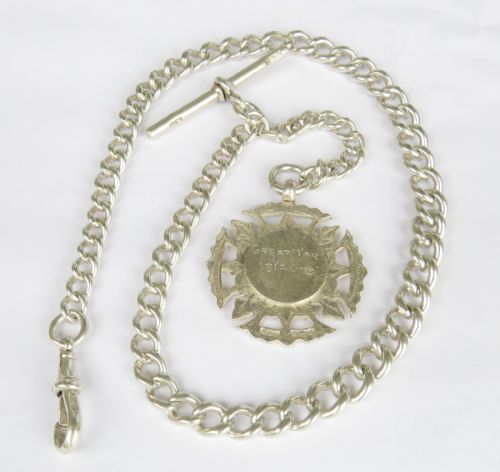
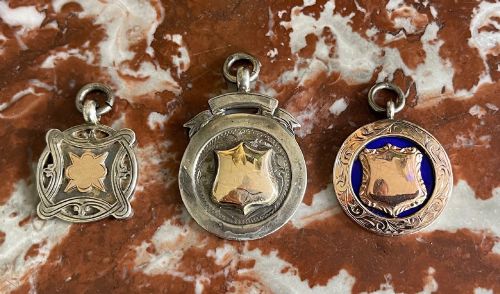
Several chains still retain their original Birmingham silver hallmarked fobs, ready to dangle once more.
Distinctions in Execution
Quality rests in the completeness of the original components, such as matching hallmarked dog clips, functioning T-bars, and unblemished swivel mechanisms. Chains where every individual link bears a clear punch mark demonstrate a higher standard of manufacture than unassayed alternatives.
The weight and gauge of the metal define the physical presence of the piece, separating hollow tubular constructions from dense, solid gold or silver links. Superior examples maintain tight tolerances in their connecting loops, preventing undue wear over decades of articulation.
The Antique Jewellery Albert Chain Glossary
- Albert chain
- A heavy watch chain designed to connect a waistcoat to a pocket watch, featuring a T-bar at one end and a dog clip at the other. It takes its name from Prince Albert, consort to Queen Victoria.
- Dog clip
- A spring-loaded swivel clasp attached to the end of a watch chain. This mechanism secures pocket watches, lockets, or fobs to the main strand.
- T-bar
- A short transverse crossbar attached to a watch chain. It slips through a waistcoat buttonhole to anchor the chain securely.
- Trombone link
- A specific watch chain link design featuring elongated rectangular links interspersed with smaller circular or oval connectors. It evokes the geometric styling popular in the late nineteenth and early twentieth centuries.
- Love knot
- An intricate decorative link formed by interwoven strands of precious metal wire symbolising affection. It frequently appears interspersed with trombone or curb links on Edwardian chains.
Antique Jewellery Albert Chain: Frequently Asked Questions
How do I wear an albert chain today?
Wear these versatile pieces as necklaces or wrap them around the wrist as substantial bracelets. The original dog clip and T-bar fastenings allow you to secure modern pendants or simply display the repeating links.
Shorter lengths sit close to the collarbone, while longer guard chains offer options for doubling up. The integrated hardware provides practical fastening without needing extra clasps.
What is the difference between single and double chains?
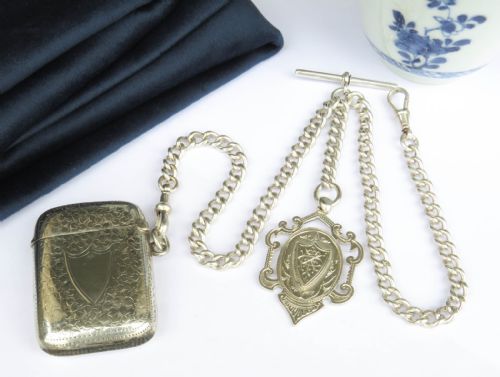
A single chain runs from a single anchor point, such as a T-bar in a buttonhole, to a watch or pendant. Double chains feature two strands meeting at a central connector or T-bar, offering a more balanced look.
Double variations often incorporate attached fobs, lockets, or vestas. Both formats utilise robust dog clips for secure attachment.
How can I date my watch chain?
Examine the links and clasps for British hallmarks, which include assay office symbols, date letters, and purity marks. These stamped indicators reveal the exact year and location of testing.
Stylistic cues such as the geometric shapes of Art Deco pieces or the romantic motifs of Victorian designs also help narrow down the period. Hallmarks on every individual link provide the most definitive chronological evidence.
What metals were used for these chains?
Makers utilised sterling silver alongside various purities of gold, including 9ct, 15ct, and 18ct yellow and rose variants. Rolled gold and silver-gilt options also appear across the selection.
Purity stamps and assay office marks confirm the metal content on solid pieces, while rolled gold items rely on plated construction techniques over a base metal core.