




Antique Japanese Silver
Antique japanese silver brings tactile craft to your table through intricate bowls, vases, and delicate plaques.
Antique Japanese Silver
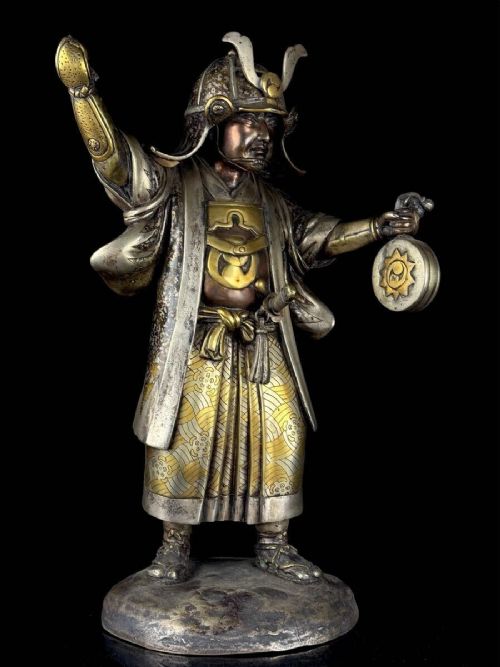
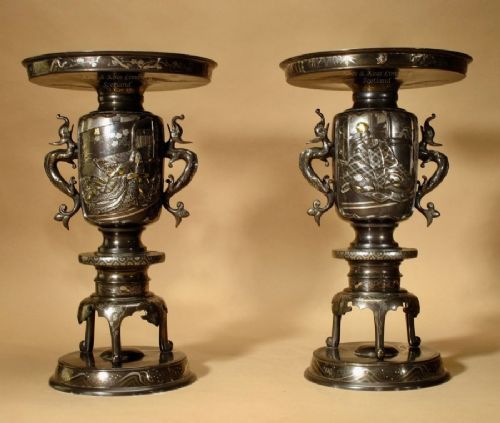
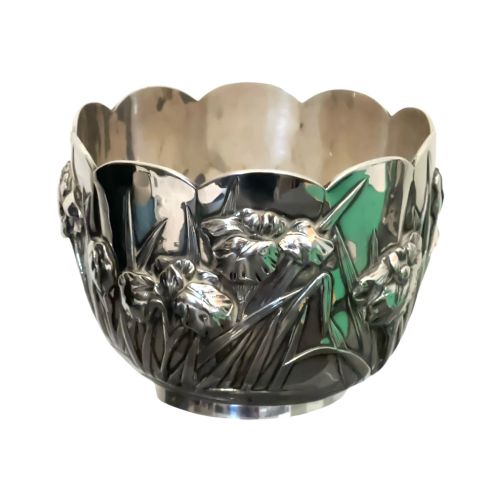
When you search for antique japanese silver, you encounter items defined by intricate metalwork spanning the nineteenth century and the Meiji period. Vases, bowls, and pin dishes dominate the selection, often combining silver with bronze, gold inlay, or patinated iron. These objects reflect a period of extraordinary craftsmanship where traditional metalworking techniques met Western demand.
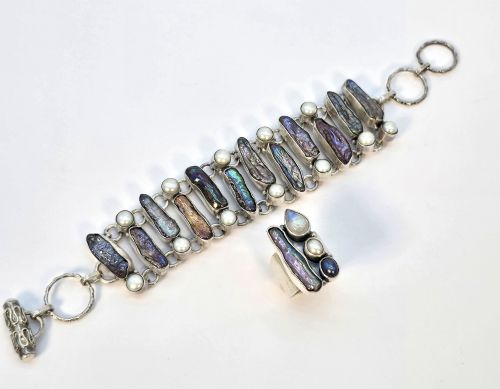
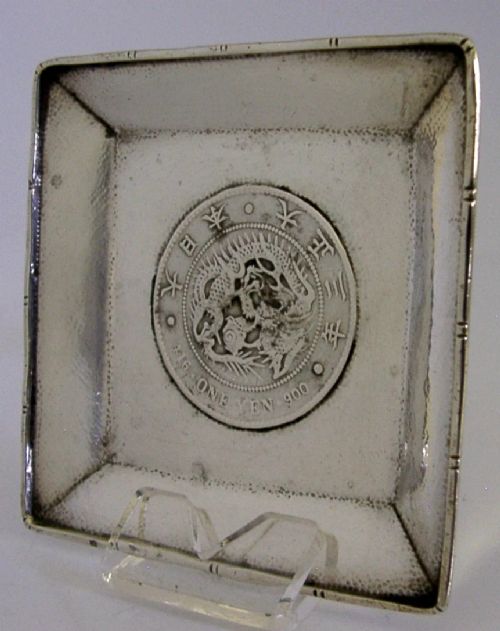
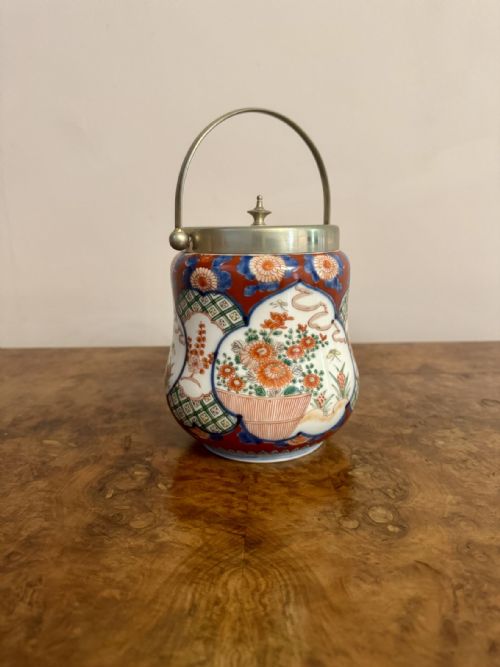
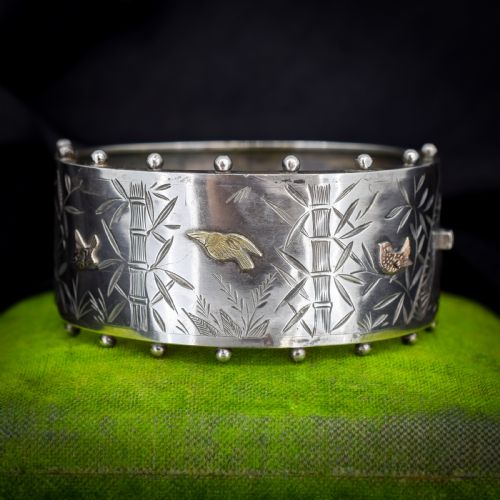
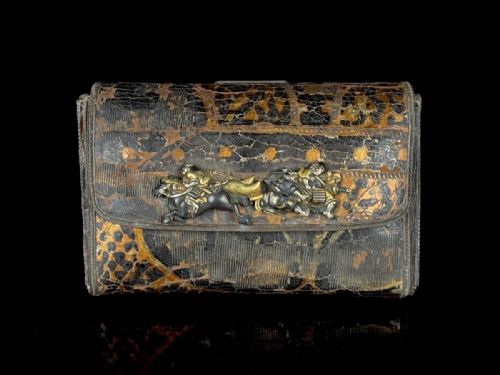
The objects on this page range from modest sterling coin dishes to substantial bronze and mixed-metal vessels, with periodic appearances of related Victorian aesthetic pieces. You will find small decorative plaques alongside functional biscuit barrels and tobacco pouch clasps. Each piece showcases the distinct design sensibilities of Meiji artisans and contemporary British makers influenced by Eastern aesthetics.
How they were made
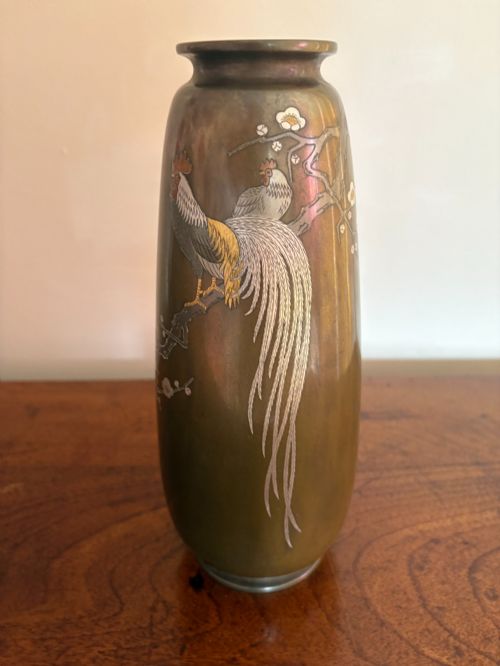
Makers utilised primary materials such as silver, sterling silver, and bronze, frequently enhancing them with gold inlay and silver inlay. Techniques involve patination of iron and bronze surfaces, where metal is chemically treated to achieve deep, dark tones that contrast sharply with applied precious metals.
Artisans also worked with porcelain and silver plate, particularly in items designed for Western dining and decorative use. Mixed-metal construction allows different alloys to be fused seamlessly, creating nuanced depictions of birds, flora, and traditional motifs.
Antique Japanese Silver Retail Price Guide 2026
Typical asking prices for japanese silver among the pieces listed under this phrase on Sellingantiques today, from the lower quarter to the upper quarter. They describe what is for sale here now, not the wider market.
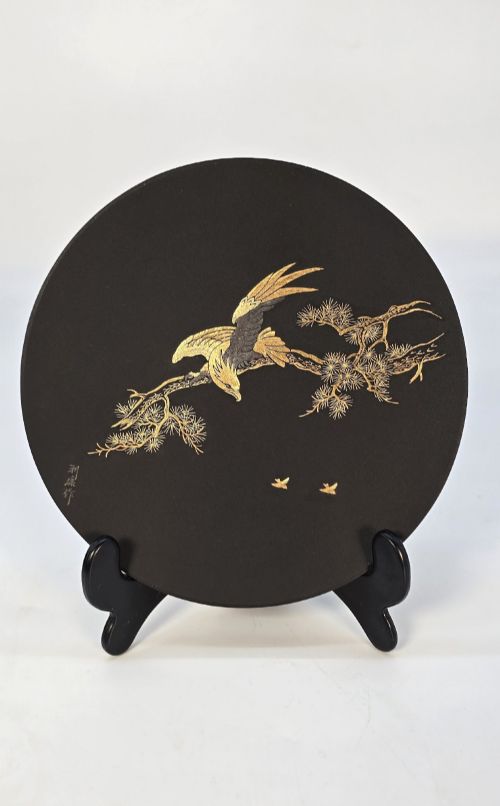
A resolute goshawk rendered in silvered bronze stands ready to supervise your desk alongside quiet nineteenth-century tobacco pouches.
What varies in quality
Quality rests in the precision of the mixed-metal inlay and the depth of the patination on bronze and iron surfaces. Superior examples demonstrate secure, flush integration of gold and silver elements into the base metal without visible gaps or weak soldering.
The articulation of chased and engraved details separates standard decorative pieces from exceptional works of art. Weight, balance, and the crispness of signature marks further distinguish finer vessels and plaques from mass-produced export wares.
KANASAWA·Roberts and Belk·Ando
The Antique Japanese Silver Glossary
- Meiji Period
- The era in Japanese history from 1868 to 1912 characterised by rapid modernisation and the opening of trade with the West. This period produced much of the finest decorative metalwork available to collectors today.
- Patination
- The process of artificially ageing or treating a metal surface to produce a coloured or textured finish. Makers applied this to bronze and iron to create dramatic contrasts with silver inlay.
- Tsuba
- The traditional guard at the base of the hilt of a Japanese sword. These metal components are often heavily worked with mixed metals and collected as independent decorative objects.
- Koro
- A traditional Japanese incense burner typically supported by three legs and fitted with a pierced lid. These vessels frequently combine bronze bodies with intricate silver and gold overlays.
- Sweetmeat dish
- A small serving dish intended for confectionery, nuts, or sweet preserves. Victorian and Edwardian examples often feature silver plate or sterling construction.
Antique Japanese Silver: Frequently Asked Questions
How do I identify Meiji period metalwork?
Meiji period metalwork is distinguished by naturalistic motifs such as birds, flowers, and landscapes rendered in mixed metals. You will frequently see combinations of bronze, silver, and gold inlay on vases, boxes, and plaques.
Signatures or artist seals are often incorporated directly into the design of finer pieces, providing clues to their origin and maker.
Were these items made for export?
Many Japanese metalwork items from this era were produced specifically for international export following the opening of Japanese trade ports. European and American demand shaped the creation of specific forms like biscuit barrels, pin dishes, and decorative plaques.
At the same time, Western designers like Dr Christopher Dresser drew direct inspiration from Japanese aesthetics, creating blended Victorian silver plate items.
How should I clean antique silver and bronze?
Cleaning antique silver and patinated bronze requires minimal intervention to preserve the original surface and historical finish. Avoid harsh chemical dips that strip patination from bronze or iron elements.
Dust gently with a soft cloth and consult a specialist conservator before attempting any aggressive polishing on mixed-metal pieces.