


Antique Japanese Lidded Vessel
An antique Japanese lidded vessel brings domestic and ritual forms into the room, ranging from bronze incense burners to porcelain sugar bowls.
Antique Japanese Lidded Vessel
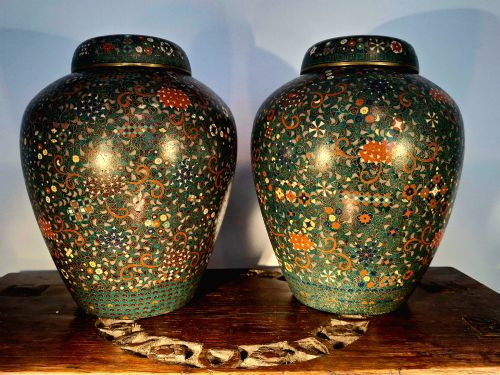
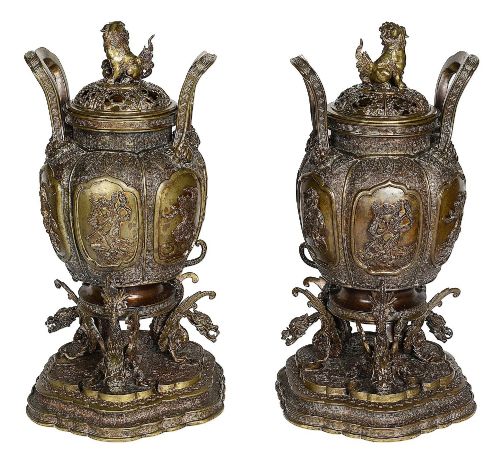
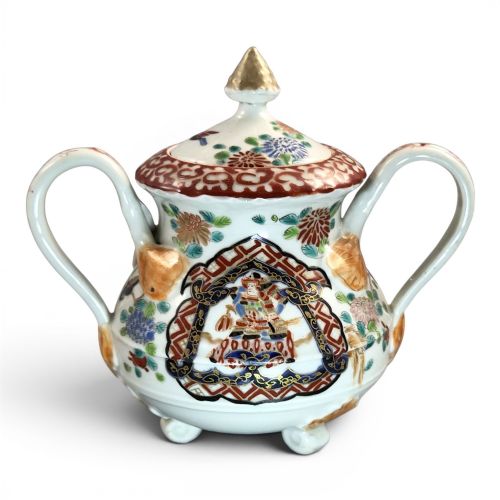
When you search for an antique Japanese lidded vessel, you encounter a diverse group of objects created for ritual, domestic, and decorative use. These include bronze and silver incense burners, Imari porcelain sugar bowls, cloisonne enamel ginger jars, and iron kettles.
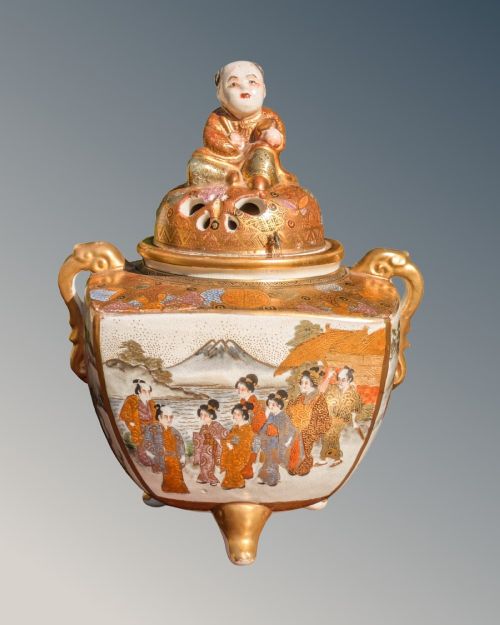
The pieces on this page span the Edo and Meiji periods, stretching from the mid nineteenth century into the Edwardian era. You are most likely to meet cloisonne enamel ginger jars and Satsuma earthenware vessels bearing covers.
Form follows function across these items, taking shape as pedestals, urns, boats, and jars. Each category reflects the specific craft traditions of its origin, whether Kyoto, Imari, or broader Meiji workshops.
How they were made
Metalworking techniques shape many of these items, utilising bronze, copper, cast iron, and brass. Makers cast bronze and silver into koro, while workshops hammer and shape iron to form tetsubin kettles.
Ceramic pieces rely on porcelain and earthenware bodies. Imari and Satsuma wares receive hand-painted decoration, sometimes augmented with gold leaf.
Cloisonne enamel work employs fine wires soldered to metal bases to form cells, which artisans then fill with coloured enamel pastes before firing.
Listings combine Edo and Meiji periods alongside Edwardian documentation, featuring materials from cast iron and bronze to delicate porcelain and enamel.
What varies in quality
Quality rests upon the precision of the execution, whether in the fine alignment of cloisonne wirework or the crispness of a cast bronze surface. Maker signatures and marks, such as those from Kyoto studios or Fukagawa, distinguish standard production from exceptional output.
The preservation of delicate details, including gold leaf application and enamel integrity, separates the finest examples from heavier, simpler items. Material weight and the balance of form also determine the distinction of a piece.
Fukagawa·Kibundo·Kotobuki-do·Shozan
The Antique Japanese Lidded Vessel Glossary
- Koro
- An incense burner, typically fitted with a lid and standing on small feet. These vessels often feature openwork covers to allow smoke to escape.
- Imari
- A style of Japanese porcelain decorated in underglaze blue, iron red, and gold. This ware was produced primarily in the town of Arita.
- Satsuma
- Earthenware pottery with a characteristic ivory-coloured, crackle-glazed surface. Decoration typically incorporates detailed enamel painting and gilding.
- Cloisonne
- A decorative metalwork technique using wire compartments filled with enamel. Artisans fire the piece multiple times to achieve a smooth, vitreous surface.
- Tetsubin
- A traditional Japanese cast iron kettle used for boiling water. These vessels often display heavy texture and robust handles.
Antique Japanese Lidded Vessel: Frequently Asked Questions
What is a koro used for?
A koro serves as a traditional Japanese incense burner, designed with a fitted cover to contain burning materials while releasing scent.
These pieces appear in bronze, silver, and Satsuma earthenware, often featuring pierced lids to diffuse the smoke effectively.
How do I identify Edo period pieces?
Edo period items on this page often date from the mid nineteenth century, typically around eighteen fifty to eighteen sixty. They frequently showcase early cloisonne enamel work on copper or bronze bases.
Look for the distinct material qualities and styles associated with nineteenth-century workshop production before the Meiji period transitions.
What is Imari porcelain?
Imari porcelain is a distinctive ceramic style characterised by a palette of underglaze blue, iron red, and gold leaf highlights. These vessels were shipped from the port of Imari.
Sugar bowls and lidded jars in this group demonstrate the bold patterns typical of these kilns.
How do I care for cloisonne enamel?
Cloisonne enamel requires gentle handling to protect the delicate wire borders and glass paste surfaces from impact. Dusting with a dry, soft cloth preserves the finish.
Keep these vessels away from direct moisture and extreme temperature changes to maintain the integrity of the metal and enamel.