


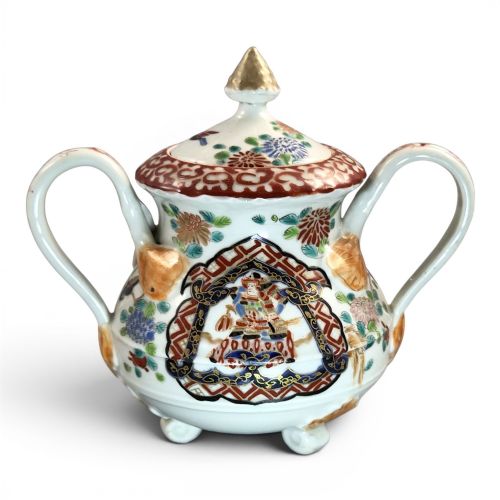


Antique Jam Jar
These antique jam jar examples bring nineteenth and early twentieth-century dining tables to life with cut glass, silver plate, and painted ceramics.
Antique Jam Jar
The selections span from Georgian cut glass lidded butter dishes and eighteenth-century mustard pots to Edwardian silver-mounted glass vessels. Makers also produced whimsical ceramic pieces, such as pottery jars painted in cherry patterns during the 1930s.
Materials range from lead crystal and cranberry glass to sterling silver and porcelain. Styles represented on this page stretch from Regency and Victorian designs through to Art Deco and Meiji period Japanese porcelain.
How they were made
Glass vessels rely heavily on cutting and moulding techniques to create deep facets that catch the light, frequently paired with lead crystal or cranberry glass compositions. Potters utilised traditional ceramic methods, applying hand-painted motifs like cherries or incorporating specific factory marks.
Metal mounts and stands require skilled silversmithing and silver plating to fit securely around glass bodies. Makers often fashioned hinged lids, swinging handles, and matched spoons from sterling silver or silver plate to complete the condiment sets.
Antique Jam Jar Retail Price Guide 2026
Typical asking prices for jam jar among the pieces listed under this phrase on Sellingantiques today, from the lower quarter to the upper quarter. They describe what is for sale here now, not the wider market.
Some preserve pots abandon traditional elegance entirely, taking the cheerful shape of a crisp red apple or a bowl of cherries.
What varies in quality
The standard of cutting on the glass body dictates visual depth and brilliance, distinguishing heavy lead crystal from simpler pressed glass. Crisp facet edges and clear ring when struck signal superior glassmaking skill.
Metal components show variation through the weight of the silver or the uniformity of the silver plating. Hallmarks provide secure dating and attribution, while hand-painted ceramic decoration demonstrates individual artistic execution rather than stencilled repetition.
Hukin and Heath·Asprey and Co·Plichta Pottery·Fukagawa
The Antique Jam Jar Glossary
- Cranberry Glass
- A rich red glass produced by adding gold chloride to the molten batch. It gained popularity during the Victorian era for tableware.
- Lead Crystal
- Glass containing metallic lead oxide to increase weight, refractive index, and clarity. This material allows deep, sharp cutting.
- Silver Plate
- A base metal coated with a thin layer of silver. Manufacturers utilised this technique to offer affordable elegance on the dining table.
- Preserve Pot
- A covered container specifically designed to hold jam, marmalade, or jelly at the table. They frequently include a matching spoon.
- Imari Porcelain
- Japanese export porcelain decorated in underglaze blue, iron red, and gold. These pieces often feature traditional pictorial motifs.
Antique Jam Jar: Frequently Asked Questions
How do I date an antique jam jar?
Silver mounts and lids often carry hallmarks indicating the assay office and year of manufacture. Stylistic indicators like Art Deco geometric lines or Georgian cutting styles also help narrow down the period.
Glass manufacture techniques and maker marks on ceramic bases provide additional clues for dating these tabletop items accurately.
What is cranberry glass?
Cranberry glass is a pinkish-red transparent glassware created by introducing gold into the molten glass mixture. It became a fashionable choice for Victorian and Edwardian dessert and jam dishes.
Artisans often combined this vibrant glass with silver-plated stands and mounts to create striking contrasts on the dining table.
Did all jam jars include spoons?
Many preserve pots and jam dishes were originally retailed with matching spoons made from sterling silver or silver plate. Over the decades, these small utensils were easily separated from their primary vessels.
Finding a complete set with its original spoon adds significantly to the historical integrity of the piece.
How were these jars used?
These vessels served preserves, jams, honey, and condiments during formal breakfast and afternoon tea services in past centuries. They sat centrally on tables, often resting on matching stands to protect linens.
Today, collectors utilise them for contemporary dining or display them as examples of historical glassware and ceramics.