
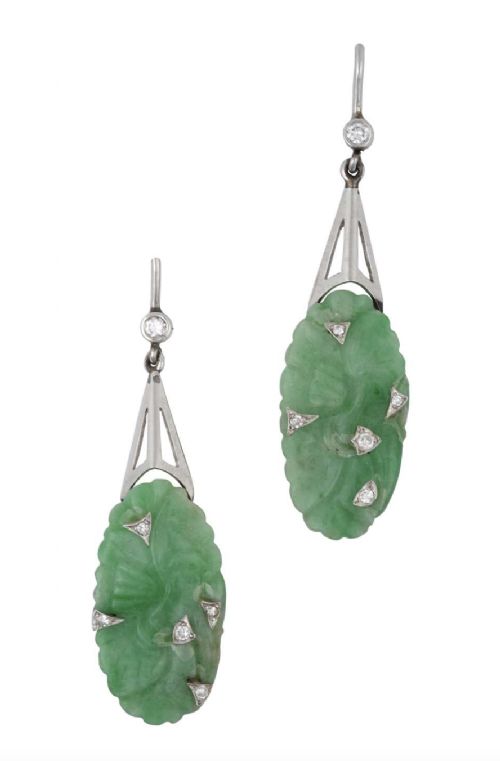


Antique Jade Pendant
An antique jade pendant brings together centuries of mineral carving tradition and precious metal mounts.
Antique Jade Pendant
When you search for an antique jade pendant, you enter a field defined by carved hardstone and precious settings spanning multiple centuries. The pieces on this page range from traditional Chinese nephrite and jadeite carvings to Edwardian and Art Deco platinum or gold mounts.
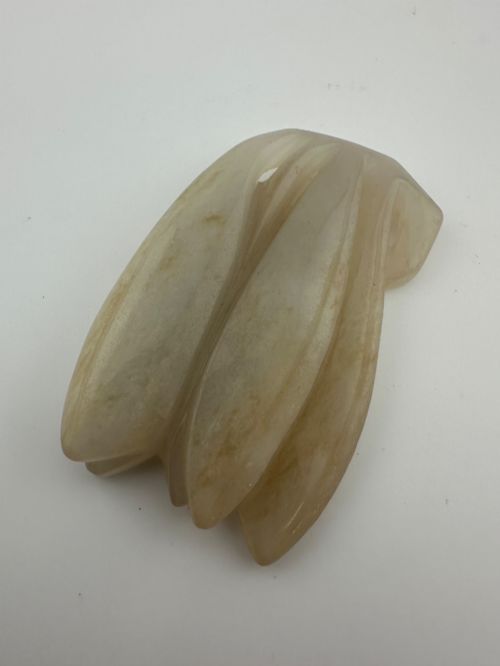
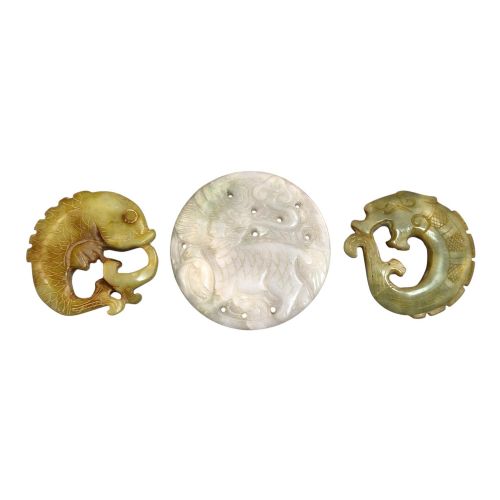
Buyers are most likely to encounter Chinese carved forms such as dragons, bi discs, cicadas and auspicious plaques, alongside geometric twentieth century European designs set with diamonds. These items combine ancient mineral working techniques with the refined metalwork of the Qing dynasty, the Republic period and early twentieth century Western workshops.
Materials and technique
The construction relies on hardstone carving combined with precious metalwork in gold, platinum and silver. Artisans shaped jadeite, nephrite and pale celadon jade using abrasive sands and rotational tools to achieve intricate relief details.
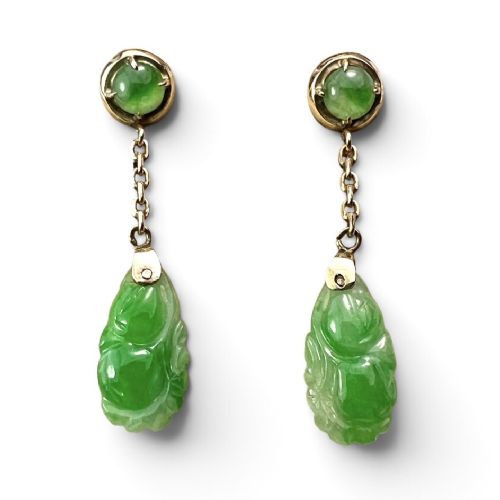
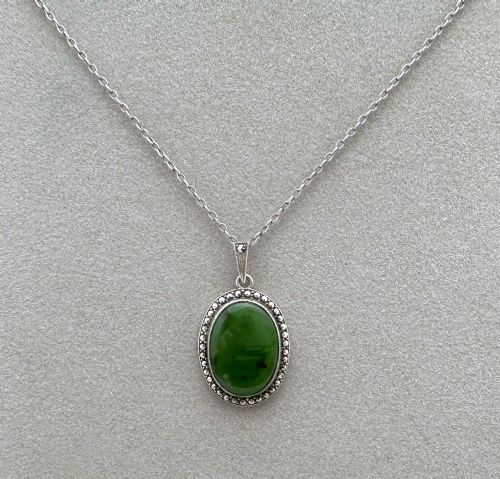
Mounts incorporate claw settings, pierced galleries and diamond accents, particularly in Art Deco and Edwardian pieces where platinum frames the carved green stone.
Materials recorded across the inventory include platinum, gold, silver, diamonds, nephrite jade, jadeite, and celadon jade.
Distinctions in quality
Quality rests upon the translucency and natural colour saturation of the jade, alongside the crispness of the carving. Superior examples show fluid lines in figurative motifs like dragons and deities, with no dull areas in the stone.
The sophistication of the metal setting elevates the piece, distinguishing standard commercial mounts from intricate, gem-set platinum or high carat gold frameworks.
The Antique Jade Pendant Glossary
- Jadeite
- A pyroxene mineral valued for its vibrant green hues and translucent structure. It forms one of the two distinct mineral species classified as jade.
- Nephrite
- An amphibole silicate mineral known for its toughness and varied colour palette ranging from white to dark green. It represents the traditional material of early Chinese carvings.
- Celadon
- A pale grey-green glaze or stone colour reminiscent of specific ceramic tones. In jade, it describes a soft, translucent greenish-white shade.
- Bi disc
- A flat circular jade object with a circular hole in the centre. Ancient Chinese examples served as ritual items symbolising heaven.
- Pixiu
- A mythical winged creature featured in traditional Chinese carving. It is believed to attract wealth and bring good fortune to the owner.
Antique Jade Pendant: Frequently Asked Questions
How do I care for antique jade?
Clean jade gently using a soft damp cloth without harsh chemical detergents or ultrasonic jewellery cleaners. Store the piece separately in a fabric lined box to prevent scratches from harder gemstones.
Avoid exposing mounted stones to sudden temperature shifts or strong solvents that could weaken historical adhesives or delicate metal settings.
What is the difference between jadeite and nephrite?
Jadeite and nephrite are two entirely distinct mineral species that share similar appearance and toughness. Jadeite typically exhibits a brighter, more crystalline translucency while nephrite is fibrous and dense.
Historical pieces utilise both materials depending on the region of origin and the period of manufacture, with nephrite dominating earlier Chinese dynasties.
How do I date an antique pendant?
Dating relies on stylistic clues found in both the carving motifs and the metal mountings. Art Deco and Edwardian pieces feature distinct platinum geometry and diamond arrangements that differ from Qing dynasty work.
Examining tool marks under magnification and understanding traditional iconography helps narrow the timeframe of creation.
Can I wear an antique pendant daily?
Jade is an exceptionally tough mineral that withstands regular wear when mounted securely in precious metal. However, antique settings require mindful handling during daily activities to protect delicate carved edges.
Consider having a professional jeweller inspect the prongs or suspension loop periodically to ensure the stone remains firmly anchored.