
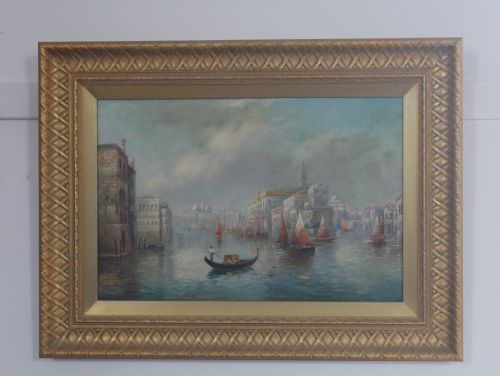


Antique Italian Canal Painting
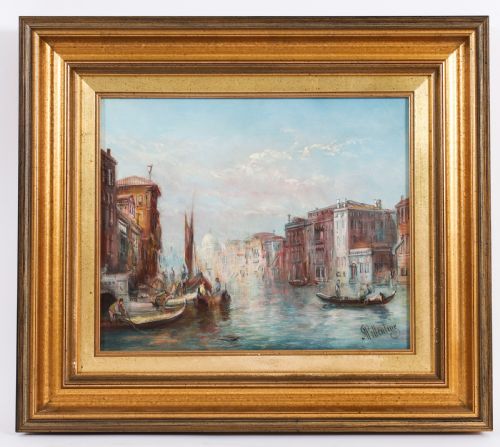
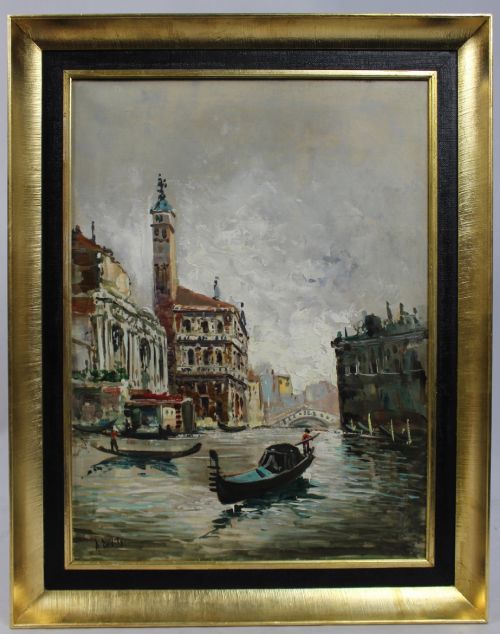
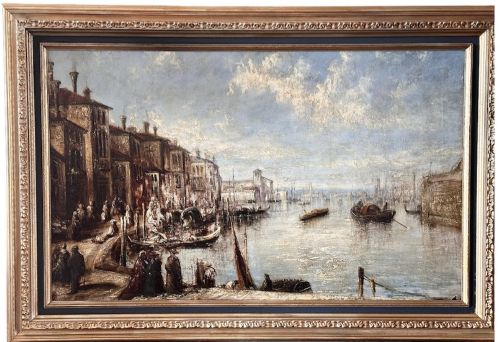
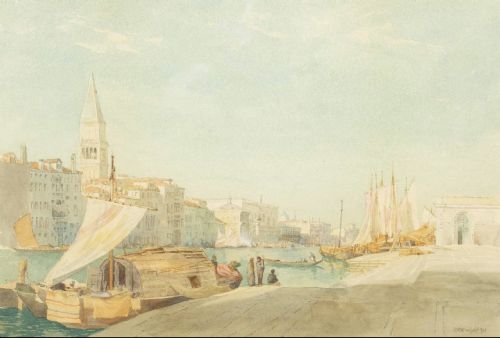
An antique italian canal painting captures the light and water of Venice on canvas or paper.
Antique Italian Canal Painting
An antique italian canal painting depicts scenes of Venice, including the Grand Canal, the Doge's Palace, and the Bridge of Sighs. These works record the architecture, gondolas, and waterways of the city across the nineteenth and twentieth centuries.
The most common examples on this page are oil paintings on canvas and watercolours on paper, often framed in wood or giltwood. They range from Victorian views to impressionist interpretations of Venetian lagoons and palazzos.
How they were made
Painters used oil paint on canvas or board to build rich textures and deep water effects, whilst others applied watercolour, pastel, and gouache on paper for lighter atmospheric treatments.
What varies in quality
The strength of a piece rests in the handling of light on the water and the precision of architectural perspective in landmarks such as Santa Maria della Salute or the Mocenigo Palace.
Named artists with documented exhibition histories or distinctive impressionist brushwork command greater attention than anonymous works, though handling and condition across the canvas or paper remain the ultimate measure.
Alfred Pollentine·Francis Moltino·Richard Henry Wright·Claude Jousset·Antonietta Brandeis·Jane Vivian·Vittore Zanetti Zilla·Hercules Brabazon Brabazon·David Law·Wilfred Knox·Henry Wimbush·Helen Donald-Smith
The Antique Italian Canal Painting Glossary
- Giltwood
- Wood carved and covered with a thin layer of gold leaf. This material frequently appears in the frames surrounding Victorian and nineteenth-century works.
- Gouache
- An opaque watercolour paint mixed with a binding agent. Artists use this medium alongside watercolours to add solid highlights to Venetian canal scenes.
- Lagoon
- An expanse of salt water separated from the open sea by low sandbanks. Venice sits within such a body of water, which forms the subject of several paintings here.
- Impressionism
- A style of painting emphasising immediate visual impressions through thin brush strokes and ordinary subject matter. Several nineteenth and early twentieth-century painters apply this approach to Venetian townscapes.
Antique Italian Canal Painting: Frequently Asked Questions
What subjects appear in these paintings?
The works depict iconic Venetian locations such as the Grand Canal, the Dogana, and the Bridge of Sighs. Gondoliers and historic palazzos frequently feature alongside local waterways.
Views extend from bustling squares to quiet lagoon scenes, capturing the architecture and everyday activity of the city.
How do I identify the period of the painting?
Periods are identified through stylistic cues, artist signatures, and framing materials. Nineteenth-century works often show detailed Victorian realism or early impressionist techniques.
Twentieth-century pieces introduce looser brushwork and varied paper mediums, while inscriptions on the reverse or frame frequently record dates.
Are these paintings executed on canvas or paper?
The listings include both oil paintings on canvas or board and watercolours on paper. Pastels and gouache also appear in the selection.
Canvas works typically display heavier textures, whereas watercolours offer translucent washes suited to capturing light on water.
How should I care for an antique painting?
Keep works away from direct sunlight and steady humidity levels to protect both the canvas and the paper from fading or foxing. Glass on watercolours should remain sealed against dust.
Avoid hanging pieces above active heat sources, and let professional restorers handle any cleaning of the painted surface or giltwood frame.