





Antique Iron Strap Trunk
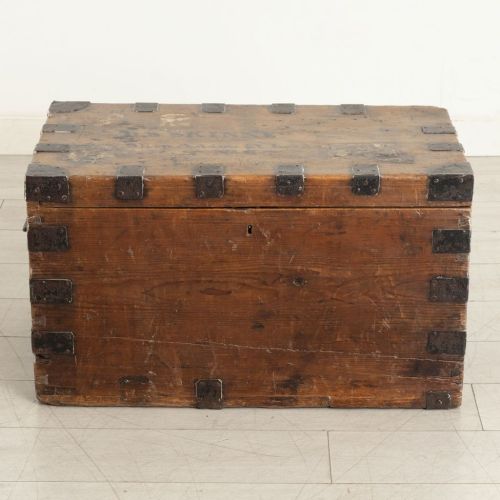
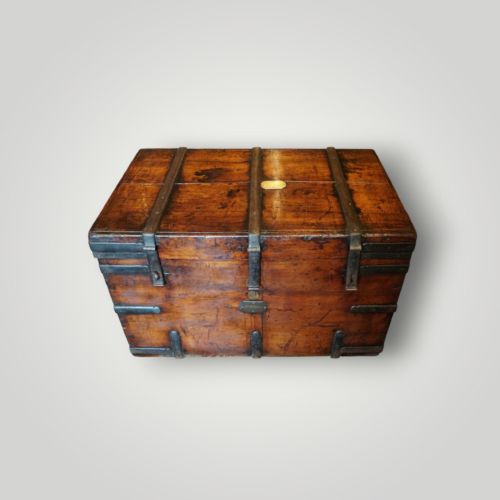
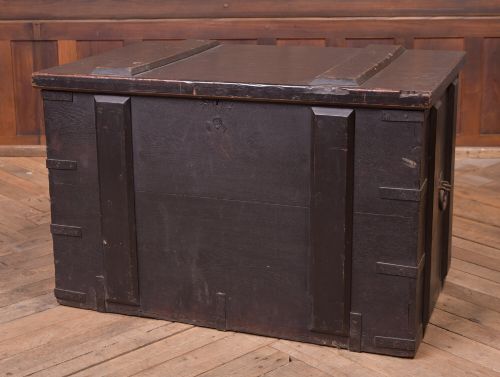
An antique iron strap trunk is a robust wooden storage box reinforced with metal bands, built to protect belongings through arduous journeys.
Antique Iron Strap Trunk
An antique iron strap trunk combines utilitarian timber construction with heavy metal reinforcement designed to secure contents during travel and domestic storage. Buyers seeking an antique iron strap trunk encounter sturdy receptacles spanning the eighteenth, nineteenth and early twentieth centuries from diverse origins.
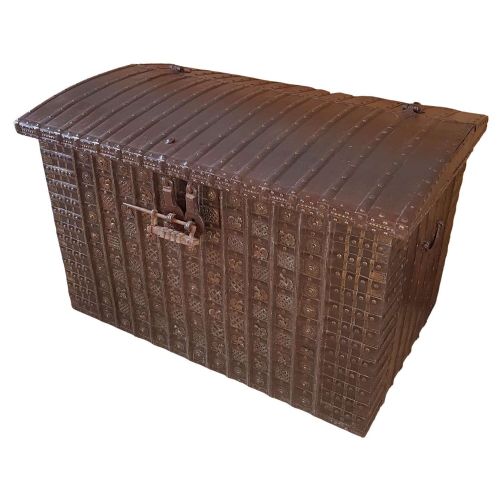
The versions most frequently found on this page are pine and oak travel chests, storage boxes and dowry chests from the Victorian period and the wider nineteenth century. These items range from domestic silver chests fitted for cutlery to dome-top coffers and large merchant trunks.
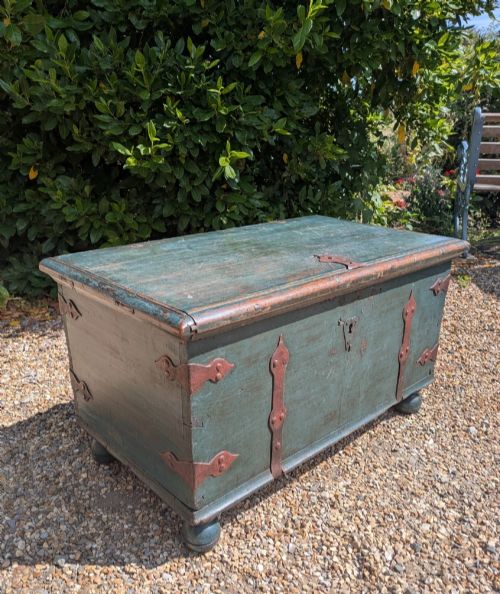
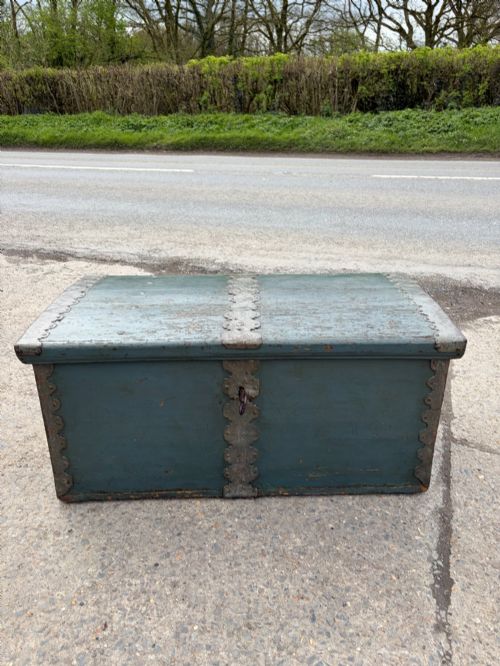
Geographic origins vary widely across the selection, encompassing English oak silver chests, Scandinavian painted pine boxes, French elm cannonball boxes and substantial teak or hardwood trunks from India and Rajasthan. Regional styles dictate the character, from rustic country pine to formal colonial and Anglo-Indian designs.
How they were made
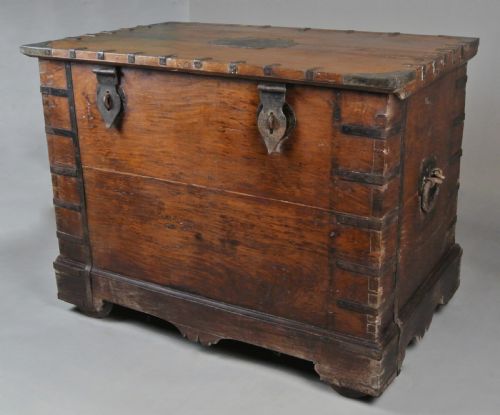
Constructed primarily from solid timbers such as pine, oak, teak and elm, these chests rely on durable joinery like dovetails and robust panel assembly. The primary woods are reinforced with hand-forged iron straps, bands and corner braces fixed with iron nails or rivets to absorb the heavy impacts of transit.
Functional hardware is integral to the manufacture, featuring heavy side lifting handles, articulated hasps, iron lock plates and working locks sometimes accompanied by brass corners. Surface treatments range from natural waxed or polished hardwoods to original layers of paint on Scandinavian and folk art pieces.
Listings feature woods including pine, oak, teak, elm and walnut, paired with wrought iron and brass hardware across 18th, 19th and early 20th-century periods.
What varies in quality
The integrity of the original construction and surviving surface finish dictate the standing of a piece, distinguishing honest utility items from heavily restored examples. Retaining original paint, working locks with original keys and undisturbed structural ironwork elevate the standing of a trunk.
Fittings and interior appointments create a clear distinction at the higher end of the range, particularly in specialised storage like oak silver chests lined for cutlery and bearing retailer or maker stamps. The quality of the blacksmith work on the strapwork and the selection of dense primary hardwoods further separate standard travel boxes from exceptional commissions.
The Antique Iron Strap Trunk Glossary
- Strapwork
- Metal bands fixed across the exterior of a chest to reinforce the wooden panels and corners. This ironwork provides structural rigidity during heavy transit.
- Dome Top
- A curved lid profile designed to shed water during travel and increase internal storage capacity. These lids frequently appear on nineteenth-century Scandinavian and American boxes.
- Silver Chest
- A heavy oak or pine storage box fitted internally with baize-lined trays and compartments for domestic silverware. Retailers and silversmiths often supplied these for secure transport.
- Dowry Chest
- A large trunk commissioned or gifted upon marriage to store household linens and valuables. Examples frequently originate from regional traditions in India, Scandinavia and the wider European countryside.
- Coffer
- A heavy wooden chest traditionally used for storing money, documents or precious objects. These boxes generally feature robust locking mechanisms and iron hasps.
Antique Iron Strap Trunk: Frequently Asked Questions
How were antique iron strap trunks used?
These trunks served primarily for transporting personal belongings, military equipment, silver and commercial goods across land and sea. Their reinforced construction protected contents from the rigours of stagecoach, ship and railway travel.
In domestic settings, families utilised them as stationary storage for heavy textiles, blankets and valuables. Many large examples functioned as marriage or dowry chests within regional households.
How do I live with an antique trunk?
An antique trunk integrates easily into modern interiors as a practical coffee table, end table or bedroom storage solution. Their flat or dome tops provide useful surface space while the interior conceals everyday clutter.
Placement away from direct heat sources and damp environments protects the antique timber and metalwork. Periodic waxing maintains the condition of exposed wood and retards oxidation on the iron straps.
How can I tell the period of a trunk?
Dating relies on assessing the construction methods, timber species, hardware styles and any surviving maker labels. Hand-forged ironwork and eighteenth-century panel construction differ visibly from late nineteenth-century machine-rolled iron straps and factory pine.
Regional characteristics and secondary woods also offer clues to the era of manufacture. Eighteenth-century pieces often display hand-cut dovetails and forged hinges, whereas Edwardian iterations utilise standardised industrial fastenings.
Are these trunks waterproof for travel?
Most antique trunks were designed to withstand weather during historic transit, featuring tight wooden joints and overlapping lids. However, centuries of timber movement mean they no longer guarantee modern waterproof protection.
Environmental changes in heated homes can cause old wood to shift further, affecting the seal of the lid. They suit indoor display and storage far better than contemporary outdoor travel.