


Antique Iron Hearth Screen
An antique iron hearth screen provides both utility and decoration, stopping stray embers while grounding the fireplace with period character.
Antique Iron Hearth Screen
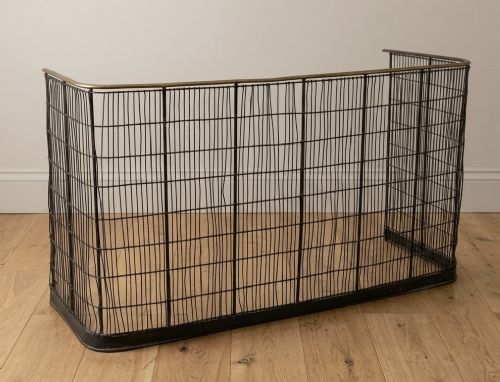
When you search for an antique iron hearth screen, you are looking at practical fireplace guards and reflectors originating from the nineteenth and early twentieth centuries. These pieces encompass sturdy nursery fenders, folding fireguards, and standing screens designed to protect rooms from sparks and excessive heat.
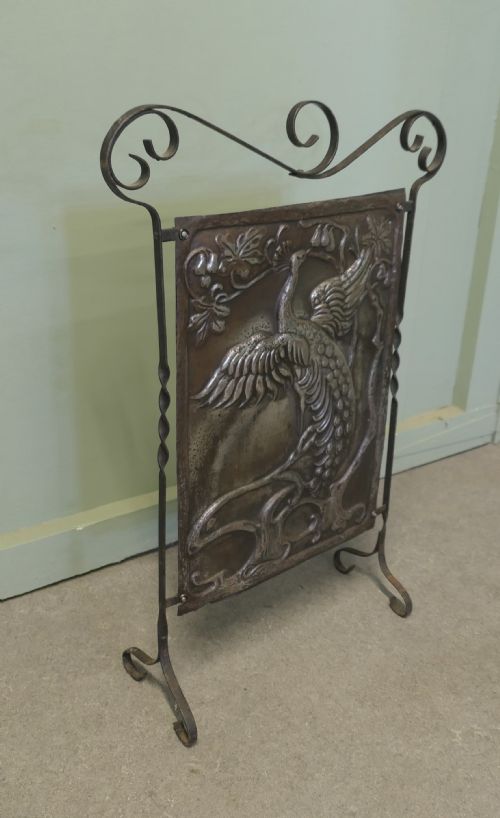
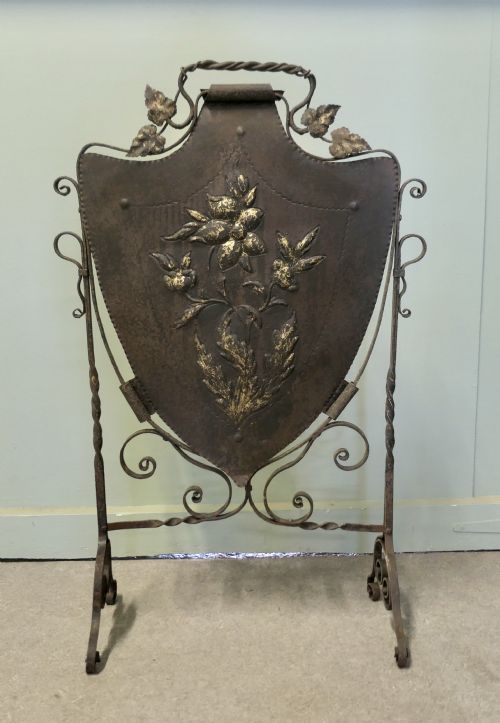
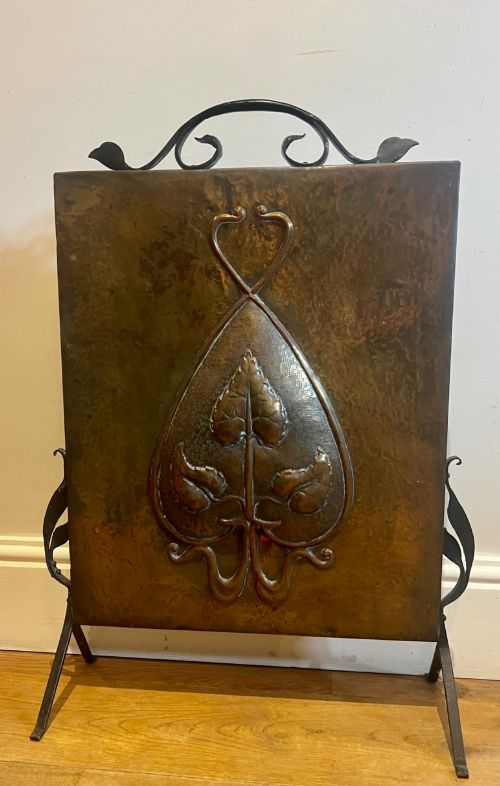
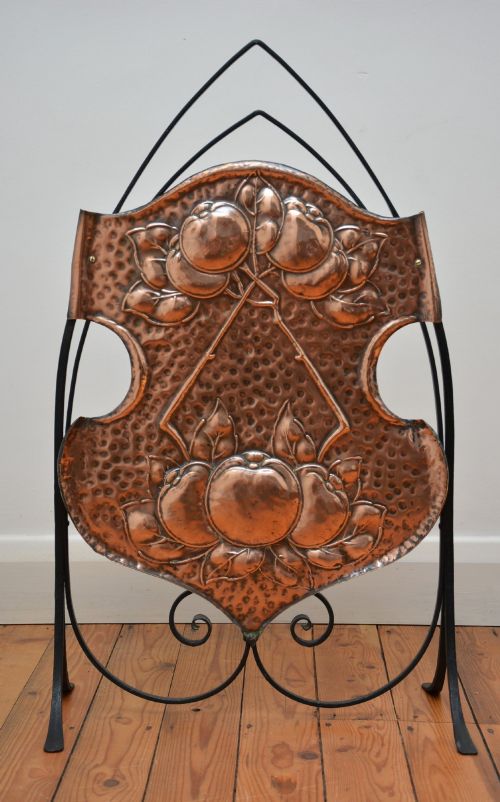
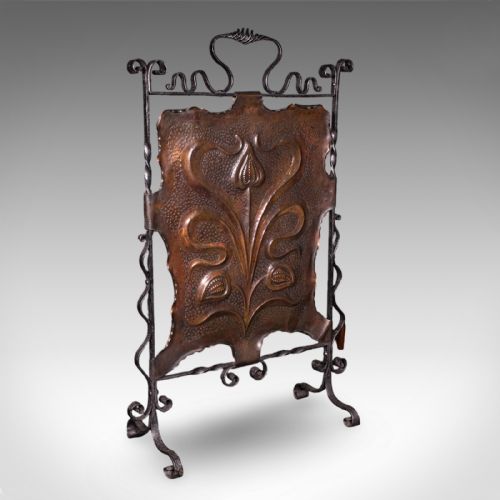
The versions you are most likely to meet on this page span Victorian, Edwardian, and later periods, often rendered in iron, wrought iron, or cast iron. Many examples incorporate copper panels, wire mesh, or brass details, reflecting utilitarian needs combined with decorative Arts and Crafts or Art Nouveau aesthetics.
How they were made
Makers utilised forged and wrought iron alongside cast iron to build the primary frames and folding structures, frequently employing wire mesh or solid metal panels to contain sparks. Riveting, welding, and twisting metal rods formed the structural foundations of these hearth accessories.
Many examples incorporate contrasting materials, pairing iron frames with beaten copper panels or adding brass tops and wire mesh. Polished finishes and decorative motifs, such as peacock designs or Gothic shields, were applied by hand to enhance the visual impact of the metalwork.
Listings feature iron, copper, and brass materials across Victorian and Edwardian periods, alongside Arts and Crafts and Gothic Revival styles.
What varies in quality
The distinction between standard and superior pieces rests on the weight of the metal and the complexity of the handwork. Heavier wrought iron frames and thick gauge wire mesh demonstrate superior structural integrity compared to lighter alternatives.
Artistic execution also separates the range, seen in the refined detail of beaten copper panels, the precision of Art Nouveau or Gothic ornamentation, and the overall robustness of the hinges and folding mechanisms.
The Antique Iron Hearth Screen Glossary
- Wrought iron
- Iron that has been heated and worked with tools, known for its fibrous structure and durability in heavy hearth furnishings. This material bends rather than snaps under high stress.
- Nursery fender
- A low metal barrier placed around a hearth to keep children and pets at a safe distance from the fire. These often feature integrated clothes rails or wire mesh guards.
- Fireplace reflector
- A polished metal panel, often copper or brass, placed at the back of a hearth to reflect heat back into the room. They brighten dark fireplace recesses.
- Wire mesh
- A woven metal grid used in fireguards to allow visibility of the flames while containing sparks and embers. It forms a lightweight barrier within rigid iron frames.
Antique Iron Hearth Screen: Frequently Asked Questions
Are these screens safe for open fires?
Most pieces are built from robust iron and steel mesh designed to withstand hearth temperatures and stop stray embers. They function effectively as spark guards during active fires.
Heavier nursery fenders additionally establish a physical distance barrier in rooms with children or pets. Check the stability of the frame and mesh integrity before regular use.
How do I date an iron hearth screen?
Dating relies on observing construction methods, material combinations, and decorative styles characteristic of specific eras. Victorian and Edwardian examples often feature Gothic Revival or Arts and Crafts motifs.
Heavier wrought iron construction combined with beaten copper panels typically points toward the late nineteenth or early twentieth century. Compare the decorative hardware and fixing techniques with documented period pieces.
What is the difference between a fender and a screen?
A fender sits flat on the hearth floor around the perimeter of the fireplace, sometimes incorporating a raised barrier or clothes rail. It primarily restricts access to the hearth area.
A screen stands upright to shield the room from direct heat and flying sparks. Some designs combine both functions through folding frames and integrated mesh guards.