



Antique Iron Chandelier
An antique iron chandelier brings the weight and rustic presence of centuries past into a room, spanning grand French chateaux and simple arts and crafts forms.
Antique Iron Chandelier
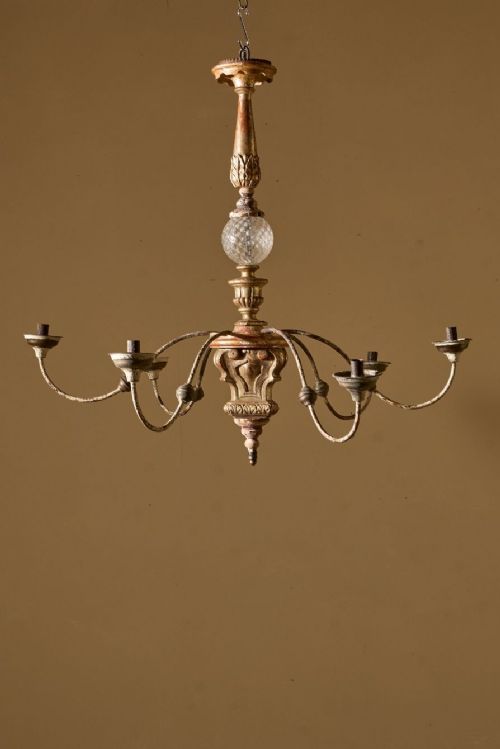
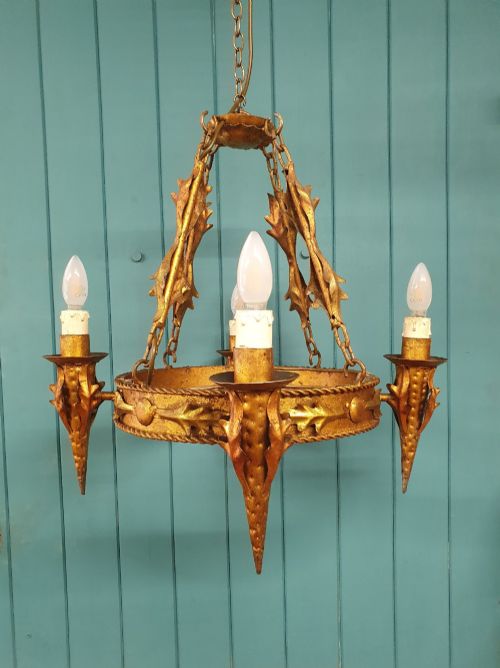
An antique iron chandelier is a heavy overhead light fitting forged from wrought iron, cast iron or steel, often accented with glass, crystal or gilt metal. These fixtures range from simple eighteenth century wagon wheel designs and pricket candle holders to elaborate French provincial and Italian Florentine multi-light fixtures.
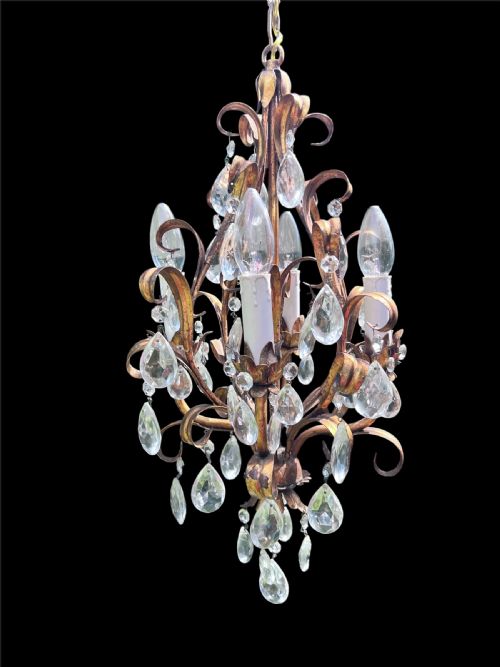
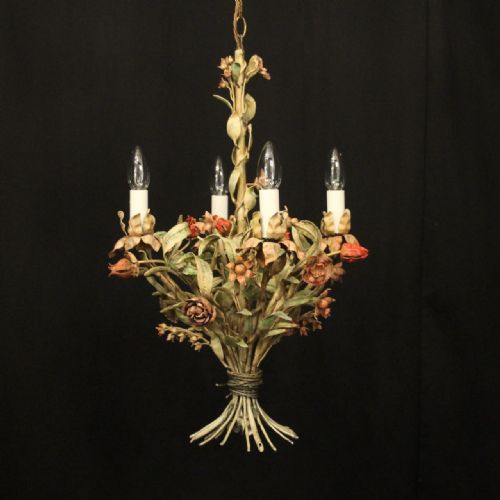
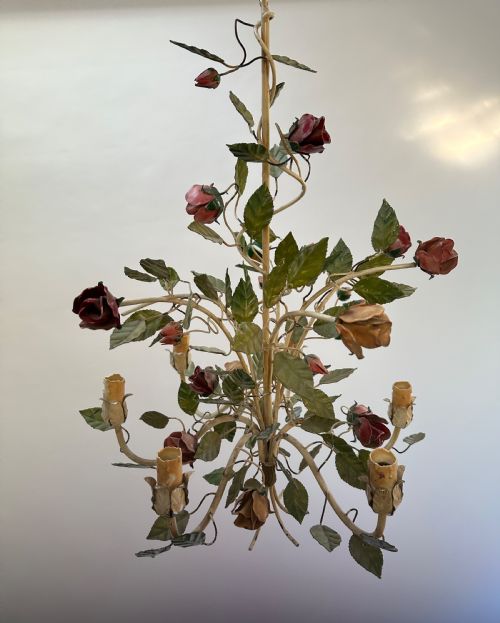
When browsing this selection, you will frequently encounter French and Italian examples from the late nineteenth and early twentieth centuries. These pieces often feature polychrome paintwork, gilt leaves, or hanging crystal fruits alongside standard iron branches.
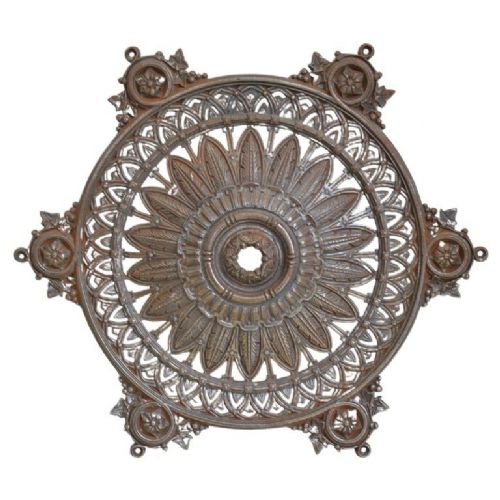
Beyond standard chandeliers, the selection includes hall lanterns, ceiling lights, and billiard room pendants. Each type serves to illuminate large spaces with the distinct dark metalwork of past periods.
Materials and construction
The primary structure relies upon forged wrought iron or cast iron, shaped by hand or moulded into arms, scrolls, and scrolling bands. Blacksmiths and metalworkers joined these structural elements with rivets and collars before applying painted polychrome finishes, gilding, or patinated green treatments.
Many fixtures integrate delicate decorative elements alongside the heavy metal frame. Glass shades, frosted glass panels, pate de verre bowls, and moulded crystal fruit drops hang from the iron arms to soften the illumination of early candle or electric bulbs.
Listings feature items spanning the eighteenth century through to the 1940s, encompassing wrought iron, glass, crystal, and brass materials.
Quality and craftsmanship
The quality of an antique iron chandelier rests upon the hand-forged detail of the metalwork and the integrity of the original finish. Finer examples display subtle hammer marks, naturalistic leaf and feather motifs, and securely integrated glass components rather than mass-produced stamped metal.
The sophistication of the secondary materials also dictates the standing of a piece. Hand-cut crystal drops, signed art glass shades, and layered polychrome or gilded patinas elevate a functional ceiling light into a notable decorative work.
Schneider·Verrerie Des Vosge·Muller Freres
The Antique Iron Chandelier Glossary
- Wrought iron
- Iron that has been heated and hammered into shape by hand. This material shows slight irregularities that indicate manual blacksmithing.
- Pricket
- A sharp metal spike on a candle chandelier designed to hold a wax candle in place. Early lighting forms often relied on this simple spike before sockets became common.
- Pate de verre
- A glass-making technique involving crushed glass melted in a mould. This process creates textured, translucent shades often seen on art nouveau fixtures.
- Polychrome
- Painted in several colours. This surface treatment is frequently found on French and Italian pieces to highlight floral and leaf details.
- Hall lantern
- An enclosed ceiling-hung light designed for narrow entryways and corridors. These fixtures often feature glass panels held within a decorative iron or brass frame.
Antique Iron Chandelier: Frequently Asked Questions
How do I clean an antique iron chandelier?
Dust the iron framework gently with a soft dry cloth to preserve any original polychrome or gilded surface. Avoid harsh chemical cleaners that might strip the historic patina from the metal.
Remove glass or crystal drops carefully if they require washing. Wash them in lukewarm soapy water and dry them completely before rehanging them on the fixture.
Were these chandeliers originally wired for electricity?
Most older examples started life lit by candles or early oil lamps before being converted to accept electrical wiring. Conversion work is common to make these historic fixtures safe for modern domestic use.
When buying, check the internal wiring with a qualified electrician to ensure it meets current safety standards. Many pieces retain their original candle drips adapted to conceal modern lamp holders.
How do I date an iron chandelier?
Dating relies upon examining the construction methods of the metalwork, the style of any glass elements, and the wear on the surface finishes. Eighteenth century examples tend to show heavier hand-forged wagon wheel or simple pricket designs.
Later nineteenth and twentieth century pieces incorporate stylistic cues from specific movements such as art nouveau, arts and crafts, or Italian Florentine design. Signed glass components or specific maker marks can also narrow down the production decade.