

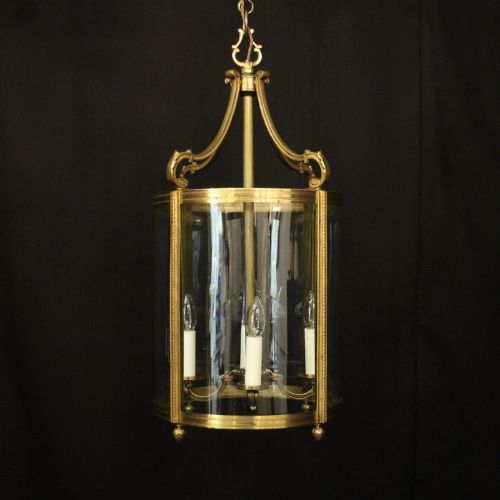
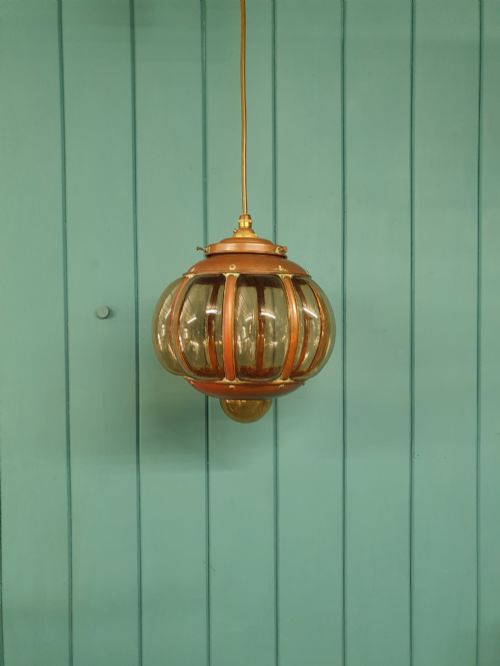


Vintage Glass Cage Lantern
These vintage glass cage lantern pieces offer distinctive illumination and industrial charm, bringing historical character to a hallway or living space.
Vintage Glass Cage Lantern
When you search for a vintage glass cage lantern, you are looking at protective metal frameworks enclosing glass panels or shades designed to hold light sources safely. These hanging fixtures appear across several periods including the Victorian era, the Edwardian period, and the early twentieth century.
The versions you are most likely to meet on this page span styles such as French Chateau, nautical, and Victorian Gothic. They take forms including pendant lights, hall lanterns, and wall lights, utilising materials like brass, copper, and gilt bronze.
Makers and designers from these earlier centuries constructed them for practical illumination in passages, stairwells, and exterior porches. Today, they serve both functional lighting roles and decorative focal points within traditional and eclectic interiors.
How they were made
The framework of a vintage glass cage lantern typically relies on durable metals such as brass, copper, wrought iron, or gilded bronze. Artisans formed these metals into structural cages designed to support and protect the glass elements within.
Glass components vary from flat bevelled panes to smoked glass, coloured crystal, and curved purple glass shades. These panels were fitted securely into the metal housing, often incorporating detailed casting or metalwork across the French Louis XVI style and Rococo Revival pieces.
Vintage Glass Cage Lantern Retail Price Guide 2026
Typical asking prices for vintage glass cage lantern among the pieces listed under this phrase on Sellingantiques today, from the lower quarter to the upper quarter. They describe what is for sale here now, not the wider market.
Some nineteenth-century examples retain traces of soot from the original candles that lit them before electricity arrived.
What varies in quality
The distinction between standard examples and finer pieces rests in the weight of the metalwork and the precision of the casting. Heavier applications of gilded bronze or detailed brass show greater hand-craftsmanship than simpler production pieces.
Glass selection also defines the tier of the object, with bevelled edges, smoked transparency, or coloured crystal indicating higher ambition in design. The integration of the protective cage with the suspension hardware reveals the original maker's attention to structural proportion.
The Vintage Glass Cage Lantern Glossary
- Cage lantern
- A lighting fixture where a metal frame encloses glass panels around a light source. This design originally protected candles or early bulbs from drafts.
- Bevelled glass
- Glass panes with angled edges cut and polished to a specific angle. This technique creates decorative light refraction within the room.
- Gilded bronze
- Bronze coated with a thin layer of gold or gold leaf. It provides a durable, lustrous finish found on finer decorative metalwork.
- Smoked glass
- Glass treated during production to achieve a darkened, translucent appearance. It softens the glare of internal illumination.
Vintage Glass Cage Lantern: Frequently Asked Questions
Where should I hang a cage lantern?
These lanterns suit entrance halls, stairwells, and high-ceilinged corridors where their enclosed design can be viewed from multiple angles. They provide directed downward illumination while adding architectural interest to transition spaces.
Ensure the hanging height allows adequate clearance beneath the fixture, particularly in narrow hallways or areas with heavy foot traffic.
How do I date these lanterns?
Dating relies on examining the metal composition, fastening methods, and stylistic cues such as Victorian Gothic or French Rococo Revival motifs. Evaluating the type of glass, whether bevelled, smoked, or coloured, also helps narrow the period.
Consulting the specific era indicators in the listing description provides a reliable guide to the decade of manufacture.
How do I clean the glass panels?
Careful maintenance involves removing loose dust with a soft cloth before applying a mild glass cleaner to the panels. Avoid harsh chemicals that might damage aged metal finishes or gilding on the surrounding frame.
For delicate smoked or coloured crystal, a gentle wipe preserves the original surface treatment without scratching.