



Antique Irish Centre Table
An antique irish centre table anchors a room with distinctive regional cabinetmaking, offering magnificent timber and robust proportion.
Antique Irish Centre Table
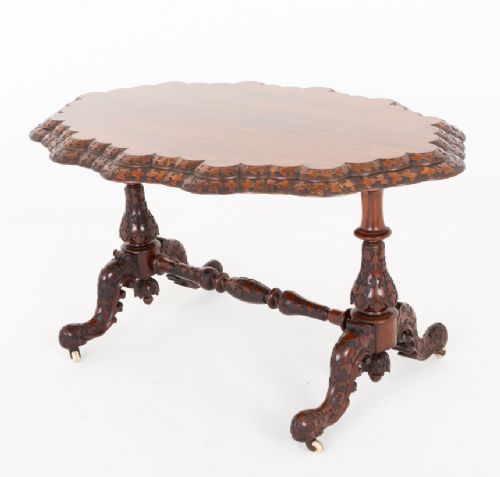
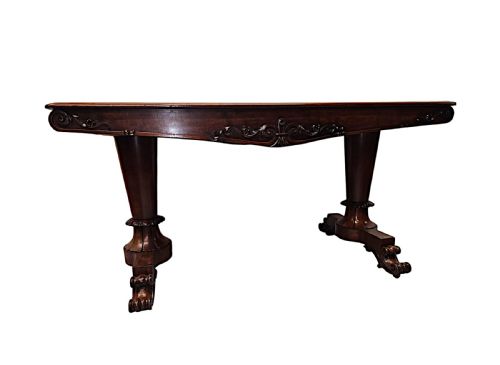
An antique irish centre table is a freestanding piece designed to sit in the middle of a room rather than against a wall, finished carefully on all sides. When you search for this phrase, you find forms that range from heavy library tables to round pedestal tables intended for entrance halls.
The pieces listed here span several distinct periods, including Georgian, Regency, William IV, and Victorian eras. You are most likely to meet mahogany and rosewood examples from the nineteenth century, alongside specialised regional work.
Makers working in Dublin and regional workshops produced tables that adapted English fashions with heavier carving or distinctive indigenous timbers. These tables functioned variously as library desks, silver tables, or grand display pieces in large houses.
How they were made
Cabinetmakers constructed these tables using dense primary timbers such as mahogany, rosewood, and pollard oak, often selecting burr walnut for decorative top surfaces. Workshops also utilised native Irish woods like arbutus and yew, particularly for specialised inlaid wares.
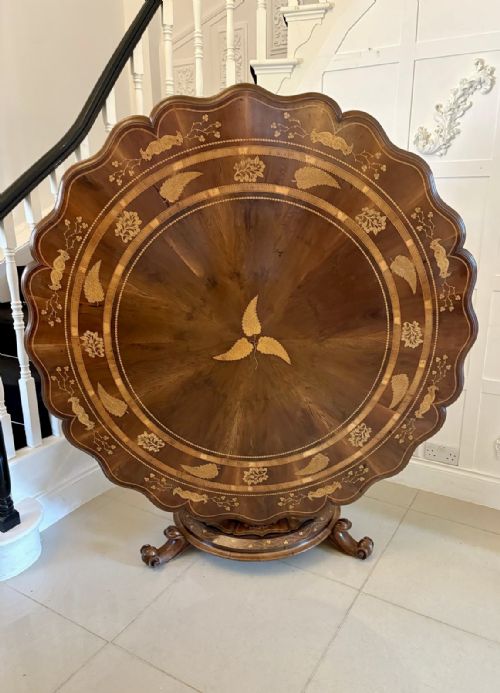
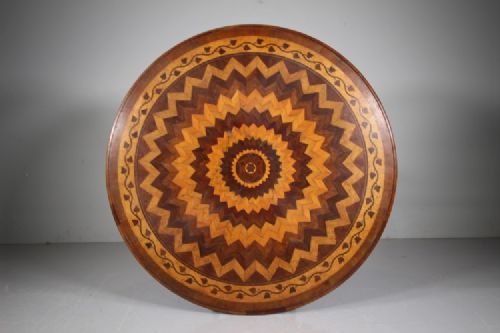
Techniques combined traditional joinery with elaborate surface decoration, including marquetry inlay, brass mounts, and inset leather writing surfaces. Killarney pieces relied on meticulous parquetry and pictorial inlay using multiple local woods to depict architectural ruins or native foliage.
Antique Irish Centre Table Retail Price Guide 2026
Typical asking prices for irish centre table among the pieces listed under this phrase on Sellingantiques today, from the lower quarter to the upper quarter. They describe what is for sale here now, not the wider market.
Some nineteenth-century tables carry secret compartments hidden within their heavy pedestal bases to conceal household valuables.
What varies in quality
Quality in an antique irish centre table rests upon the choice of timber and the ambition of the carving or inlay. Tables featuring figured rosewood, burr walnut, or elaborate Killarney marquetry demonstrate a higher tier of workshop output than simpler mahogany pieces.
The sophistication of the structural design also divides standard production from exhibition pieces. Heavy pillar supports, finely turned tripod bases, and attribution to known Dublin makers elevate a piece above ordinary workshop stock.
Williams and Gibton·Egan Workshop·Gillingtons Dublin
The Antique Irish Centre Table Glossary
- Killarney Ware
- Nineteenth-century Irish decorative woodwork produced around County Kerry, typically featuring intricate marquetry and native timbers such as arbutus and yew. These items often incorporate motifs of local flora and historic ruins.
- Marquetry Inlay
- The art of applying small pieces of veneer to a structure to form decorative patterns or pictorial scenes. This technique defines the most elaborate nineteenth-century table tops.
- Library Table
- A large freestanding table designed for the storage and consultation of books, often fitted with drawers beneath the top. They frequently feature inset leather panels for writing.
- Pollard Oak
- Timber taken from oak trees that have been pollarded, resulting in a dense grain full of small knots and swirling patterns. Cabinetmakers valued this wood for its rich texture.
- Silver Table
- An occasional table with a raised gallery edge designed for displaying or serving silver tea wares. Georgian examples represent early forms of freestanding display furniture.
Antique Irish Centre Table: Frequently Asked Questions
How were these tables used originally?
These tables occupied prominent spaces in country houses and town residences, acting as central focal points for reception rooms or libraries. Library tables provided sturdy writing and reading surfaces with integrated storage drawers.
Round pedestal examples stood in entrance halls to receive callers, while smaller tripod pieces functioned as occasional tables for tea and display. Their freestanding nature allowed them to be moved depending on the social demands of the household.
How do I identify Killarney work?
Killarney work appears on nineteenth-century pieces decorated with complex marquetry made from native Irish timbers such as arbutus, yew, and holly. The surfaces typically display contrasting geometric patterns or pictorial views of local abbeys and fern motifs.
This regional specialty reflects the tourism and craft trade of County Kerry during the Victorian era. The contrasting pale and dark woods create a distinct mosaic effect across the table top.
How do I live with a centre table?
Living with a freestanding table involves placing it where you can walk around it and appreciate the timber finish from every angle. Use coasters and protective pads to safeguard polished mahogany or rosewood surfaces from daily wear.
Position the table away from direct heat sources and strong sunlight to prevent the timber from drying out or fading. Regular dusting and occasional wax application maintain the historical sheen of the wood.