



Antique Interior Genre Scene
An antique interior genre scene captures domestic life, tavern gatherings and quiet moments within Victorian and nineteenth-century rooms.
Antique Interior Genre Scene
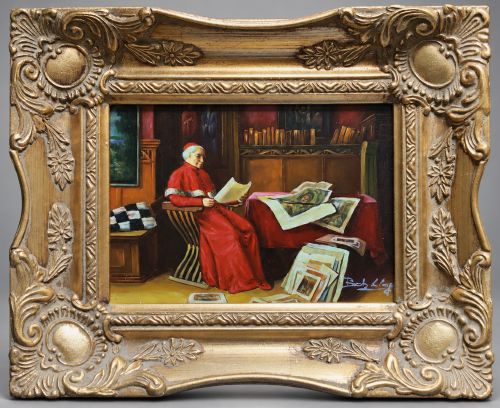
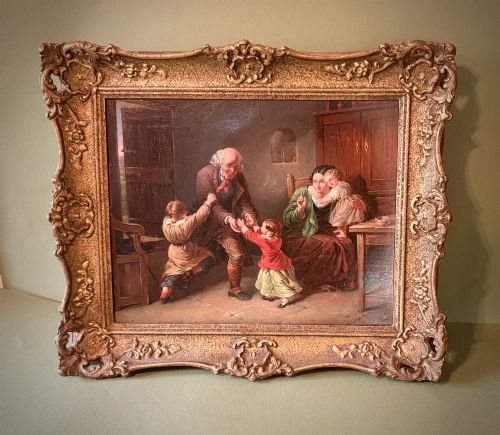
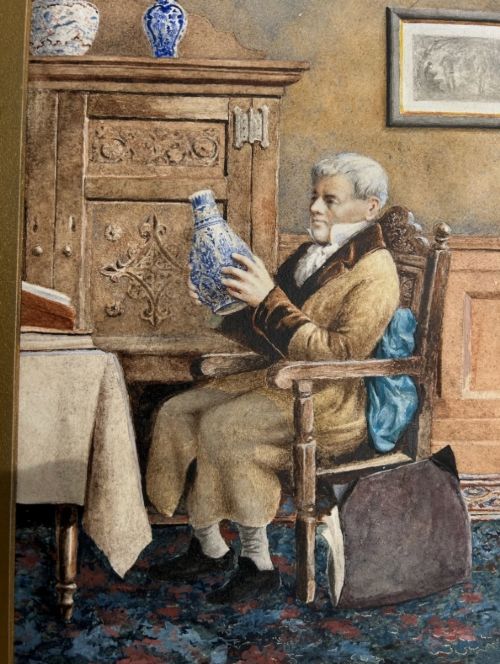
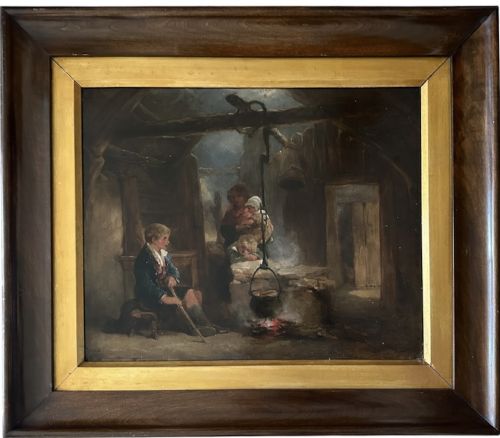
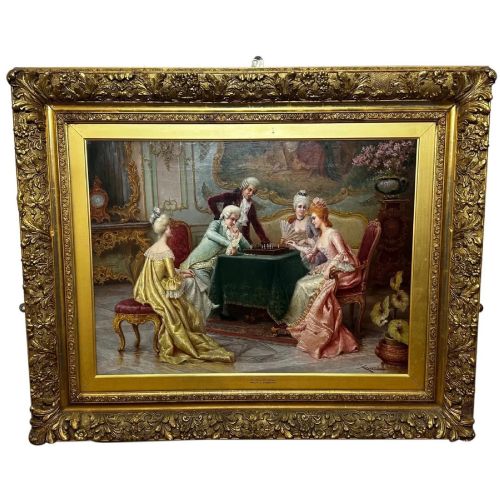
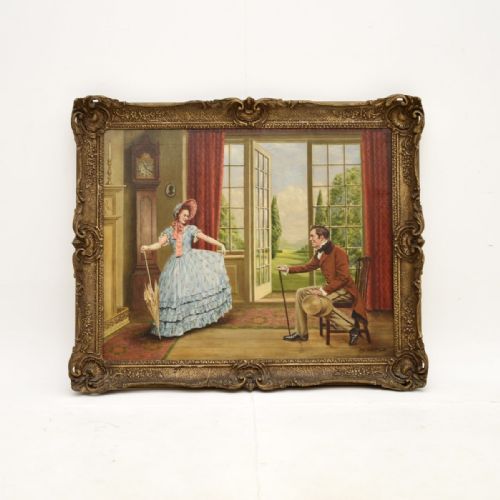
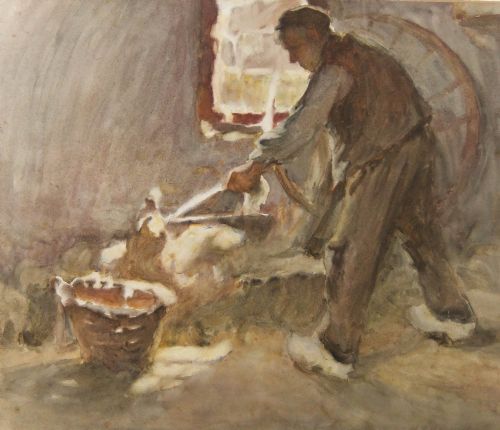
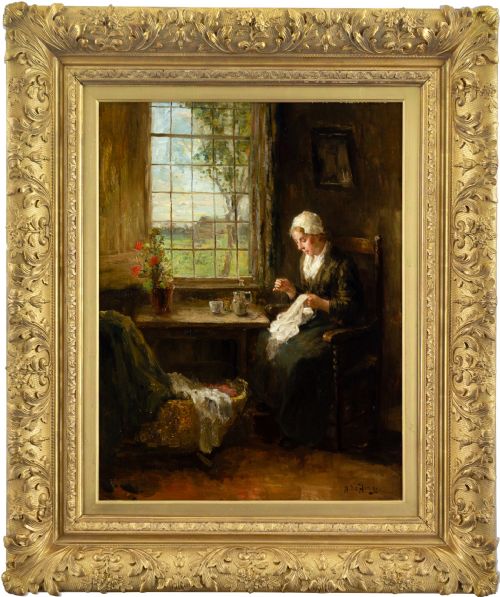
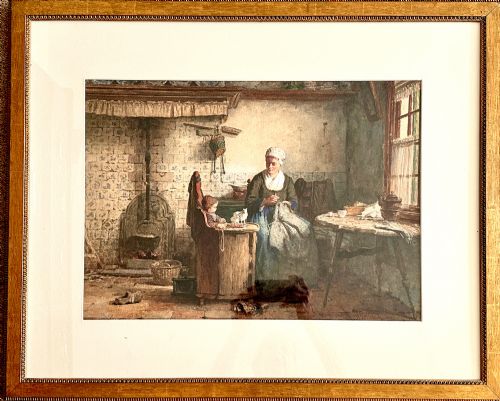
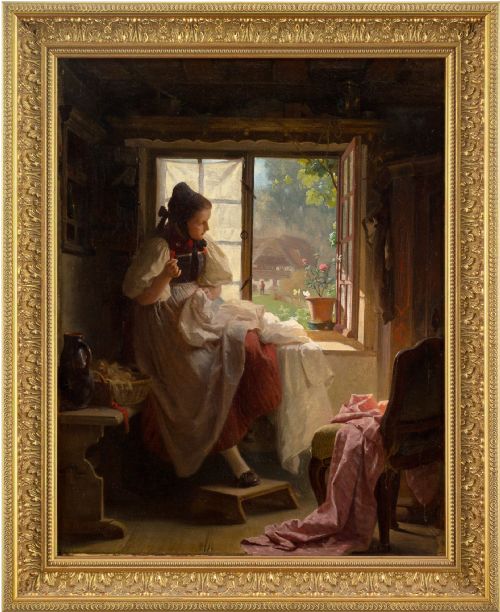
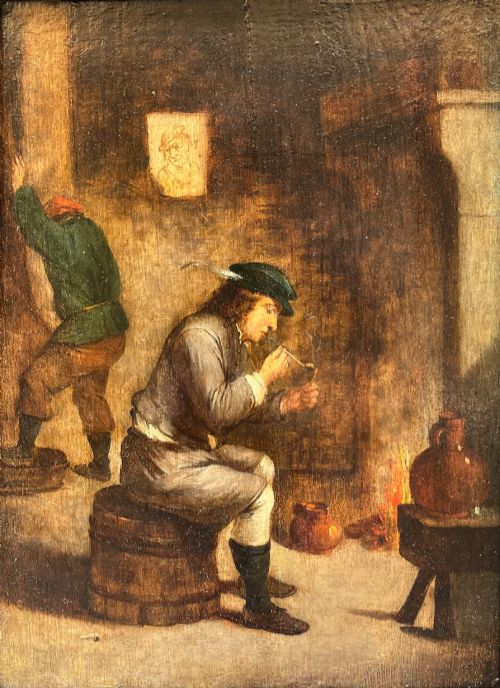
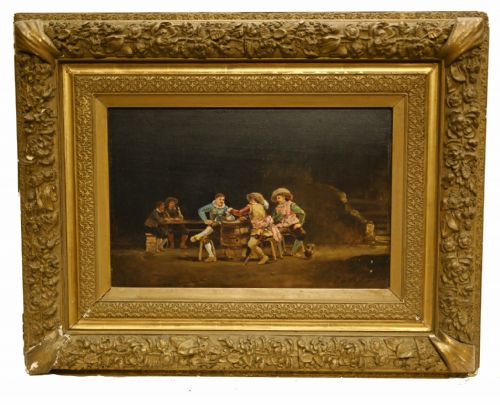
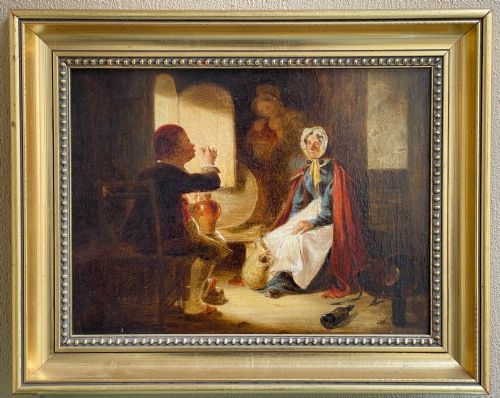
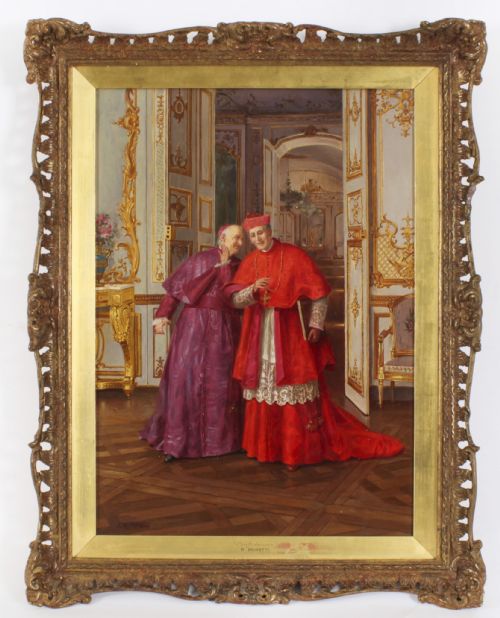
When you search for an antique interior genre scene, you encounter framed watercolours and oil paintings depicting everyday life inside cottages, rectories and drawing rooms. These artworks capture domestic narratives such as tea time, spinning maids, children playing and gentlemen examining vases or smoking on barrels.
The pieces on this page span the nineteenth century and into the mid-twentieth century, with Victorian works forming a large part of the selection. You find cottage interiors alongside grander settings like French ballrooms and Dutch school tavern scenes.
Artists record the human stories behind closed doors, focusing on realistic details of clothing, furnishings and daily routines. The subjects range from quiet solitary moments by a window to lively group gatherings.
What varies in quality
Quality rests in the precision of the brushwork and the expressiveness of the figures inhabiting the room. Stronger pieces convey light filtering through windows or glowing from firesides with convincing depth, while lesser works rely on stiff poses and flat shadows.
The handling of narrative detail distinguishes the best examples. A superior painting brings character to everyday tasks like spinning or sewing, whereas ordinary pieces treat the figures as mere silhouettes within the space.
Antique Interior Genre Scene Retail Price Guide 2026
Typical asking prices for interior genre scene among the pieces listed under this phrase on Sellingantiques today, from the lower quarter to the upper quarter. They describe what is for sale here now, not the wider market.
Listings feature oil on canvas, watercolour and oil on panel, spanning the nineteenth century up to 1950.
George Whitton Johnstone·Henry Stacy Marks·Stephen Samuel Lewin·Henry Silkstone Hopwood·Alfred Lyndon Grace·Max Kaltenmoser·David Teniers·Hendrik Valkenberg·Bernard De Hoog·Renato Moretti·Jacob Akkersdijk·James Hayllar·Harry Brooker·George Kilburne·Alexander Rosell·Benjamin Eugene Fichel·Haynes King·James Kyd·Robert Alexander Hillingford·George Smith·Edwin Hughes·Thomas Couture·Hans Temple
The Antique Interior Genre Scene Glossary
- Genre painting
- A style of art depicting scenes from everyday life rather than grand historical or mythological subjects. These works show people engaged in common domestic or social activities.
- Chiaroscuro
- An artistic technique using strong contrasts between light and dark to give subjects a three-dimensional volume. It creates dramatic shadows inside tavern and room settings.
- Gesso
- A plaster-like mixture applied to wood panels or canvas as a prepared base for painting, or used to mould decorative details on picture frames.
- Academic realism
- A style taught in European academies that emphasises precise observation, anatomical accuracy and smooth brushwork.
- Giltwood
- Wood that has been treated with gold leaf or gold paint to give a metallic sheen, commonly found on nineteenth-century picture frames.
Antique Interior Genre Scene: Frequently Asked Questions
What is a genre scene?
A genre scene depicts ordinary people engaged in daily activities, such as working, eating or relaxing indoors.
These paintings focus on domestic narratives rather than historical events or portraits of specific individuals.
How do I date these paintings?
Dating relies on costume styles, interior furnishings and the artist's recorded working dates shown in the listing.
Nineteenth-century works often bear signatures or exhibition records that help narrow down the period.
Where were these scenes painted?
Artists painted these scenes in various European settings, including British cottages, French palaces and Dutch rooms.
Many reflect the artistic traditions of the nineteenth-century academic and realism movements.
How do I care for an oil painting?
Keep oil paintings away from direct sunlight and dramatic changes in temperature to protect the canvas and paint layers.
Dust the surface gently with a soft dry brush and avoid using water or cleaning solutions on the paint.