



Antique Instrument Accessory
These antique instrument accessories are practical desk items, magnifiers and writing tools from the nineteenth and early twentieth centuries.
Antique Instrument Accessory
When you search for antique instrument accessory, you encounter a specialised collection of Victorian and early twentieth century scientific, writing and desk equipment. These items range from pocket pencils and dip pens to precision magnifiers, thermometers and portable measurement devices.
How they were made
Maker workshops utilised durable metals such as brass, sterling silver and gold plate to construct mechanical components, hinges and protective mounts. Glass and crystal formed lenses and optical accessories, while natural materials like mother-of-pearl, tortoise-shell effect celluloid and leather provided tactile handles and fitted cases.
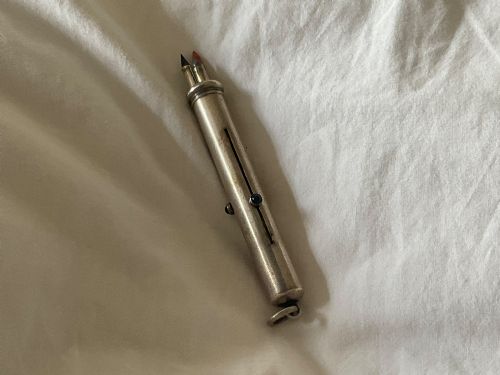
Precision engineering defined the production of these accessories, seen in the multi-colour mechanisms of sliding pencils and the pivoting frames of bullseye magnifiers. Artisans combined optical glass grinding with fine metal engraving and turning to create reliable instruments for daily use.
Antique Instrument Accessory Retail Price Guide 2026
Typical asking prices for instrument accessory among the pieces listed under this phrase on Sellingantiques today, from the lower quarter to the upper quarter. They describe what is for sale here now, not the wider market.
The listings span from the nineteenth century through the Art Deco era, featuring materials like sterling silver, brass, glass and leather.
What varies in quality
Quality rests upon the precision of the mechanical action and the clarity of the optical glass. Superior examples retain crisp hallmarks, tight joints on folding elements and original fitted leather or velvet cases that protected the instrument.
The refinement of the secondary materials, such as finely chased gold plate or well-matched mother-of-pearl inlays, separates standard production pieces from workshop examples signed by notable makers like Sampson Mordan or M Pillischer.
Mabie Todd And Co·Sampson Mordan·M Pillischer·Auguste Robert Kauffman·Goldsmiths Of London·CW Dixey London
The Antique Instrument Accessory Glossary
- Dip Pen
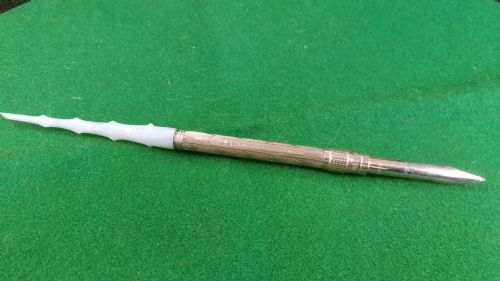
- A simple writing instrument comprising a pen nib fitted into a decorative handle, requiring frequent dipping into an inkwell.
- Propelling Pencil
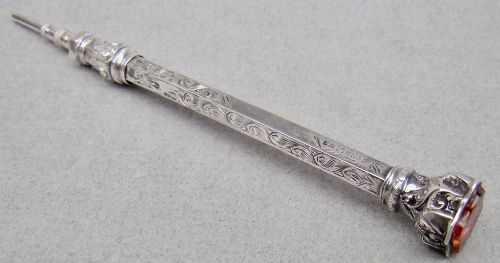
- A mechanical pencil that advances or retracts lead through a rotating or sliding mechanism within a metal casing.
- Bullseye Magnifying Glass
- A thick, convex lens mounted on a pivoting brass stand, designed to focus light or magnify text and details on a desk.
- Microscopy Candle Shade
- A specialised translucent screen used alongside nineteenth century microscopes to diffuse candlelight for optimal specimen illumination.
- Posograph
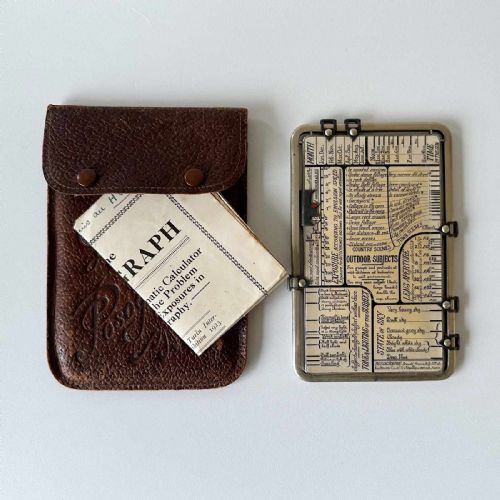
- An early twentieth century photographic exposure machine used to calculate correct camera settings before digital automation.
Antique Instrument Accessory: Frequently Asked Questions
What is an antique instrument accessory?
An antique instrument accessory is a functional object designed to aid writing, reading or scientific observation during the nineteenth and early twentieth centuries. These items include magnifying glasses, dip pens, mechanical pencils and pocket thermometers.
They represent the intersection of utility and fine craftsmanship, often produced in workshop environments by specialist metalworkers and opticians.
How were magnifying glasses used?
Magnifying glasses served various purposes, from reading small text and maps to examining fine specimens under microscopy or natural light. Pivoting and folding desk models allowed users to adjust the lens angle without holding the glass.
Many of these instruments came with original fitted cases to protect the delicate optical glass and metal frames during transport or storage.
How do I identify a Victorian piece?
Victorian pieces often feature characteristic material choices such as heavy brass, rosewood, sterling silver and mother-of-pearl, combined with nineteenth century manufacturing techniques. Examining the style of engraving, hallmarks and maker signatures helps establish the period.
Makers active during this era frequently stamped their firm names directly onto the metal mounts or the interior of fitted leather cases.
Did these items come with cases?
Many precision instruments and writing accessories were originally retailed with custom-fitted cases lined in velvet or silk. These housings protected delicate glass lenses and mechanical pencils from dust and impact.
Surviving examples complete with their original signed cases are particularly valued for preserving the entire operational history of the piece.