

Antique Inlay Tray
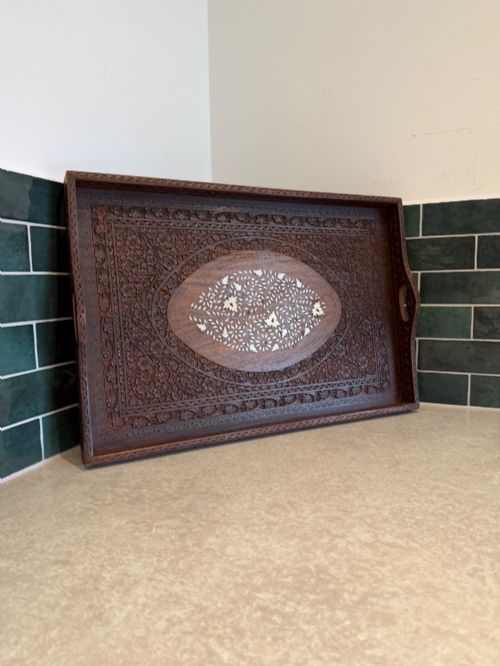
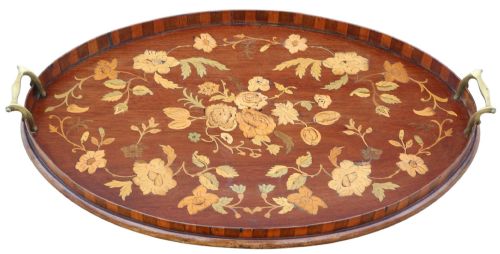
An antique inlay tray brings tactile warmth to a room, combining fine timber grounds with delicate contrasting bands or pictorial marquetry.
Antique Inlay Tray
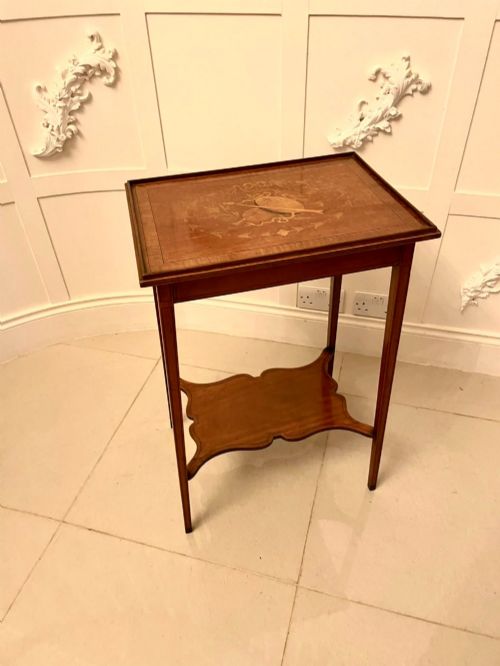
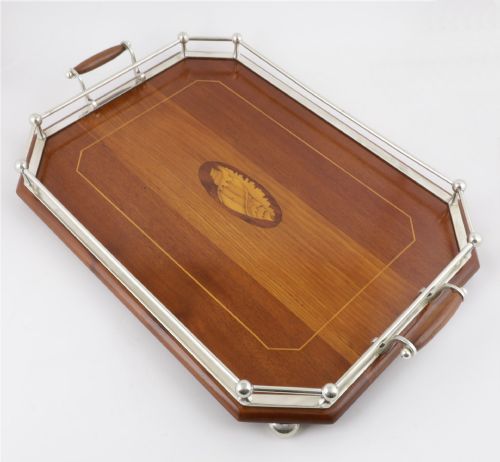
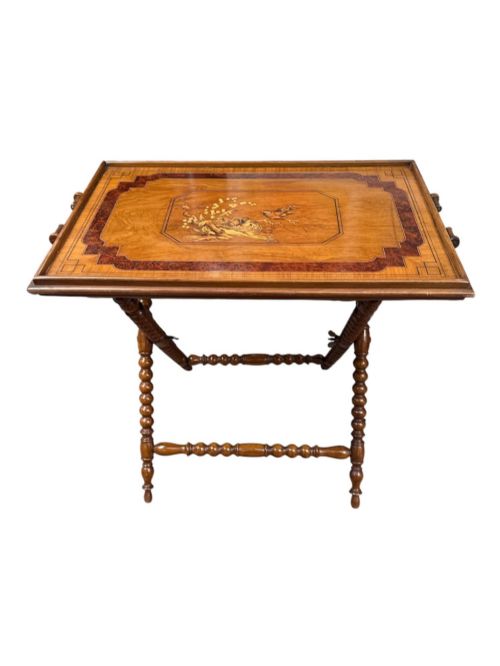
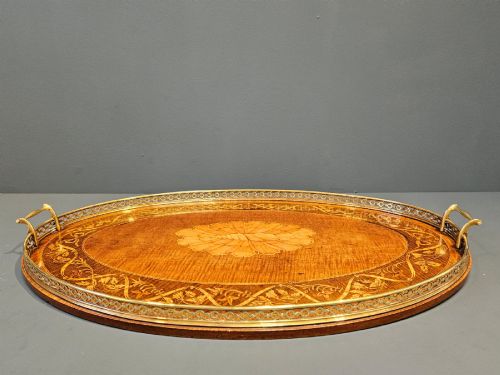
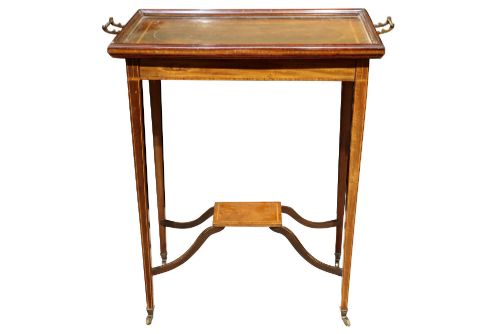
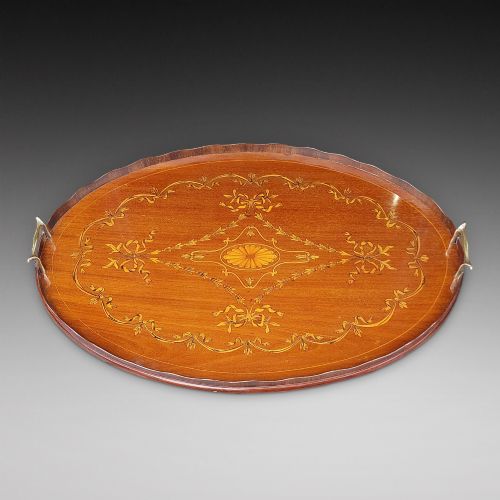
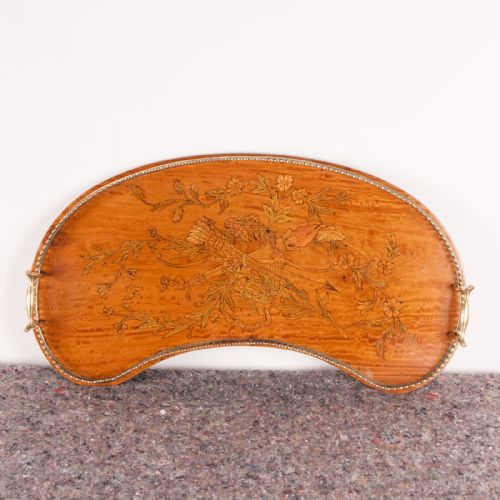
The antique inlay tray appears in several distinct forms across this selection, ranging from oval and kidney-shaped serving pieces to butler's trays fitted onto folding stands. Mahogany and satinwood form the primary timber grounds for these pieces, often highlighted with boxwood and ebony stringing or elaborate floral marquetry.
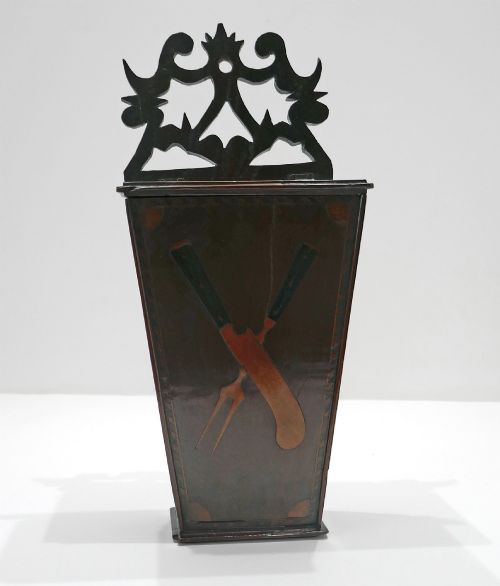
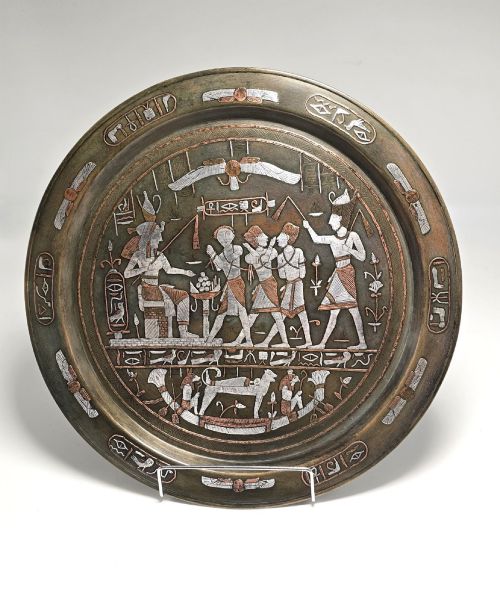
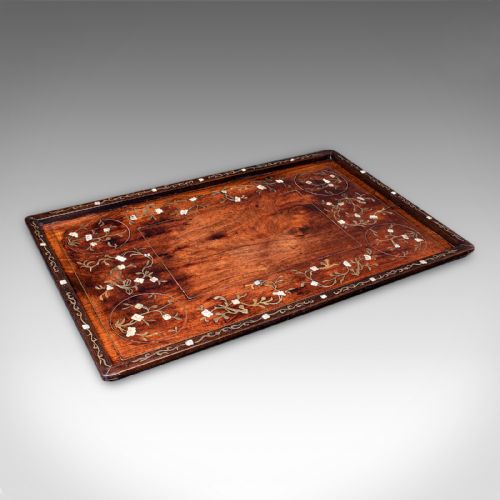
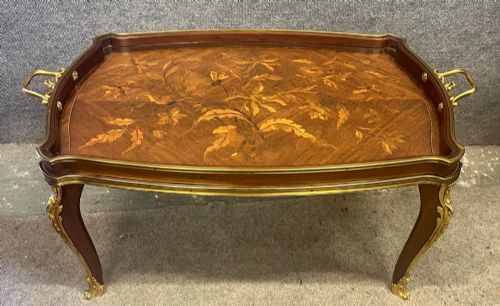
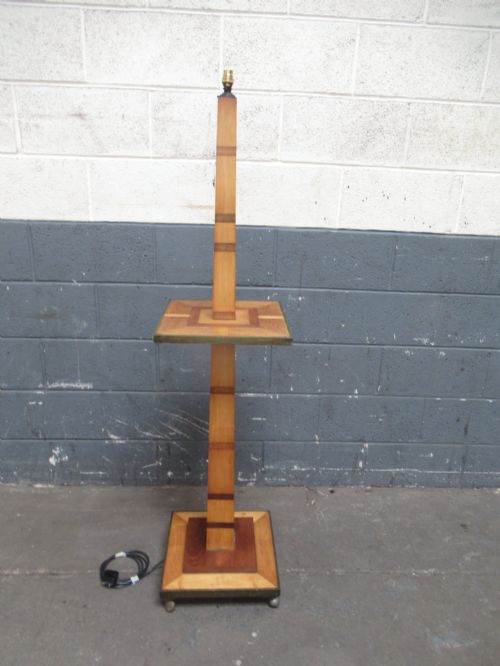
Beyond standard serving accessories, the category encompasses broader tables and desk furnishings incorporating inlaid surfaces, such as occasional tables with tray tops, inkstands, and decorative chargers from regional traditions. Victorian and Edwardian examples dominate the current selection, though earlier Georgian items and pieces reflecting Egyptian Revival or Anglo-Indian styles also surface.
Buyers encounter serving trays designed for afternoon tea alongside occasional furniture functioning simultaneously as display surfaces and functional tables. Each piece demonstrates how makers adapted traditional marquetry and stringing techniques to portable wooden forms.
How they were made
Cabinetmakers constructed these trays using solid timbers or stable veneered bases, applying contrasting woods like satinwood, boxwood, and ebony to create geometric stringing or intricate floral motifs. Marquetry panels required precision hand-cutting of thin wood veneers, which were then fitted together like puzzles before being glued to the primary carcase.
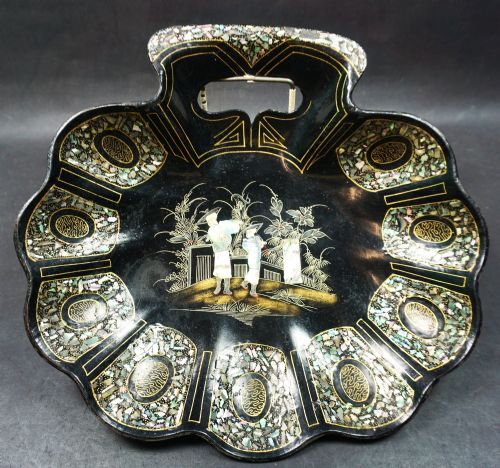
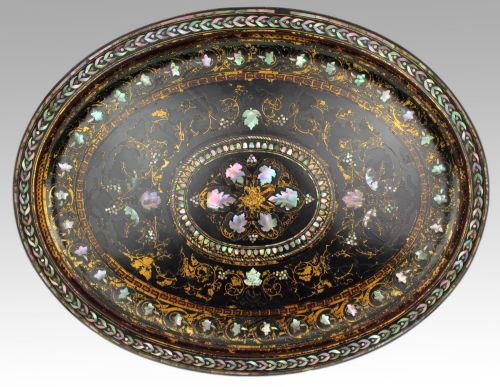
Metal inlay work appears in distinct traditions, utilising brass or silver wire set flush into darker woods, tortoise-shell, or patinated copper grounds. Lacquered wood platters integrate organic materials such as mother-of-pearl to catch the light, while papier-mâché pieces rely on layered paper pulp built up over moulds and finished with painted or inlaid details.
Antique Inlay Tray Retail Price Guide 2026
Typical asking prices for inlay tray among the pieces listed under this phrase on Sellingantiques today, from the lower quarter to the upper quarter. They describe what is for sale here now, not the wider market.
Listings feature mahogany, satinwood, and walnut timbers alongside metal inlay techniques including silver, brass, and copper.
What varies in quality
Execution of the inlay distinguishes workshop output, separating crisp, tightly fitted veneer work from looser assemblies with visible filler between the component parts. The choice of primary timber and secondary framing timbers dictates the weight and balance of the piece when lifted.
Design sophistication also marks the tier of an item, seen in the fluid symmetry of kidney-shaped serving trays versus simpler rectangular boards. Retained original surfaces, handles, and gallery rails preserve the integrity of the piece against later alterations.
Edwards and Roberts·Waring and Gillow
The Antique Inlay Tray Glossary
- Marquetry
- The art of forming decorative patterns by fitting together thin veneers of wood, shell, or ivory onto a structural base. This technique allows for complex pictorial scenes or repeating geometric borders.
- Stringing
- Thin inlaid lines of contrasting wood used to outline panels, drawer fronts, or tray borders. It provides subtle linear definition without overwhelming the primary grain.
- Butler's tray
- A portable wooden tray with hinged or shaped sides, traditionally lifted from a folding stand after serving. They frequently appear on this page mounted as permanent occasional tables.
- Cairo Ware
- Metalwork objects originating from Egypt, typically executed in brass, bronze, or copper with contrasting silver and gold inlay. These pieces often feature Arabic inscriptions or dense geometric strapwork.
- Boulle work
- A style of ornate marquetry utilising tortoiseshell and brass inlaid in contrasting positive and negative patterns. It is named after the master cabinetmaker to Louis XIV.
Antique Inlay Tray: Frequently Asked Questions
How do I clean an antique inlay tray?
Dust the surface regularly with a soft, dry cloth to prevent dirt accumulation in the veneer crevices.
Avoid liquid polishes or water, as excess moisture can lift old glues and cause the delicate wood or metal stringing to loosen from the base timber.
Can I use these trays for serving drinks?
While many examples were originally built for afternoon tea or hospitality use, older serving trays feature delicate veneers and historic finishes that demand gentle handling.
Using them primarily for display or placing a protective linen runner underneath glasses helps preserve the antique surface from moisture rings and heat damage.
How do I tell Edwardian trays from Victorian ones?
Victorian pieces frequently showcase darker timbers like rosewood and heavily figured mahogany, often accompanied by robust brass handles and deep gallery rims designed for heavier use.
Edwardian items tend to favour lighter satinwood grounds, delicate marquetry motifs, and kidney shapes that reflect a turn-of-the-century preference for refined, graceful occasional furniture.
What is the difference between a tray top table and a serving tray?
A serving tray is an independent portable object featuring integrated handles or side galleries designed for carrying items across a room.
A tray top table mounts a similar deep-rimmed tray onto a permanent or folding wooden stand, transforming the serving board into a fixed piece of occasional furniture.