


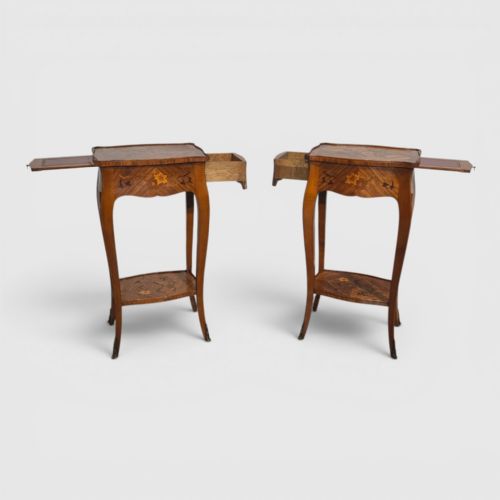
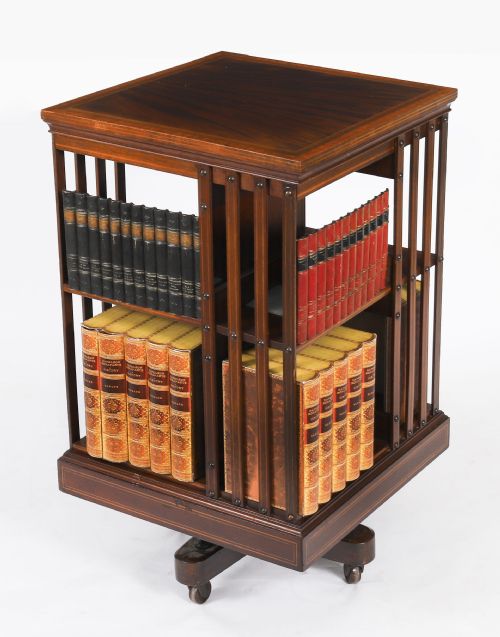
Antique Inlaid Tier Table
When an antique inlaid tier table enters a room, it brings stacked surfaces and precise contrasting timber work from the Victorian, Edwardian, and Regency eras.
Antique Inlaid Tier Table
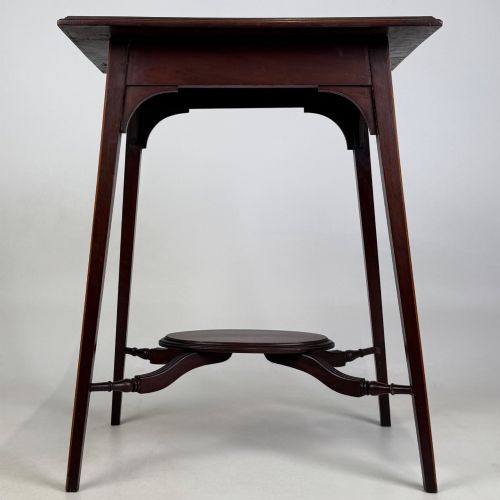
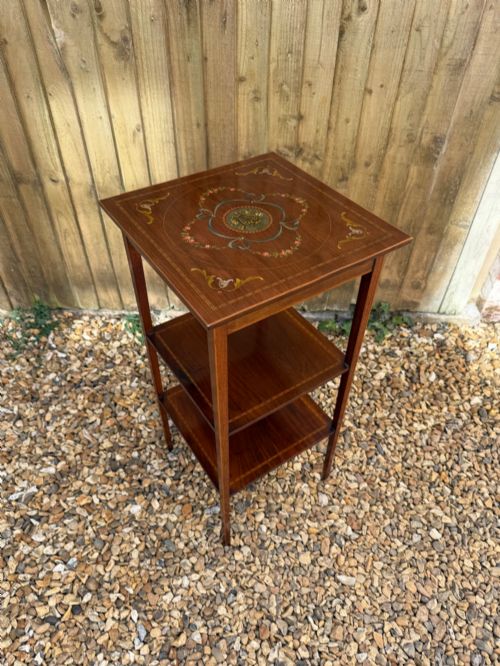
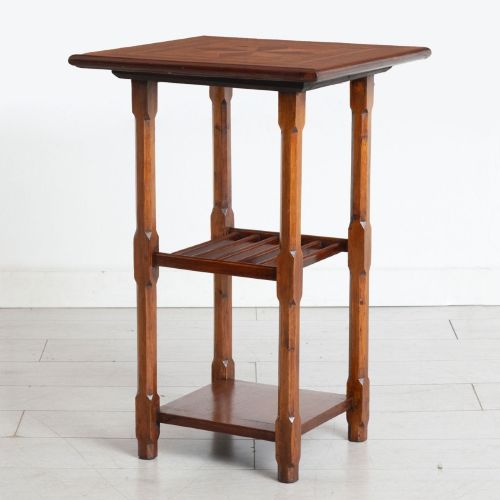
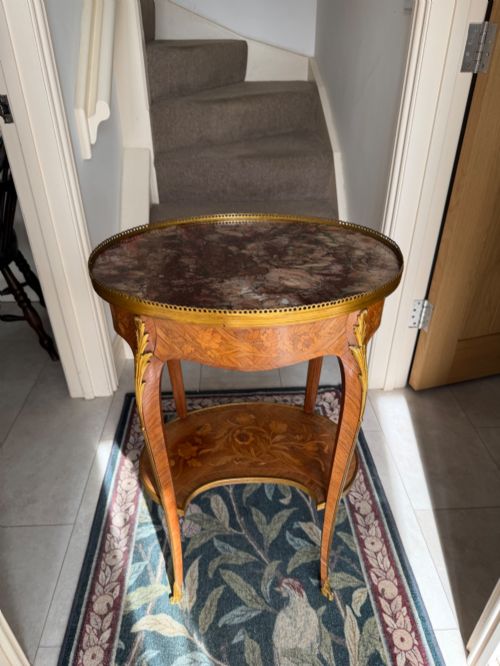
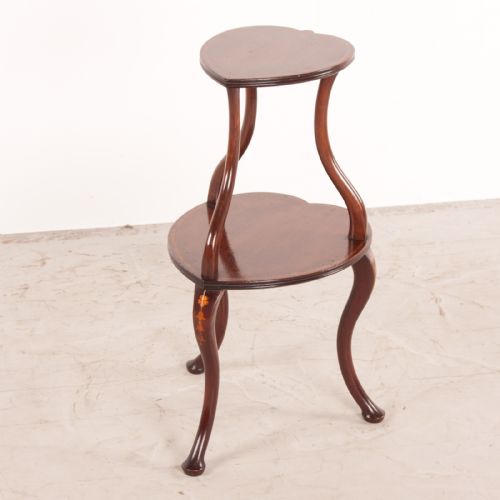
An antique inlaid tier table provides multiple stacked surfaces supported by uprights, designed for display and convenience in the drawing room or parlour. These pieces span the Victorian and Edwardian periods, alongside earlier Regency examples, appearing primarily as occasional, side, or lamp tables.
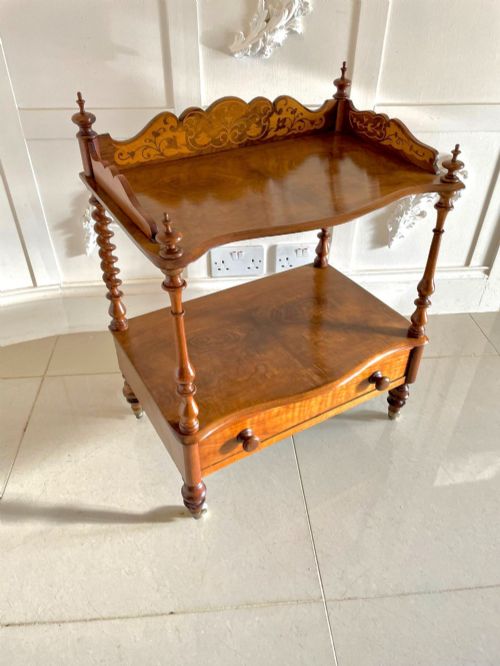
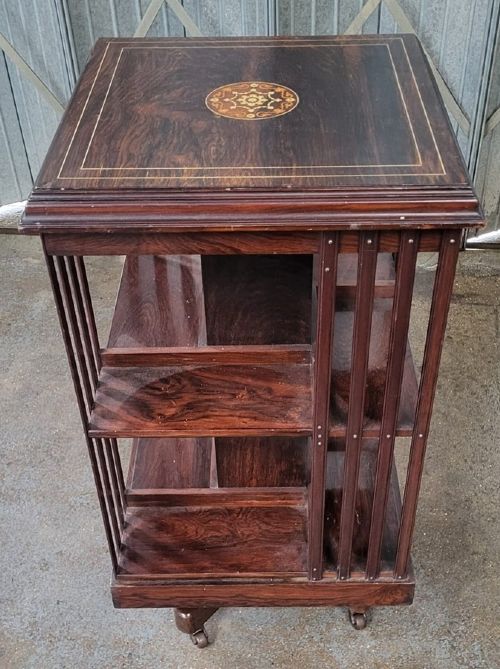
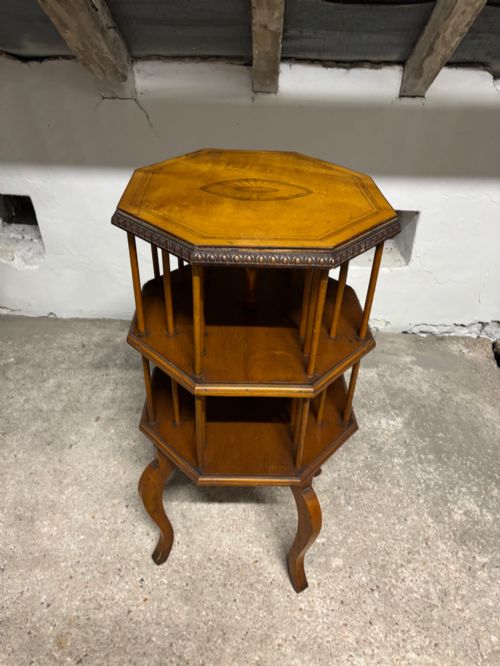
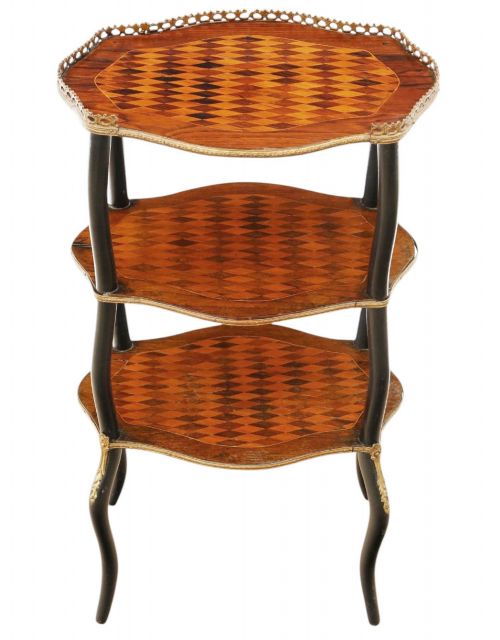
The most common form encountered on this page is the two or three tier side or occasional table in mahogany or rosewood, often detailed with boxwood inlay. Alongside standard occasional tables, related multi-surface forms such as etageres, whatnots, and revolving bookcases appear frequently in the listings.
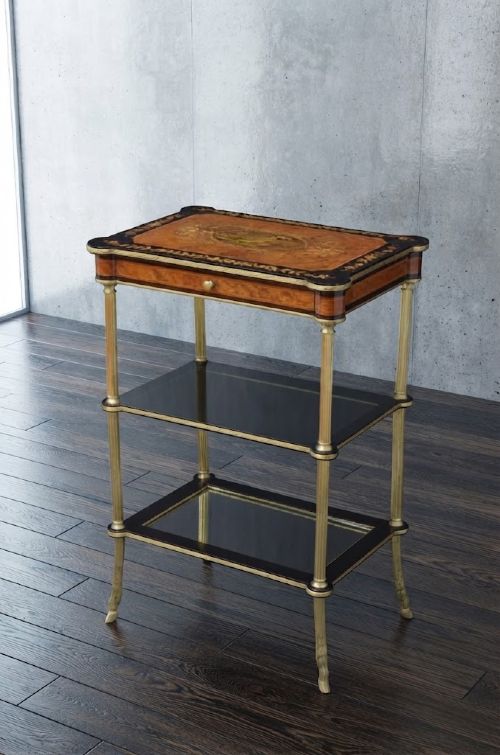
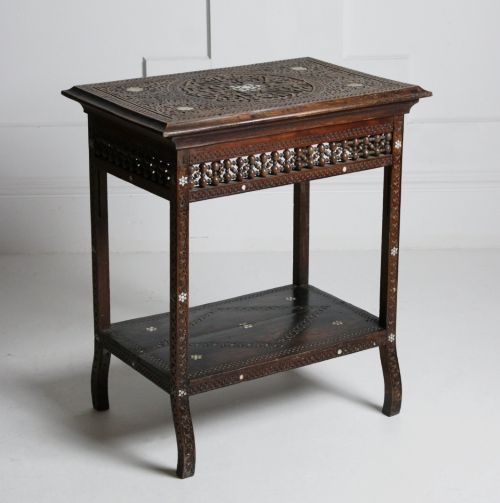
Origins vary between English cabinetmakers working in Sheraton Revival or Arts and Crafts styles and continental workshops producing French Rococo Revival or Syrian and Moorish pieces. Buyers find both rectangular and oval formats, each utilising the vertical space characteristic of tiered furniture.
Materials and construction methods
Makers utilised primary cabinet timbers including mahogany, walnut, rosewood, and satinwood, selected for their rich grain patterns and smooth finished surfaces. Secondary woods provided structural stability beneath the visible exterior veneers.
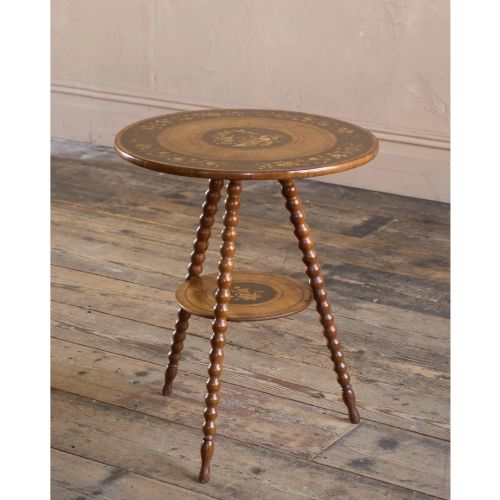
Surface decoration relied heavily on contrasting timber inlays such as boxwood, alongside marquetry and parquetry geometric patterns. Brass mounts, ormolu, and bobbin-turned legs added further architectural detail to specific Victorian and French style pieces.
Listings feature mahogany, walnut, rosewood, satinwood, and boxwood inlay across Victorian, Edwardian, and Regency periods.
Judging the quality of tiered tables
Superior examples demonstrate precision in the execution of the inlay, where boxwood, satinwood, and contrasting veneers fit flush into the primary timber without visible gaps. The crispness of marquetry pictorial work or parquetry geometric lines separates standard production from exhibition quality pieces.
Structural integrity across multiple tiers depends upon the rigidity of the uprights and the stability of the joints connecting each shelf. Heavier woods like rosewood and burr walnut, combined with substantial brass mounts or finely turned supports, indicate higher grade workshop output.
Edwards & Roberts·Collingson & Lock·Jas Shoolbred·George Bullock
The Antique Inlaid Tier Table Glossary
- Tier table
- A multi-level small table providing stacked horizontal surfaces for display or placement of lamps and decorative objects. These pieces make efficient use of floor space while offering multiple display levels.
- Etagere
- A set of open shelves or tiers designed for displaying small ornaments, porcelain, or books. They originated in France and often feature delicate upright supports.
- Marquetry
- Decorative veneer work forming pictorial or scroll designs by assembling pieces of different coloured wood. It requires high precision from the artisan.
- Parquetry
- A geometric mosaic of wood pieces used for decorative floors and table surfaces. This technique creates regular patterns like cubes or herringbone.
- Whatnot
- A piece of furniture consisting of a set of shelves for books or ornaments, popular throughout the Victorian era. It serves a similar multi-tiered function to an etagere.
- Boxwood inlay
- Narrow lines or contrasting motifs of pale boxwood set into dark cabinet wood. This linear detailing defines the edges of panels and table tops.
Antique Inlaid Tier Table: Frequently Asked Questions
What is an antique inlaid tier table used for?
These tables served primarily as occasional surfaces in drawing rooms and parlours for holding small lamps, books, or decorative objects. The multiple tiers allowed owners to display collections without occupying additional floor space.
In modern interiors, they function effectively beside seating or in hallways as compact display stands. Their stacked design makes them practical for vertical storage in smaller rooms.
How do I distinguish Edwardian from Victorian tables?
Victorian examples tend to use heavier timbers like burr walnut and rosewood, often featuring deeper tones and robust brass mountings. The carving and marquetry work on these pieces reflects mid to late nineteenth-century revival styles.
Edwardian pieces frequently utilise lighter satinwood and mahogany with delicate boxwood stringing and Sheraton Revival motifs. The overall aesthetic leans toward airiness and refined, slender proportions.
What is the difference between an etagere and a tier table?
An etagere is specifically designed for display, typically featuring three or more open shelves intended to hold ornaments or small collections. It functions as a decorative showcase piece within a room.
A tier table is primarily a functional table with stacked surfaces meant for active daily use, such as holding a lamp or teacups. While their forms overlap, etageres lean heavier toward display while tier tables retain a table's utility.
How should I care for a mahogany and satinwood tier table?
Protect the polished surfaces by keeping the table away from direct sunlight, which can fade delicate satinwood and rosewood veneers. Maintain a stable room temperature to prevent the wood from drying out and causing the inlay to lift.
Dust gently with a dry, soft cloth and avoid chemical polishes that build up residue over time. Periodic waxing with a traditional beeswax preserves the natural lustre of the timber.