





Antique Inlaid Hanging Cabinet
An antique inlaid hanging cabinet offers a clever way to utilise corner space while displaying treasured possessions at eye level.
Antique Inlaid Hanging Cabinet
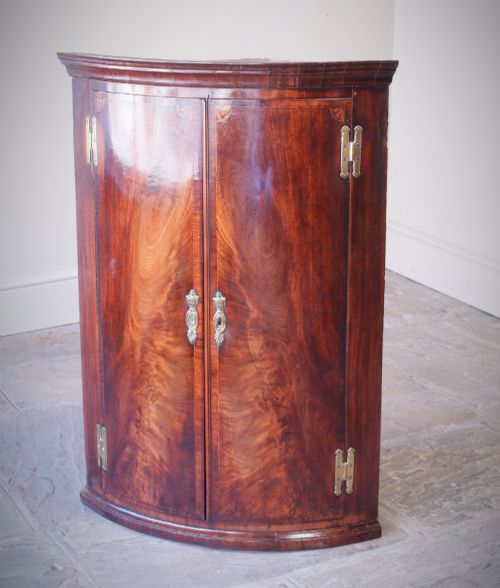
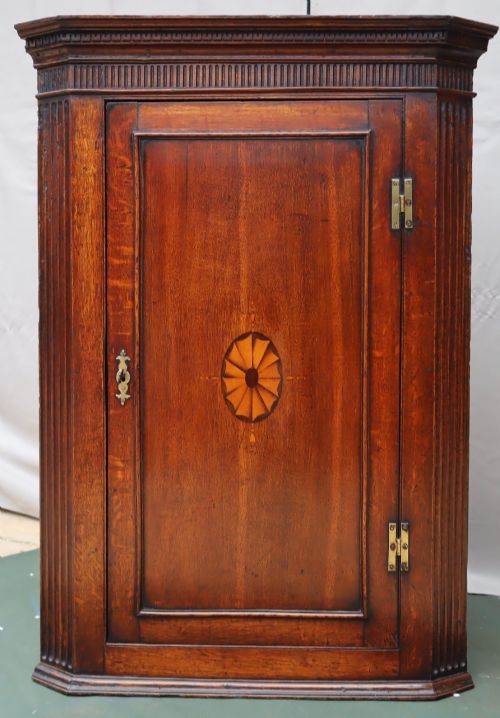
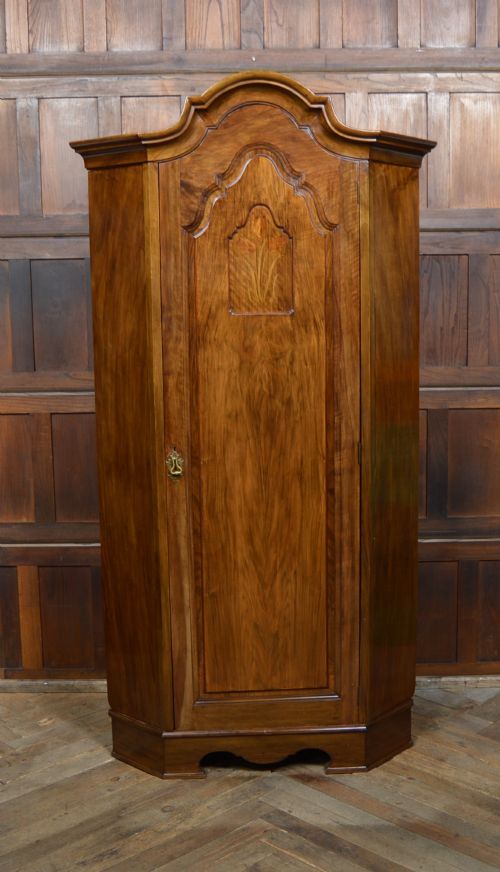
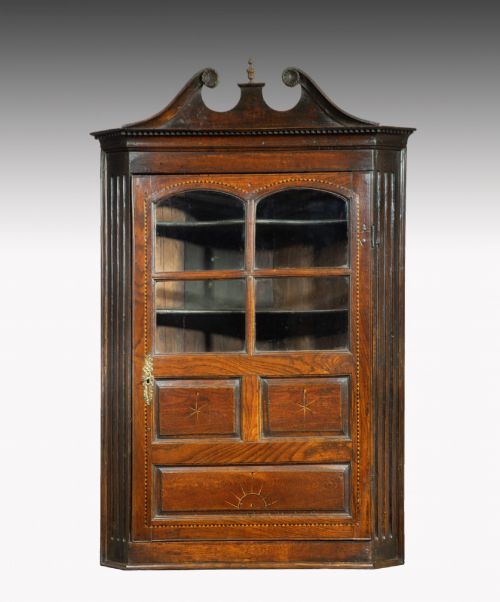
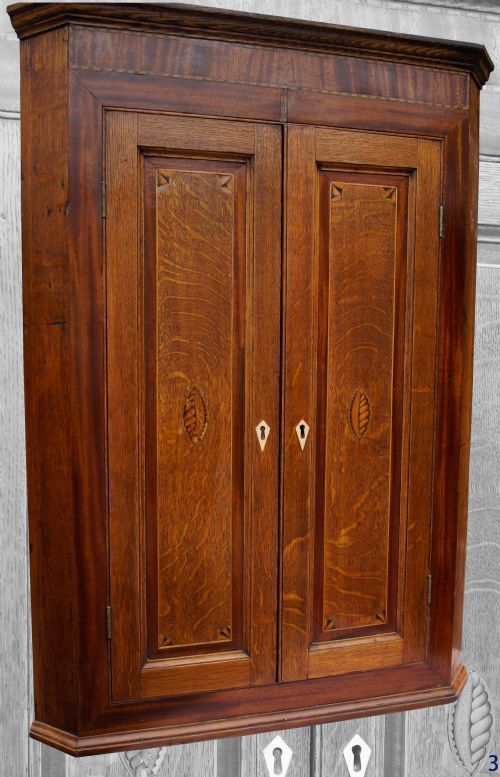
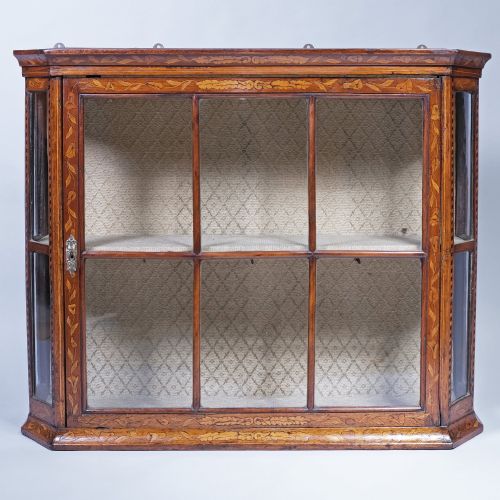
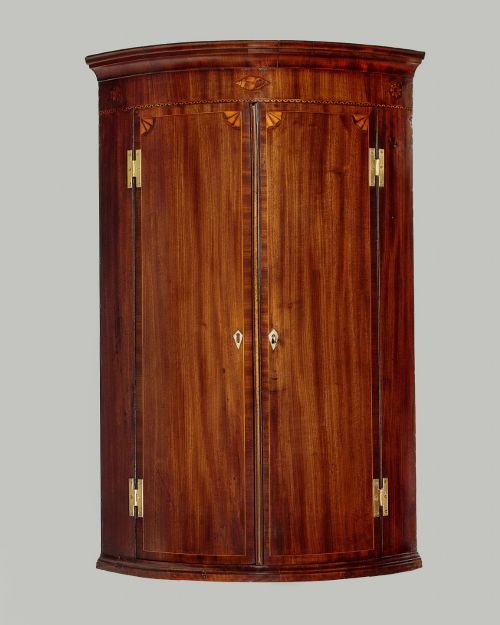
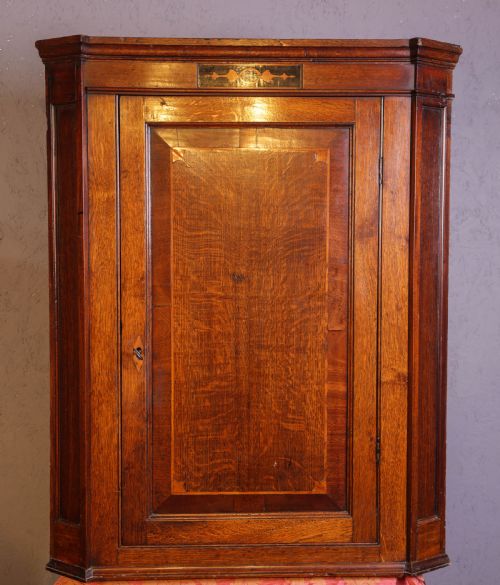
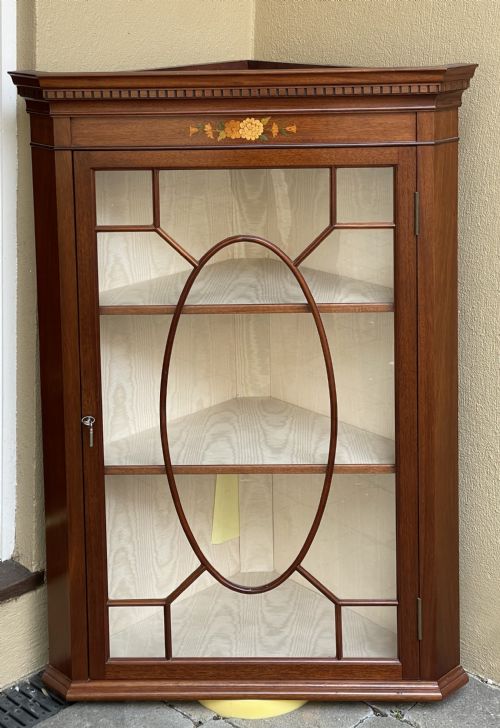
When searching for an antique inlaid hanging cabinet, a buyer encounters wall-mounted storage pieces designed primarily to fit snugly into room corners or hang flat against plaster walls. The selection spans robust Georgian oak and mahogany examples alongside later Victorian and Edwardian iterations featuring refined decorative details.
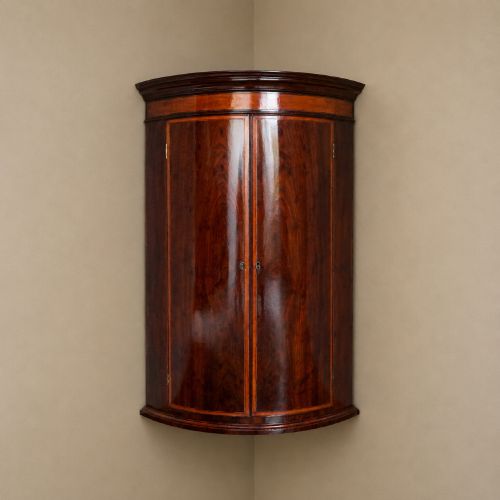
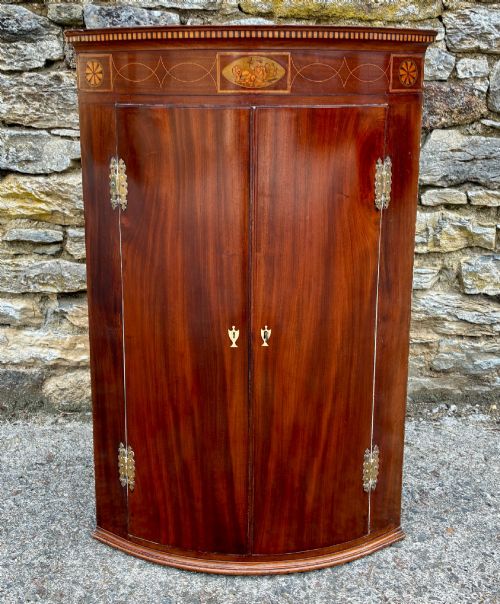
The most common formats met on this page are bow-fronted corner cupboards and glazed wall display cabinets. These items originate from periods ranging across the eighteenth and nineteenth centuries, reflecting domestic needs for secure storage of tableware, drinks, and ornaments.
How They Were Made
Cabinet makers relied heavily on timber like oak, mahogany, and walnut, often applying contrasting veneers such as satinwood and boxwood for decorative banding and stringing. Brass hardware, including H-hinges and escutcheons, provides functional articulation and visual contrast against the polished timber surfaces.
Construction techniques involve traditional joinery designed to support the weight of the carcase when suspended from walls. Inlaid motifs utilise precise wood inlay and crossbanding, requiring steady hands to fit contrasting species into recessed channels.
Antique Inlaid Hanging Cabinet Retail Price Guide 2026
Typical asking prices for inlaid hanging cabinet among the pieces listed under this phrase on Sellingantiques today, from the lower quarter to the upper quarter. They describe what is for sale here now, not the wider market.
One remarkably specific nineteenth-century survivor doubles as a kitchen knife hanging box.
What Varies in Quality
The distinction between standard examples and superior specimens rests upon the choice of timber and the crispness of the inlay work. Finer pieces employ richly figured plum pudding mahogany, burr walnut, or carefully selected satinwood rather than plain secondary timbers.
Attention to detail in the secondary joinery and the survival of original brass fittings elevate certain items above mass-produced alternatives. Proportional harmony and clean execution of curved bow fronts separate workshop standards from simpler vernacular output.
The Antique Inlaid Hanging Cabinet Glossary
- Bow front
- A convex curved cabinet front that projects outward from the corners. This shape gained popularity during the Georgian period.
- Crossbanding
- A strip of veneer applied perpendicularly to the grain of the surrounding surface. It frames panels and enhances visual depth.
- Stringing
- A thin, narrow line of contrasting wood inlaid into the carcase surface. It creates geometric borders around door panels.
- Escutcheon
- A protective plate surrounding a keyhole. Brass examples often feature pierced or engraved ornamentation.
- Carcase
- The main structural body or shell of a cabinet excluding doors and cornices. It forms the rigid framework for internal shelving.
Antique Inlaid Hanging Cabinet: Frequently Asked Questions
How do I hang a heavy antique cabinet safely?
These wall-mounted pieces require secure fixing directly into structural studs or masonry using appropriate heavy-duty brackets. Professional installation ensures the substantial weight of hardwood and glass is supported safely.
Distributing the load prevents strain on the original timber joints and historic hanging fixings. Consulting a specialist installer provides peace of mind for heavier mahogany or oak carcases.
What rooms suit a hanging corner cabinet?
Dining rooms and kitchens provide traditional settings for displaying ceramics, glassware, and kitchenalia. Compact forms also suit hallways and studies where floor space is limited.
Utilising awkward wall junctions turns neglected corners into functional display areas. The elevated position keeps delicate items clear of daily foot traffic.
How do I distinguish Georgian from Edwardian examples?
Georgian pieces typically display heavier timber construction, hand-cut dovetails, and simpler linear stringing in mahogany or oak. Edwardian revivals often incorporate lighter satinwood veneers, finer marquetry, and machine-made elements.
Examining internal secondary woods and backboards helps clarify the period of manufacture. Differences in patination and hardware styles also reveal the age of the carcase.
Can these cabinets support heavy porcelain collections?
Historic internal fixed shelves are designed for modest domestic weights like lightweight glassware and small ceramics. Overloading historical timber risks bowing the wooden boards.
Displaying heavy ironstone or large collections requires careful assessment of the internal shelf supports. Distributing items evenly preserves the structural integrity of the antique interior.