
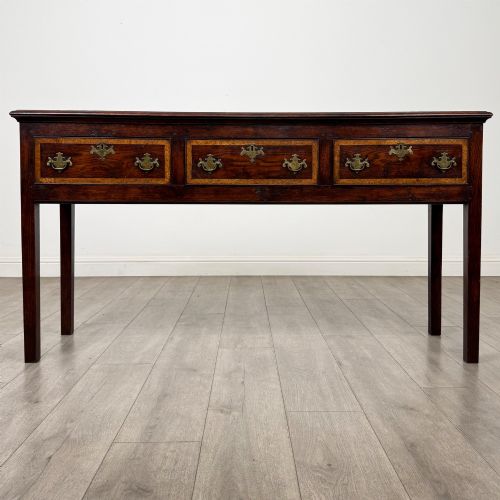
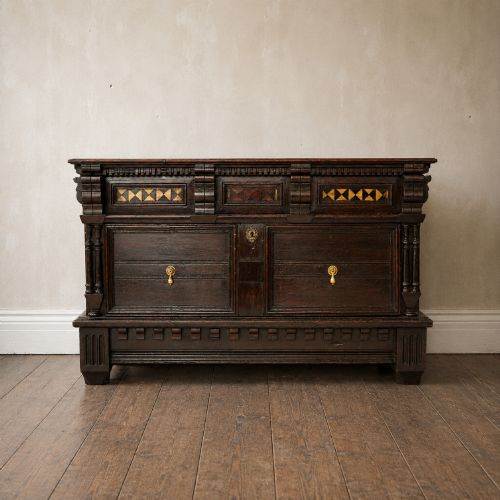
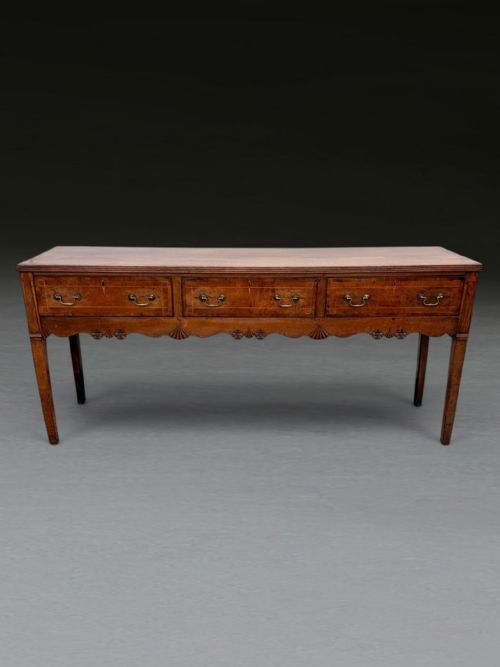
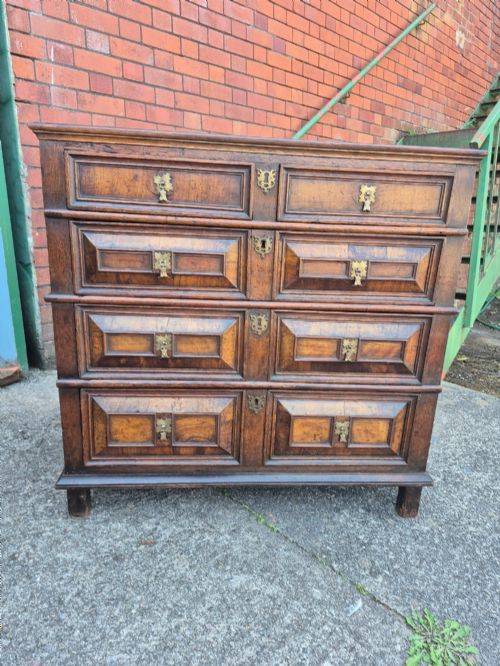

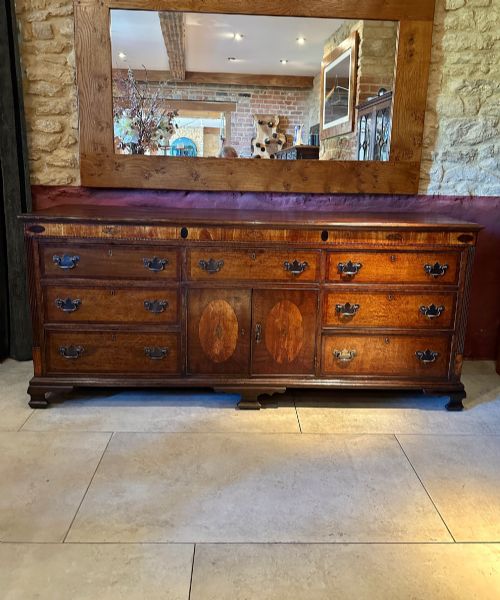


Antique Inlaid Dresser Base
These antique inlaid dresser base examples offer practical storage and striking timber work, drawing collectors who appreciate period craftsmanship.
Antique Inlaid Dresser Base
An antique inlaid dresser base combines sturdy foundational cabinetry with decorative surface ornamentation, serving historically as a utilitarian surface for food preparation and household storage. When searching for an antique inlaid dresser base, buyers encounter robust storage forms that have evolved from functional farmhouse furniture into formal reception room pieces.
The selections span multiple eras including Georgian, 19th Century, Edwardian, 17th Century, and Victorian periods. Oak and mahogany form the structural core of these pieces, frequently enhanced by contrasting boxwood, satinwood, and walnut details.
The forms on offer stretch across designated dresser bases, Lancashire dresser bases, sideboards, and occasional geometric chests of drawers. Most examples lean towards traditional English country aesthetics alongside formal Georgian and Edwardian designs.
How they were made
Cabinet makers constructed these dresser bases using solid timbers such as oak and mahogany, often pairing them with burr elm or walnut veneers for visual depth. Construction relied on traditional joinery methods that ensured long term structural integrity.
Inlay work incorporated contrasting woods like boxwood and satinwood, cut precisely into the primary surface to form geometric patterns or classical motifs. Brass hardware frequently finished the drawers and cupboards, adding functional contrast to the dark and light timbers.
Some cabinet makers hid secret compartments behind decorative inlay to keep family valuables out of sight.
What varies in quality
The refinement of the timber and the precision of the inlay work largely determine the standing of an individual piece. Finer examples display meticulous alignment in their contrasting wood veneers and botanical or geometric motifs.
The integrity of the structural wood, whether heavy oak or polished mahogany, dictates the overall presence and durability. Original brass fittings and the crispness of carved or inlaid details further distinguish standard utilitarian items from exceptional works.
Mawer and Stephenson
The Antique Inlaid Dresser Base Glossary
- Dresser base
- A low cabinet featuring drawers and cupboards, historically used in kitchens or dining rooms for serving and storage. It lacks the upper plate rack of a traditional tall dresser.
- Inlay
- A decorative technique where pieces of contrasting timber, such as boxwood or satinwood, are inserted into recessed portions of the primary wood surface to create patterns.
- Marquetry
- An elaborate form of inlay where wood veneers are assembled to form pictorial or decorative designs across the entire surface of the furniture.
- Geometric
- A decorative style utilising repeated shapes and straight lines, commonly seen in panel mouldings and inlay patterns on 17th-century furniture.
- Sideboard
- A dining room cabinet used for storing tableware and serving food, which shares functional similarities with later dresser bases.
Antique Inlaid Dresser Base: Frequently Asked Questions
What is a dresser base?
A dresser base is a low wooden cabinet with drawers and cupboards built for storing household items and serving food. It functions similarly to a sideboard.
These pieces typically sit lower than a full Welsh dresser and omit the upper shelving tier entirely.
Where were they used?
Historically, these items stood in farmhouses, country houses, and large kitchens to hold tableware and foodstuffs. They later moved into dining rooms as formal entertaining spaces evolved.
Today, they adapt easily to living rooms, hallways, and kitchens for modern storage needs.
How do I date a piece?
Dating relies on identifying the primary timber, construction methods, and decorative styles present in the woodwork. Oak and geometric patterns often point to earlier centuries, while satinwood and mahogany frequently indicate Edwardian or Georgian periods.
Hardware styles and secondary woods inside the drawers also provide clear chronological clues.
How do I care for the wood?
Maintain these surfaces by keeping them away from direct sunlight and extreme temperature fluctuations that can dry out the timber. Regular dusting with a soft cloth preserves the polished finish and the delicate inlay.
Applying appropriate wax occasionally nourishes the grain without building up heavy residue.