


Antique Indian Jewellery Box
An antique Indian jewellery box brings intricate craftsmanship and rich timber grain to a dressing table.
Antique Indian Jewellery Box
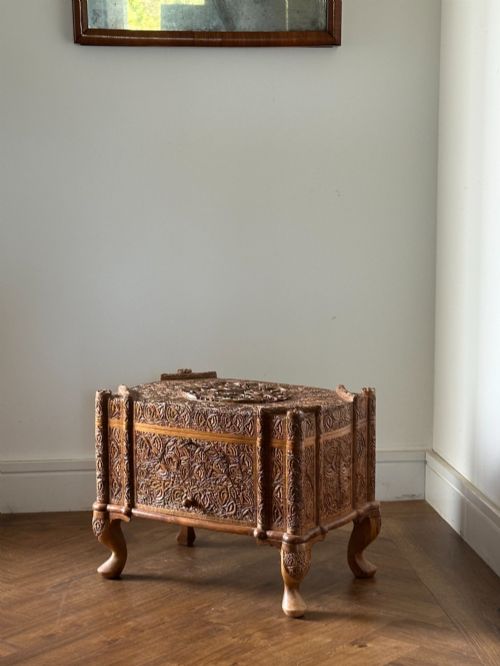
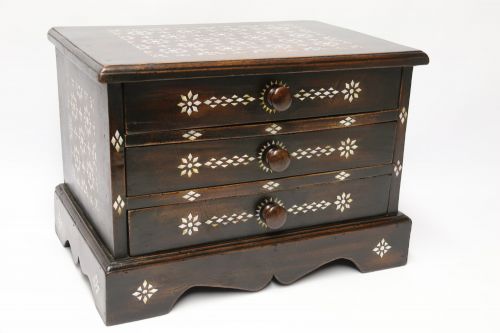
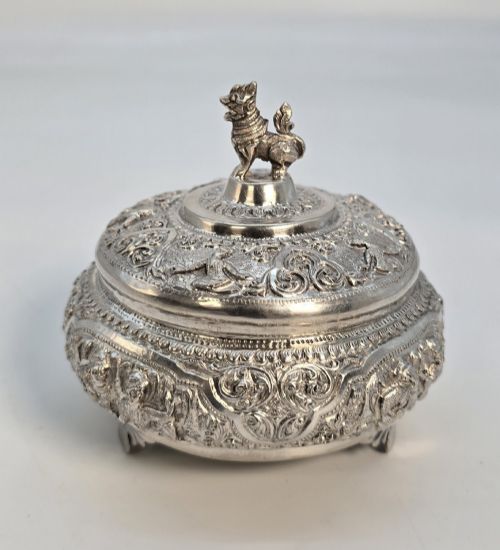
When you search for an antique Indian jewellery box, you encounter pieces designed for safekeeping precious items, often blending traditional local motifs with British colonial forms. The examples found here span the nineteenth and early twentieth centuries, encompassing styles from Anglo-Indian colonial workshops to indigenous regional craftsmanship.
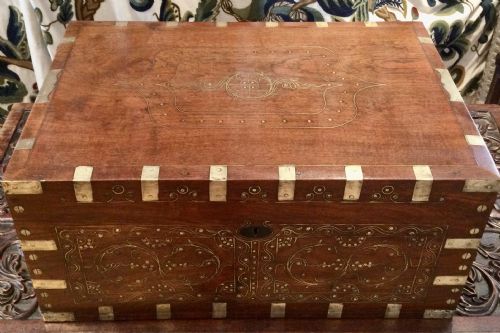
The objects take various shapes, from sarcophagus caskets and collector chests to miniature campaign trunks and simple trinket boxes. Many originate from specific historical periods such as the Victorian era, reflecting the cross-cultural exchange of the time in their construction and decoration.
Materials and construction
The makers utilised dense timbers such as teak, sandalwood, ebony, and rosewood as the primary structural foundations for these boxes. Artisans carved these woods deeply or constructed smooth surfaces ready for intricate decorative treatments.
Decoration relied on specialist techniques, including Sadeli mosaic work involving micro-mosaics of horn, bone, and other materials, alongside porcupine quill work and delicate silver plating. Brass mounts and campaign-style hardware frequently reinforced corners and provided functional lifting handles.
Judging the craftsmanship
The distinction between standard items and superior pieces rests on the precision of the decorative inlay and the depth of the carving. Finely executed Sadeli mosaic and deeply pierced ivory or bone work demonstrate a higher level of artisan skill than simpler surface decoration.
Structural integrity also separates the range, with superior boxes retaining tight joints, original brass hardware, and clean interior linings. The choice of timber affects the overall quality, with dense hardwoods and fragrant sandalwood commanding greater attention.
The Antique Indian Jewellery Box Glossary
- Sadeli mosaic
- A specialised micro-mosaic technique originating in western India, utilising geometric arrangements of materials such as bone, horn, and metal to create intricate decorative banding. This meticulous work adorns the finest nineteenth-century caskets.
- Campaign box
- A portable chest or box constructed for military officers or travellers on the move, typically featuring recessed brass handles and reinforced corners. These items combine robust utility with refined cabinetmaking.
- Porcupine quill work
- A decorative technique employing natural porcupine quills arranged in geometric patterns across the exterior of a wooden box. This distinctive surface texture appears on specific nineteenth-century Anglo-Indian pieces.
- Sarcophagus-shaped
- Describing a box whose profile tapers inward toward the top, mimicking the classical architectural form of a stone coffin. This curved silhouette was popular for large nineteenth-century jewellery caskets.
Antique Indian Jewellery Box: Frequently Asked Questions
How do I clean an antique sandalwood box?
Dust the exterior gently with a dry, soft cloth to protect the delicate carved surfaces and preserve the natural timber oils. Avoid using liquid polishes or water, which can damage the porous grain and alter the scent.
Keep the box away from direct sunlight and radiators to prevent the wood from drying out or splitting over time. Proper environmental care ensures the intricate carvings remain stable.
What is Anglo-Indian furniture?
Anglo-Indian pieces combine traditional Indian craftsmanship and local timber species with European furniture forms commissioned during the British colonial period. These items reflect a distinct cultural synthesis in their design and ornamentation.
Workshops in regions such as Vizagapatam and Bombay produced these distinctive goods for export and domestic use. The resulting objects merge local carving traditions with Western functional requirements.
How are campaign boxes identified?
Campaign boxes feature durable construction details designed for travel, including flush-fitting brass handles, reinforced brass corners, and secure internal compartments. These elements protected the contents during military transport and long voyages.
Many examples utilise sturdy hardwoods like teak to withstand demanding environmental conditions. Their functional hardware provides a reliable indicator of their original purpose.
Are these boxes lined with fabric?
Many surviving boxes retain their original velvet, silk, or paper linings inside the main compartment and lift-out trays. These textile interiors cushioned jewellery and small personal valuables during daily use.
Original linings often show signs of age and wear, which collectors view as a normal part of the piece's history. Replacements occur occasionally when previous owners sought to refresh the interior.