






Colonial Indian Inlay Box
A colonial indian inlay box brings dense bone, porcupine quill, and rich hardwoods into the room, offering an intricate puzzle of pattern for any collector.
Colonial Indian Inlay Box
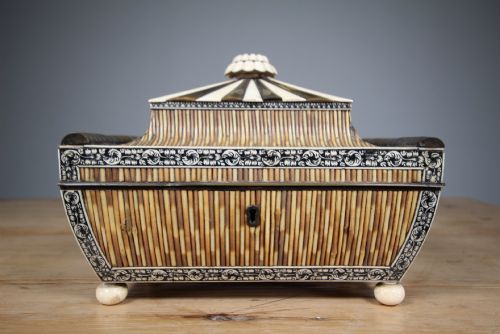
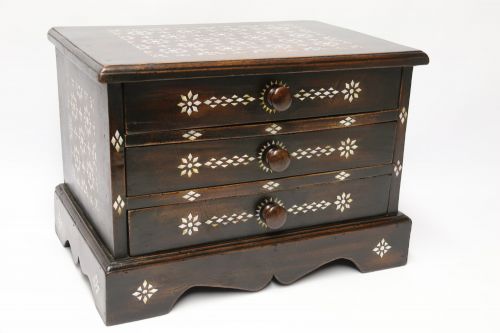
A colonial indian inlay box appears in forms ranging from small stationery boxes and sewing chests to larger blanket chests and writing slopes. These pieces emerge predominantly from the nineteenth century alongside later twentieth-century examples, reflecting the wide scope of Anglo-Indian craft. Collectors encounter decorative boxes, collector chests, and fitted work tables sharing intricate surface work.
The objects stem from distinct regional traditions within the colonial sphere, including Ceylonese workshops and Vizagapatam makers. Ebony, satinwood, and sandalwood provide the dense foundation for these varied storage forms. Each box displays the characteristic cross-cultural exchange of British utilitarian forms decorated with complex eastern inlay techniques.
Materials and construction
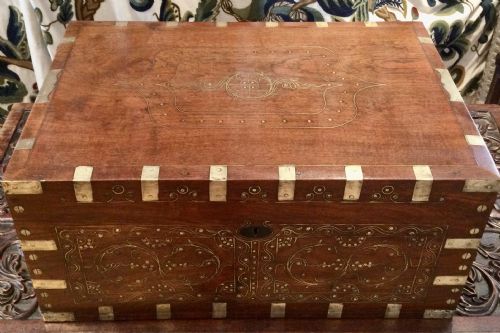
Artisans built these pieces using dark hardwoods like ebony, padouk, and satinwood, often forming the primary carcase for storage chests and writing slopes. Surfaces received elaborate decoration through contrasting materials such as bone, ivory, horn, and porcupine quill. Brass mounts, studs, and banding frequently reinforce the edges and corners of campaign and blanket boxes.
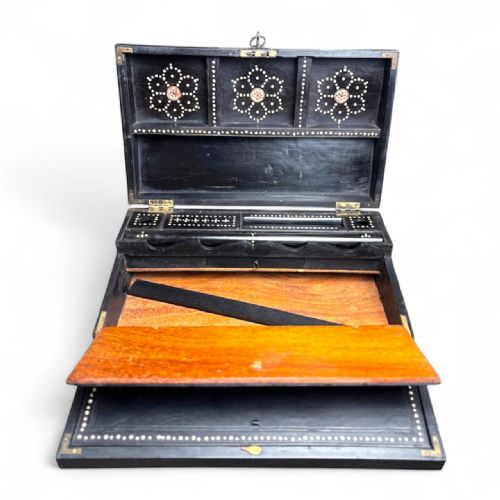
Specialised techniques such as Sadeli mosaic work create geometric micro-mosaics using slivers of horn, bone, and metal set into precise patterns. Carved wood details and delicate bone inlay define the pictorial and linear enrichment across lids and panels. Artisans fitted interiors with compartments, secret drawers, and slope mechanisms for correspondence and needlework.
Materials documented across these listings include porcupine quill, bone, horn, ivory, brass, ebony, satinwood, and sandalwood.
Variations in quality
The calibre of a colonial indian inlay box rests on the precision and complexity of its surface geometry. Pieces featuring dense Sadeli mosaic work or intricate porcupine quill arrangements demand exceptional patience from the maker, separating standard utilitarian vessels from highly finished works. The crispness of bone and ivory carving further distinguishes finer examples.
Choice of timber underpins the overall integrity, with heavy ebony and figured satinwood commanding greater visual weight than softer secondary woods. The survival of delicate quills, flush inlay work, and original fitted internal compartments dictates the condition hierarchy. Well-preserved brass hardware and secure corner strapping complete the structural standard of superior pieces.
The Colonial Indian Inlay Box Glossary
- Sadeli mosaic
- A micro-mosaic technique originating in western India, utilising minute geometric prisms of horn, bone, and metal glued to a backing. These tessellated patterns form intricate borders and panels on fine boxes.
- Porcupine quill work
- The decorative application of alternating dark and light porcupine quills, bundled together in geometric bands. This technique appears frequently on nineteenth-century Ceylonese boxes.
- Vizagapatam work
- Decorative items produced in the coastal city of Vizagapatam, characterised by elaborate engraved bone and ivory veneer panels. These pieces often feature fine cross-hatching filled with dark pigment.
- Writing slope
- A portable desk featuring a hinged, slanted lid that opens to reveal a velvet or leather-lined writing surface and internal inkwell compartments. Many colonial examples incorporate secret drawers beneath the stationery fittings.
- Campaign box
- A sturdy transportable chest or correspondence box constructed for military officers or travellers on the move. These items typically feature recessed brass handles and reinforced protective corners.
Colonial Indian Inlay Box: Frequently Asked Questions
How were these boxes used?
Owners utilised them to store writing materials, letters, sewing tools, and valuable personal collections while travelling or at home. Fitted interiors provided specific compartments for inkwells, quills, and small trinkets.
Larger versions functioned as blanket chests or storage trunks at the foot of a bed. Their robust construction made them suitable for life on the move during the colonial period.
How do I care for porcupine quill and bone inlay?
Keep these items away from direct sunlight and extreme humidity to prevent the delicate quills and bone veneers from drying out and lifting. Dust them gently with a soft, dry brush without applying liquid polishes.
Changes in temperature can cause the various natural materials to expand at different rates against the wood carcase. Maintaining a stable indoor environment protects the intricate geometric mosaic work.
How can I tell Ceylonese work from Vizagapatam pieces?
Ceylonese boxes rely heavily on the distinctive striped texture of porcupine quill work combined with ebony framing. They often present linear geometric patterns rather than figurative engraving.
Vizagapatam pieces feature finely engraved bone or ivory veneers with darkened outlines. These surfaces frequently display intricate foliate scrolls and architectural motifs unique to that coastal workshop.