
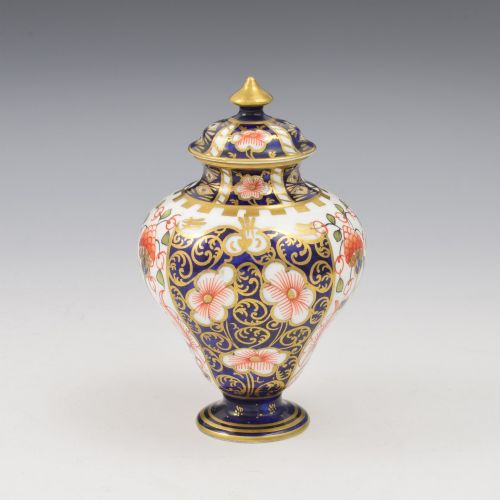

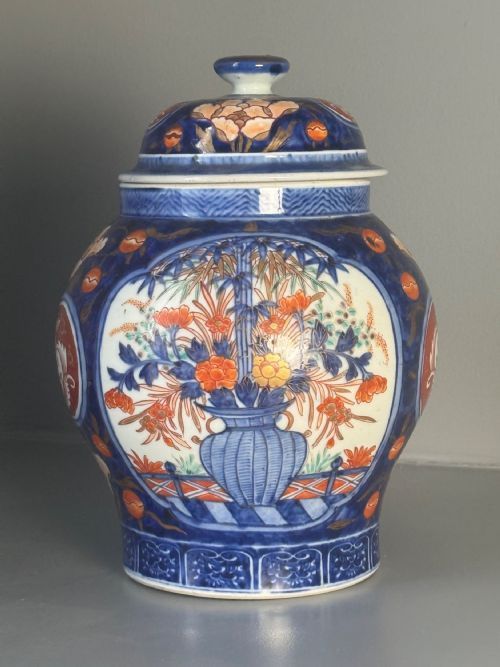


Antique Imari Lidded Vase
These antique imari lidded vases bring together dense cobalt blue and iron red tones from centuries of ceramic craft.
Antique Imari Lidded Vase
An antique imari lidded vase stands as a covered vessel produced in the distinctive Imari palette of iron red, cobalt blue, and gilt. The pieces appearing here span centuries of production, including Japanese exports from the Edo and Meiji periods alongside European interpretations.
Most examples take the form of baluster jars, ginger jars, or octagonal vessels topped with matching covers. Japanese Arita workshops and English makers such as Mason's Ironstone both contributed to this tradition of lidded display pieces.
Buyers encounter both single statement pieces and matched pairs designed for mantelpieces. The scale ranges from miniature cabinet items to large floor-standing vessels reaching significant heights.
How They Were Made
Ceramic bodies form the foundation of these vessels, utilising porcelain or ironstone depending on the origin. Potters shaped the clay on wheels or pressed it into moulds to create octagonal and baluster profiles.
Glaze and pigment application followed the initial firing, employing underglaze cobalt blue combined with overglaze iron red enamel. Artisans then added gold leaf or gilding to highlight the intricate botanical and geometric panels.
A final kiln firing fused the enamel and gold to the glazed surface. Lids were thrown and fired to match the contours of each specific vase body.
Listings span the 17th, 18th, 19th, and 20th centuries, covering both Japanese export porcelain and British ironstone production.
What Varies in Quality
The clarity and depth of the cobalt blue underglaze separate standard production from superior work. Crisp brushwork in the iron red and the generous application of gold leaf define the upper tier of execution.
Completeness dictates much of the desirability, as finding a vase with its original matching lid intact remains crucial. The precision of the potting, particularly in heavy baluster and octagonal forms, indicates the maker's skill.
Royal Crown Derby·Mason's Ironstone·Samson
The Antique Imari Lidded Vase Glossary
- Imari
- A style of ceramic decoration originating in Japan, characterised by a palette of cobalt blue, iron red, and gold. European factories later copied these distinctive aesthetic arrangements.
- Baluster
- A vase shape with a rounded body that tapers toward the base and swells above. This silhouette provides a stable foundation for detailed panel painting.
- Ironstone
- A type of heavy durable ceramic developed in Britain as a robust alternative to porcelain. It takes the Imari palette with crisp definition.
- Ginger Jar
- A globular or ovoid lidded jar originally used for storing spices. In decorative contexts, it serves as a common vessel form for Imari export wares.
- Enamel
- Opaque vitreous material applied over the glazed surface of a ceramic piece. It carries the bright red and secondary accent colours.
Antique Imari Lidded Vase: Frequently Asked Questions
How were imari lidded vases used?
These vessels originally served practical storage functions for spices, tea, or dry goods within domestic interiors. Over time, their decorative impact elevated them to formal display pieces placed on mantelpieces and cabinets.
Pairs were frequently manufactured specifically to balance symmetrical furniture arrangements in period reception rooms.
How do I tell Japanese imari from European copies?
Japanese examples usually employ fine-grained porcelain bodies characteristic of Arita kilns from the Edo and Meiji eras. European versions often utilise heavier ironstone or distinct paste compositions typical of factories like Mason's or Samson.
Brushwork style and potting weight also offer strong indicators of the piece's geographic origin.
Are the lids original to the vases?
Matching lids share the exact decorative palette, clay body, and wear patterns of the vase base. Examining the interior rim and glaze continuity helps confirm that the cover belongs to the vessel.
Replacements occur frequently given the fragility of ceramic lids over centuries of handling.
How should I clean my antique vase?
Dusting with a soft, dry brush removes surface particles safely without risking the overglaze enamel or gilding. Water and harsh cleaning agents should be avoided to protect vulnerable gold leaf and iron red pigments.
Displaying the pieces away from direct sunlight preserves the vibrancy of the original colours.