






Antique Hunting Set
An antique hunting set brings the field indoors through framed engravings, leather flasks, and fitted field gear.
Antique Hunting Set
An antique hunting set spans framed prints, leather flasks, fitted silver plate, and antler trophies from the eighteenth, nineteenth, and early twentieth centuries. These groups range from matched series of coaching and sporting engravings to practical travelling field kits and desk accessories.
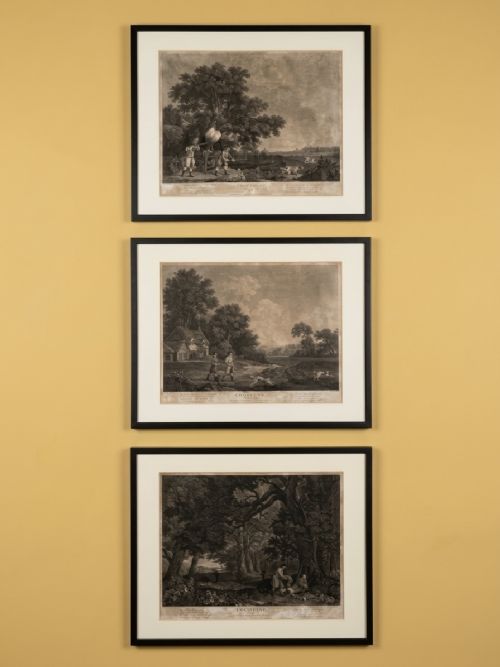
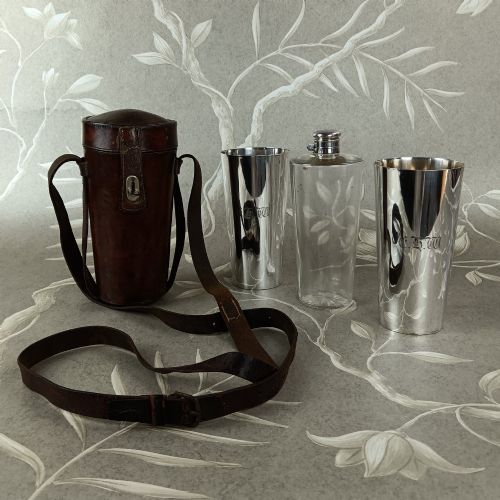
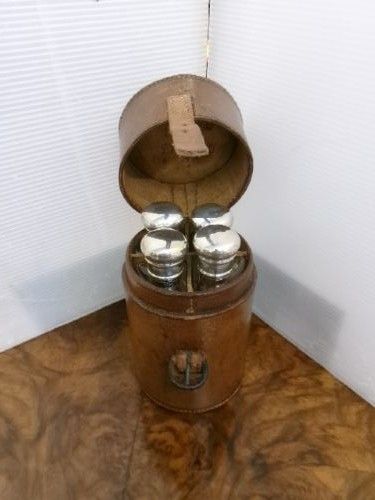
The version most commonly met on this page is the nineteenth-century framed print sequence or the cased drinking flask set. Buyers encounter Victorian leather cases housing silver-topped glass flasks alongside sets of four coloured engravings depicting fox hunts.
Makers such as James Dixon & Sons and Doulton contributed functional metalware and stoneware to the category, while artists like Alken, Herring, and Snaffles provided the graphic work. Materials run from hardwood and brass to paper, glass, and horn.
Materials and construction
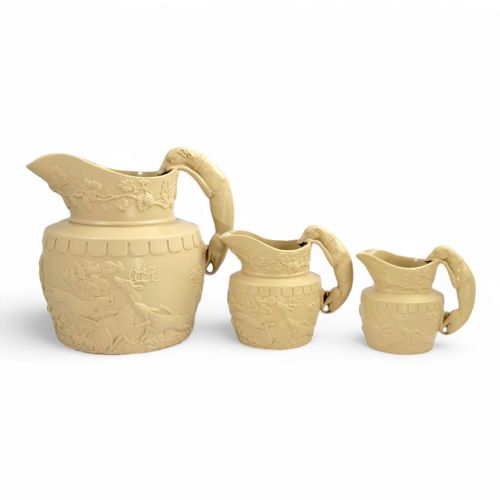
Makers utilised durable materials suited to field use and display, combining leather, hardwood, brass, and silver plate in fitted cases and desk sets. Glass flasks feature secure silver tops, while stoneware pitchers employ moulded hound handles.
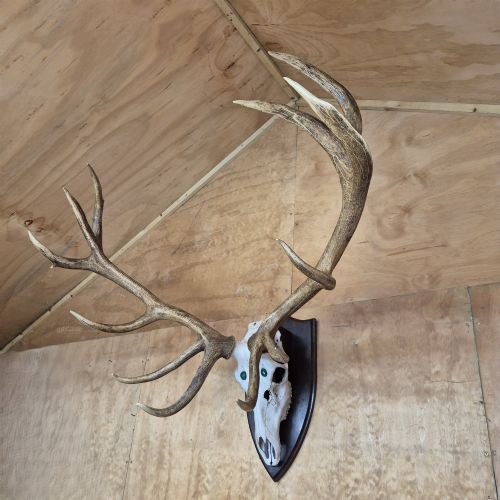
Print sets rely on hand-coloured copperplate engravings and lithographs on paper, often presented within timber frames. Carved wood decoys and mounted red deer antlers demonstrate traditional taxidermy and woodworking techniques of the period.
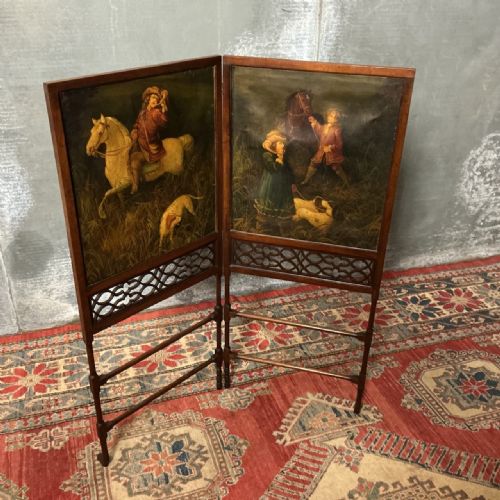
The category includes barware, framed art, fire screens, stick stands, antique books, taxidermy, and ethnographic objects.
Factors separating tiers
Quality in a hunting set depends on the crispness of the engraving impression, the integrity of hand-colouring, and the completeness of fitted components in cased sets. Complete multi-piece groups retain more character than assembled fragments.
Execution in three-dimensional items like silver plate cruets, stoneware pitchers, and carved horn handles separates utilitarian workshop output from finer studio work. Maker signatures and named artist attributions elevate the standing of prints and metalware.
James Dixon & Sons·Doulton·Arthur Ackermann·Robert Smith Surtees
The Antique Hunting Set Glossary
- Cruet set
- A matched collection of small glass bottles or containers for condiments, often mounted in a silver plate frame for the dining table.
- Garniture
- A set of three or more ornamental objects, such as a clock paired with matching side pieces, designed to display on a mantelpiece.
- Jasper
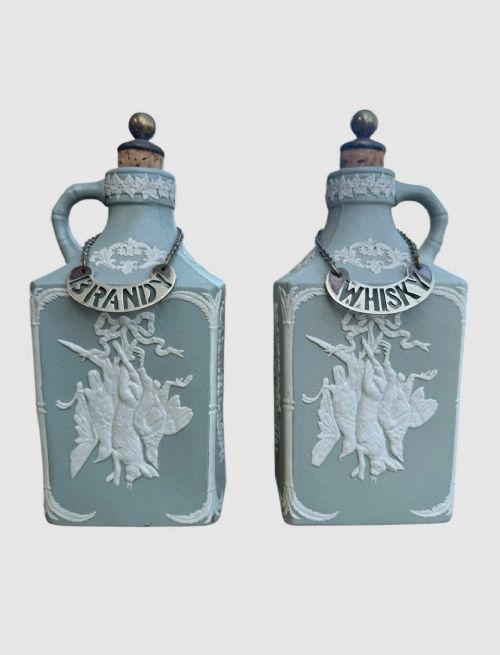
- A fine stoneware developed in the eighteenth century, used here for moulded spirit flagons and decanters.
- Lithograph
- A print made from a drawing on limestone or metal plate, widely used for nineteenth-century sporting scenes.
- Spirit flagon
- A drinking vessel or decanter designed to hold spirits for consumption during field sports.
Antique Hunting Set: Frequently Asked Questions
What items belong in an antique hunting set?
An antique hunting set comprises grouped items relating to field sports, including sets of framed coaching or fox hunting prints, leather cases with silver-topped flasks, and desk accessories featuring antlers or hound motifs.
Buyers also encounter ceramic pitchers, glassware, and field equipment bearing sporting themes from the eighteenth to the early twentieth centuries.
How were cased spirit sets used?
Cased spirit sets provided portable refreshment during outdoor pursuits such as hunting, shooting, and coaching. The leather or wooden cases kept glass flasks secure and protected silver components during travel.
These sets were packed into carriages or carried into the field for use during pauses in the sport.
How do I display framed hunting prints?
Framed hunting prints look best hung in balanced series, particularly sets of four that depict sequential moments in a chase or represent the four seasons of sporting art. Keep them out of direct sunlight to protect the hand-colouring on the paper.
Pairing print sets with related objects like leather flasks or mounted antlers creates a cohesive display in a study or hall.
How can I tell the period of a print set?
Print sets reveal their period through paper quality, printing techniques such as copperplate engraving or lithography, and framing styles like Hogarth mouldings. Look for publisher details and dates inscribed on the margins.
Signatures from known sporting artists like Alken, Herring, or Snaffles further help date the work to the nineteenth or early twentieth century.