



Antique Hunting Lithograph
These antique hunting lithograph prints capture field sports through the nineteenth and twentieth centuries, offering framed wall art for collectors of British sporting history.
Antique Hunting Lithograph
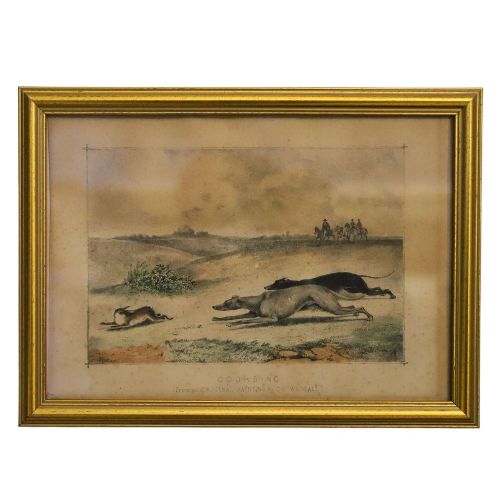
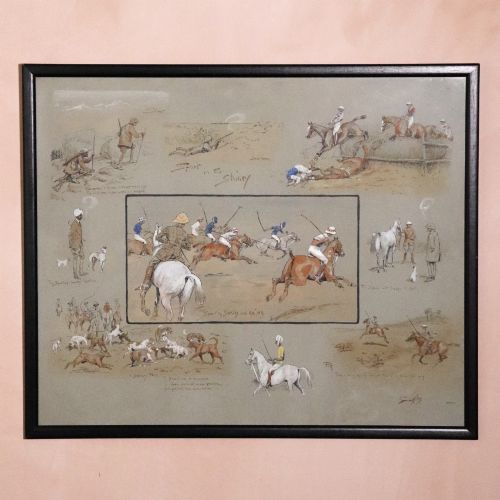
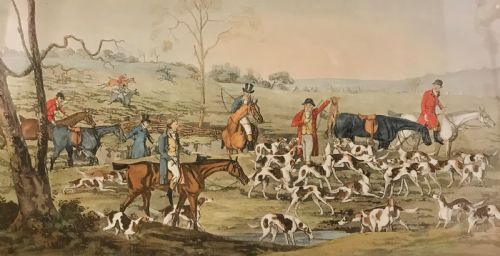
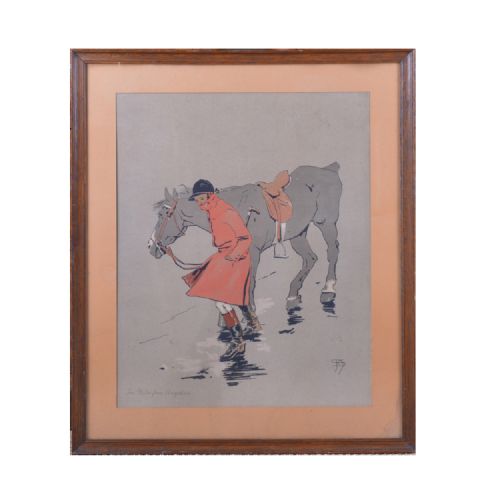
When you search for an antique hunting lithograph, you encounter framed wall art that records historic field sports and equestrian scenes. These pieces typically take the form of framed prints, artwork, and wall displays produced across the nineteenth and twentieth centuries.
The selection here draws upon British sporting art traditions, encompassing periods from the Georgian era through to the 1940s. You will frequently find works associated with British country house aesthetics and British sporting artists of note.
How they were made
The works rely upon paper supports, ink, and cardboard, utilising lithographic and chromolithographic printing techniques to render detailed sporting subjects. Many examples incorporate hand-colouring or printing in multiple inks to capture the atmosphere of the hunting field.
Presentation relies heavily on period framing materials, with wood, gesso, and gilt wood mouldings finished with gold leaf. These frames protect the fragile paper while complementing the traditional character of the prints.
The listings here feature paper supports combined with traditional wood, gesso, and gold leaf framing materials.
What varies in quality
Quality rests upon the crispness of the original ink impression and the fidelity of the paper support. Earlier impressions from the nineteenth century often display sharper tonal gradations than later reproductions.
The choice of framing contributes significantly to the overall merit of the piece. Original or period frames utilising gesso, gilt wood, and gold leaf elevate the presentation above items housed in modern replacements.
The Antique Hunting Lithograph Glossary
- Lithograph
- A planographic printmaking method based on the repulsion of oil and water, utilising a flat stone or metal plate. This technique allows for subtle tonal nuances well-suited to detailed sporting illustrations.
- Chromolithograph
- A colour lithograph produced using multiple stones or plates, one for each ink colour. This method creates rich, multi-toned prints without requiring manual hand-colouring.
- Gesso
- A plaster-like mixture applied to wood frames as a base for gilding or painting. It provides a smooth surface for intricate mouldings.
- Gilt wood
- Wood carved and coated with gold leaf or metallic powder. It forms the decorative border of traditional picture frames.
Antique Hunting Lithograph: Frequently Asked Questions
What periods do these hunting prints cover?
The pieces span from the Georgian period through the Victorian and Edwardian eras up to the 1940s.
They reflect changing tastes in British sporting art across more than a century of production.
How should I frame and display them?
Many arrive already presented in period wood, gesso, or gilt wood frames that suit their traditional aesthetic.
Keep them away from direct sunlight to protect the paper support and printing inks from fading.
Who are the notable artists featured?
The listings include works by recognised figures in British field sports art such as H. Alken, C. H. Weigall, and Snaffles.
Their prints document nineteenth-century and twentieth-century equestrian and hunting subjects.
Are these works original or reproductions?
The items comprise original nineteenth-century and twentieth-century prints, chromolithographs, and published plate series.
Each piece reflects the printing technology and artistic standards of its specific production era.