



Antique Hunting Dog Portrait
An antique hunting dog portrait captures the noble character and working history of sporting breeds through the skilled brushwork of nineteenth-century animal artists.
Antique Hunting Dog Portrait
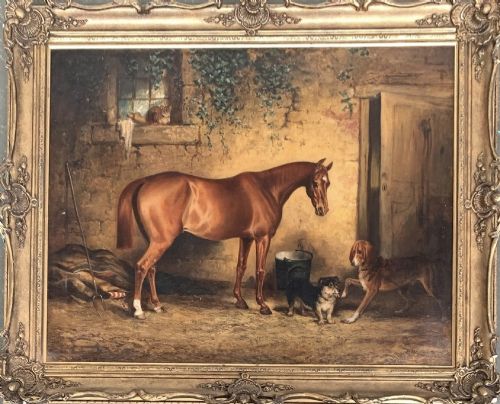
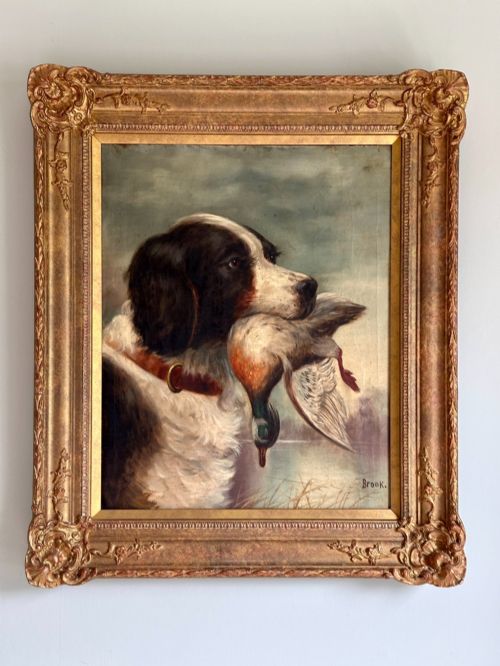
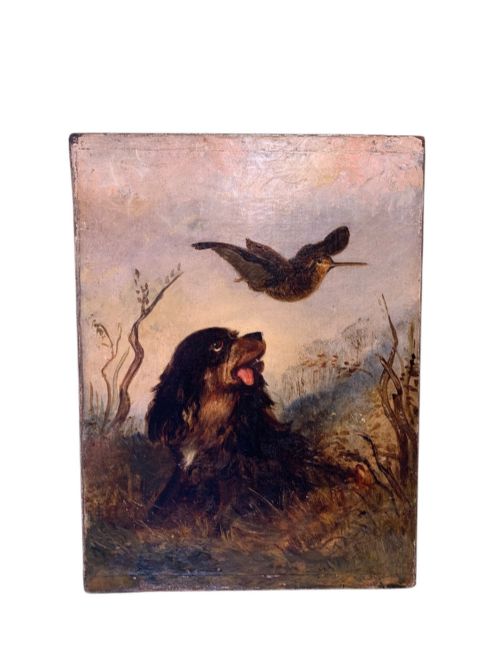
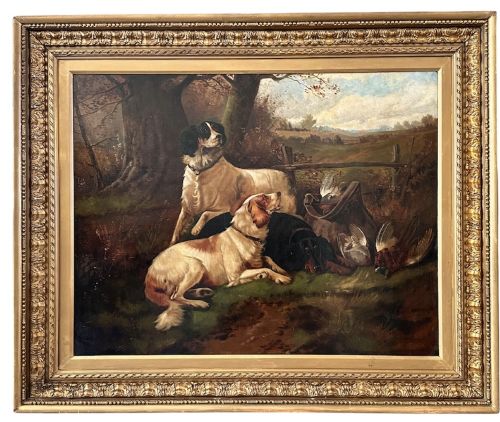
When you search for an antique hunting dog portrait, you encounter framed watercolours and oil paintings depicting spaniels, pointers, hounds and terriers in rural landscapes. The nineteenth century dominates this selection, yielding Victorian sporting art alongside earlier Georgian depictions of gun dogs and pack hounds.
The subjects range from solitary studies of prized working dogs to energetic scenes of gun dogs with the day's bag or hounds resting in the field. These works record the deep social history of the hunt, preserving the specific canine companions valued by sportsmen of past centuries.
Materials and methods
Artists painted these works primarily in oil on canvas or oil on board, building up rich textures to render the sheen of a dog's coat and the damp earth of a landscape. Watercolour on paper appears frequently for lighter, highly detailed studies produced during the Victorian era.
Makers framed these paintings in wood, often enhanced with gilt moulding to suit the formal domestic interiors of nineteenth-century country houses. Some unusual pieces utilise artist palettes as the support, combining the tools of the trade directly with the finished canine portrait.
Antique Hunting Dog Portrait Retail Price Guide 2026
Typical asking prices for hunting dog portrait among the pieces listed under this phrase on Sellingantiques today, from the lower quarter to the upper quarter. They describe what is for sale here now, not the wider market.
Terriers are captured mid-mission guarding against trapped rats, proving that Victorian working dogs took their pest control duties very seriously.
Separating the works
Quality rests upon the artist's anatomical precision and ability to convey the distinct personality of the breed, from the alert stance of a pointer to the heavy jowls of a bloodhound. Master painters of the sporting tradition capture bone structure, muscle tension and intelligent expression with striking naturalism.
The treatment of the surrounding landscape also distinguishes the tier of a piece, with superior works integrating the animal seamlessly into atmospheric skies and convincing rural terrain rather than static backdrops.
John Frederick Herring Senior·Colin Graeme Roe·Robert Cleminson·Arthur Wardle·Henri Schouten
The Antique Hunting Dog Portrait Glossary
- Gun dog
- A type of hunting dog trained to find, flush or retrieve game for sportsmen carrying firearms. Pointers, spaniels and setters fall into this working category.
- Sporting art
- A genre of painting dedicated to rural sports, field pursuits and the animals associated with them. Canine portraiture forms a central pillar of this tradition.
- Canvas
- A heavy woven fabric stretched across a wooden frame to serve as the primary support for oil painting. It provides the characteristic texture seen in period works.
- Watercolour
- A paint consisting of pigment suspended in a water-based solution, applied to paper. It allows for delicate washes and fine illustrative detail.
Antique Hunting Dog Portrait: Frequently Asked Questions
What breeds appear most often?
Pointers, spaniels, foxhounds and setters form the vast majority of the canine subjects depicted in these nineteenth-century paintings.
Artists frequently portrayed the specific dogs relied upon by landowners and sportsmen during field pursuits.
How do I date a painting?
Stylistic clues, artist signatures, framing methods and canvas stamps help establish the period of creation.
Victorian sporting art often displays distinct framing styles and costume details in accompanying human figures that assist with dating.
Were these painted from life?
Many professional animal painters of the era worked directly from prized working dogs owned by prominent sportsmen.
Some compositions draw upon established artistic traditions or academic studies rather than live sittings.
How should I display them?
These framed artworks suit traditional studies, libraries and living rooms alongside other rural or sporting items.
Direct sunlight should be avoided to protect oil pigments and watercolours from fading over time.