




Antique Horse Watercolor
When you search for an antique horse watercolor, you encounter equestrian subjects, hunting scenes, and working animals captured on paper across the nineteenth and early twentieth centuries.
Antique Horse Watercolor
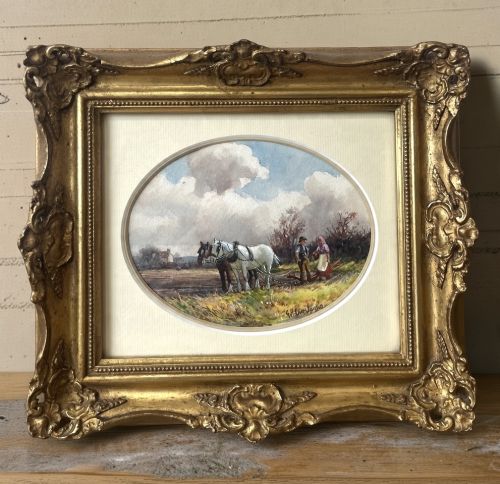
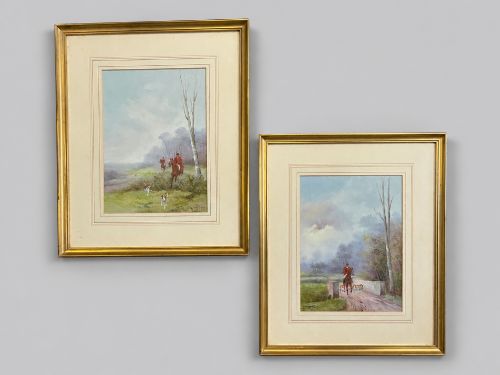
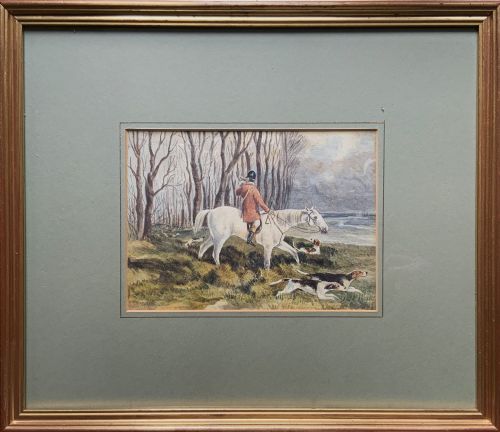
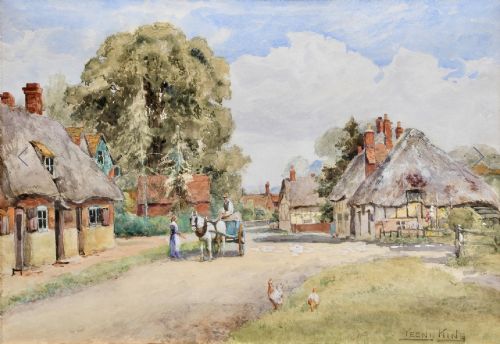
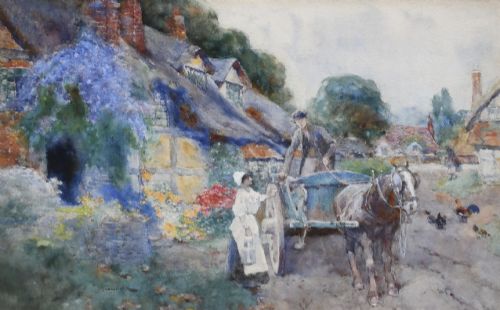
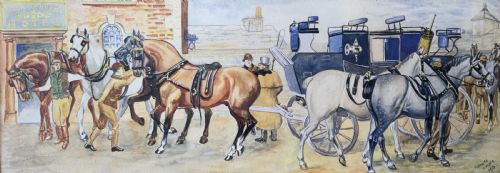
An antique horse watercolor brings together British sporting art, rural pastoral scenes, and urban street views from periods including the Victorian, Edwardian, and Georgian eras. You will find works depicting hunting scenes, cart horses hauling seaweed or timber, cavalry regiments, and country fairs.
The pieces on this page span from the early eighteenth century through to the nineteen-thirties, reflecting diverse artistic movements such as British Impressionism, Realism, and Sporting Art. They range from rapid preparatory sketches to highly finished exhibition pieces signed by known artists.
Materials and technique
These works rely primarily on watercolour pigment and ink applied to paper supports, often framed behind glass with wooden surrounds to protect the delicate medium from moisture and light. Artists utilised watercolour paint combined with bodycolour or gouache on certain sheets to build opaque highlights on horse coats and tack.
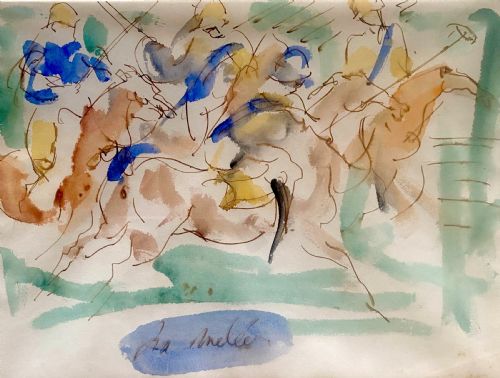
Techniques vary from loose, atmospheric washes characteristic of British Impressionism to precise draughtsmanship seen in military and equestrian studies. Painters laid down fluid pigments to capture movement in subjects like galloping hunts and working plough teams.
Antique Horse Watercolor Retail Price Guide 2026
Typical asking prices for horse watercolor among the pieces listed under this phrase on Sellingantiques today, from the lower quarter to the upper quarter. They describe what is for sale here now, not the wider market.
Listings feature works created across various media on paper, combining watercolour pigment with ink, gouache, and graphite across the Victorian and Edwardian periods.
Distinctions in execution
Quality in these watercolours rests on the artist's command of anatomy and motion, particularly in rendering the complex musculature and posture of horses under effort or at speed. A stronger piece demonstrates confident brushwork and accurate perspective in complex compositions involving multiple figures and animals.
The depth of the paper support, the preservation of pigment vibrancy without excessive fading, and the quality of the original framing contribute to the standing of an individual sheet. Signed works by documented painters working within recognised sporting and pastoral traditions hold distinct art-historical weight.
Albert Ludovici Jnr·Herman S Melville·William Manners·James William Booth·Charles James Lauder·Basil Nightingale·John Augustus Atkinson·Helena Maguire·George Hamilton Constantine·Rowland Henry Hill·Thomas Mackay·Adrian Jones·Robert Hollands Walker·Basil Bradley·Charles Clifford Turner·John Sanderson Wells·Charles Johnson Payne Snaffles·William J Hodgson·Henry Charles Fox·Walter Duncan·Johan Noah Bemmel·Frank Saltfleet
The Antique Horse Watercolor Glossary
- Watercolour
- A painting method in which the paints are made of pigments suspended in a water-soluble vehicle. It is typically applied to paper to achieve translucent, luminous washes of colour.
- Gouache
- An opaque water-based paint consisting of pigment, water, a binding agent and inert white pigment. Artists use it alongside watercolour to add solid highlights and opaque details.
- Sporting Art
- A genre of painting dedicated to depictions of rural sports, equestrian events, hunting, and racing. It flourished in Britain throughout the eighteenth, nineteenth, and early twentieth centuries.
- Equestrian
- Pertaining to horses and horseback riding. In art, this describes subjects where the horse is the primary focus of the composition.
Antique Horse Watercolor: Frequently Asked Questions
What periods do these watercolours come from?
The works span from the early eighteenth century through the Victorian and Edwardian eras up to the nineteen-thirties. They reflect the stylistic shifts of British art across multiple generations.
Most pieces date from the nineteenth and early twentieth centuries, capturing traditional rural and sporting life before the widespread adoption of the motor car.
How should I frame and display an antique paper painting?
Paper paintings require protection behind glass to prevent atmospheric damage and airborne pollutants from degrading the pigment. Acid-free mounts should be used so the paper does not touch the glass directly.
Hang your watercolour away from direct sunlight to prevent the pigments from fading over time. Maintaining stable room temperature and humidity protects both the paper support and the wooden frame.
What subjects are most common in these equestrian works?
Common subjects include hunting scenes, cavalry charges, horse fairs, and working animals such as cart horses hauling timber or seaweed. Artists also recorded urban street life featuring cabs and horses in cities like London and Paris.
These depictions offer a record of the crucial role horses played in transport, agriculture, military operations, and recreation before mechanisation.