
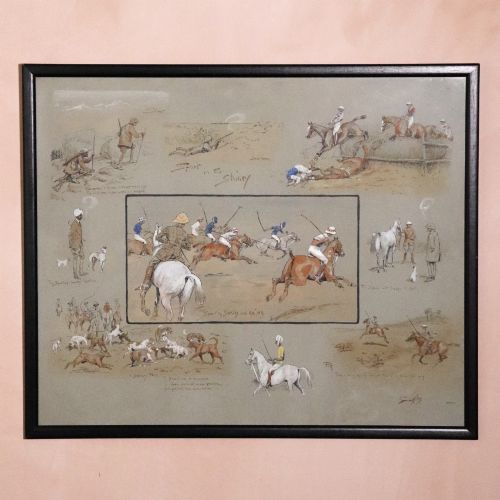


Antique Horse Racing Lithographs
These antique horse racing lithographs capture the speed and tension of the turf through period ink on paper.
Antique Horse Racing Lithographs
When you search for antique horse racing lithographs, you encounter framed prints and wall art spanning the nineteenth century, the Edwardian era, and the nineteen thirties. These works depict jockeys, racehorses, and sporting scenes through British sporting art, British colonial styles, and nineteenth-century American traditions.
The selections available here range from Vanity Fair double-page spreads to original prints by Snaffles and political prints by Thomas Worth. Each piece records historical sporting culture and character studies framed behind glass in wood housings.
Victorian and later Edwardian examples dominate the selection, offering a direct window into historical equestrian events and humorous field scenes. Buyers find both individual framed pieces and curated groups that document the visual language of past sporting artists.
Materials and production methods
These works utilise printing ink applied to paper through lithographic and chromolithographic techniques to achieve rich tonal variation and colour. The resulting sheets capture fine illustrative line work and vibrant hues typical of period periodical and plate production.
Finished prints are housed in wood frames and protected beneath glass to preserve the delicate paper surfaces from atmospheric wear. The combination of ink, paper, wood, and glass constitutes the physical makeup of every piece in this category.
Expect encounters with carpet beaters and bobbery wallahs alongside thoroughbreds on the turf.
Assessing quality and finish
Quality rests upon the clarity of the lithographic impression and the preservation of the original ink tones on the paper sheet. Finer examples retain their intended colour vibrancy without fading, whereas lesser specimens suffer from surface dullness.
The execution of the framing also marks the difference between standard items and superior examples, particularly where period wood housings complement the age and origin of the print.
Thomas Worth·Snaffles
The Antique Horse Racing Lithographs Glossary
- Chromolithograph
- A colour lithograph produced using multiple stones or plates, one for each colour applied. This technique allows for vibrant, multi-coloured prints that define many nineteenth-century periodical illustrations.
- Lithograph
- A print made from a flat stone or metal plate treated to retain ink only in desired areas. The process enables detailed reproduction of hand-drawn illustrations.
- Double page
- A large format print spanning two pages of a publication, often featuring a central fold line. Vanity Fair frequently utilised this layout for prominent caricatures and sporting scenes.
- Framed print
- An artwork mounted and displayed within a protective border and glass enclosure. This presentation guards the paper from environmental damage.
- Sporting art
- Artistic representation of field sports, equestrian events, and animals. This genre records the culture and excitement of historical racing.
Antique Horse Racing Lithographs: Frequently Asked Questions
How were these prints used originally?
Period publications like Vanity Fair distributed these images to subscribers who bound them into volumes or displayed them on walls. They provided middle and upper-class households with affordable contemporary art and social commentary.
Over time, owners chose to frame individual sheets to protect the paper and showcase specific sporting or satirical subjects in domestic interiors.
How do I care for framed paper prints?
Keep framed lithographs away from direct sunlight to prevent the ink and paper from fading over time. Maintaining stable indoor humidity levels also protects the paper and wood frames from moisture damage.
Clean the glass gently with a soft cloth, avoiding any liquid sprays that might seep beneath the frame edge and stain the paper.
How do I identify Victorian prints?
Victorian examples often display the characteristic typography, paper stock, and subject matter associated with late nineteenth-century British publishing houses. Look for double-page spreads with chromolithographic colouring typical of the period.
Comparing the artistic style and framing materials to documented examples from the same decade helps confirm the era of production.