



Antique Hearth Panel
An antique hearth panel protects a room from radiant heat while framing the fireplace with period craftsmanship.
Antique Hearth Panel
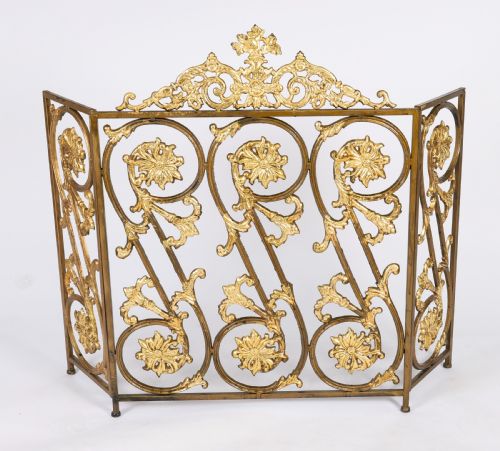
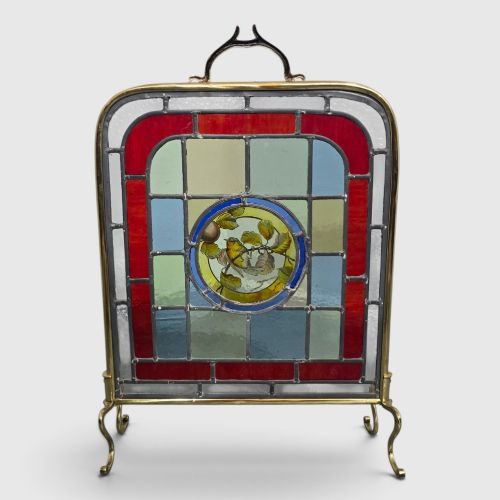
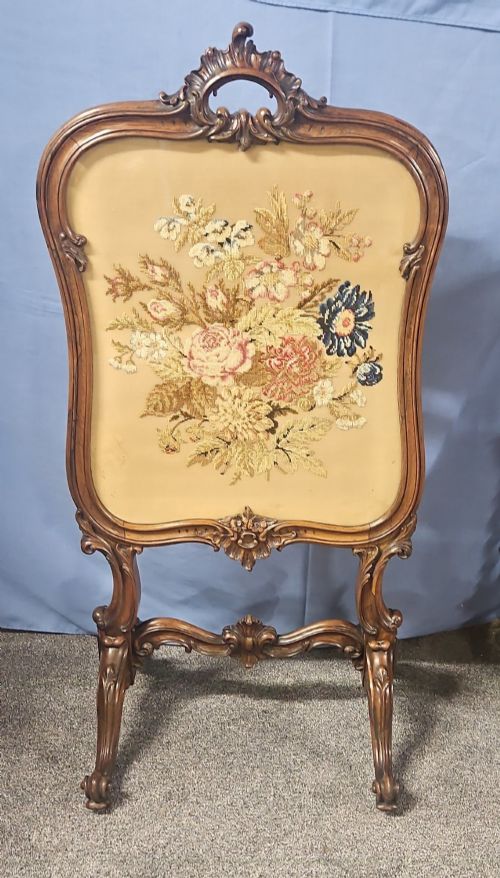
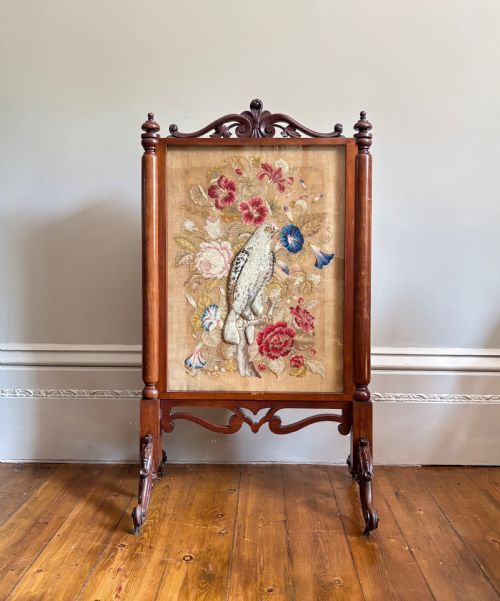
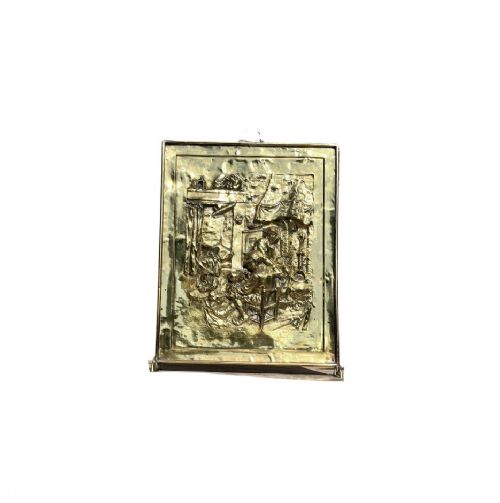
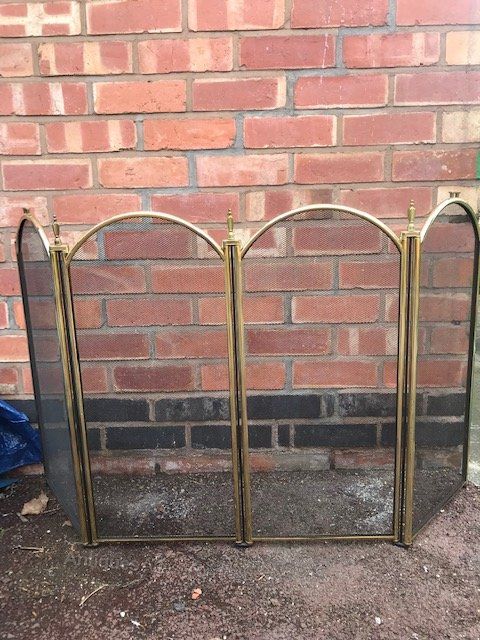
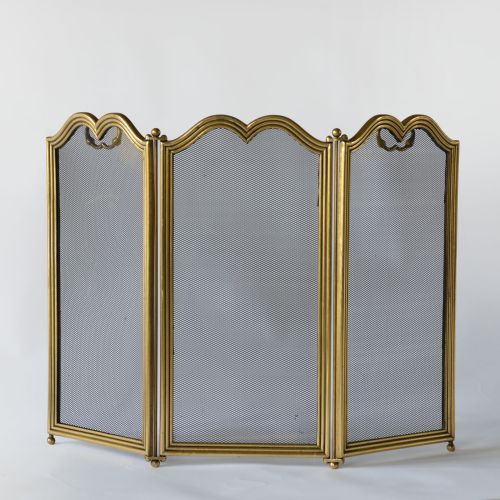
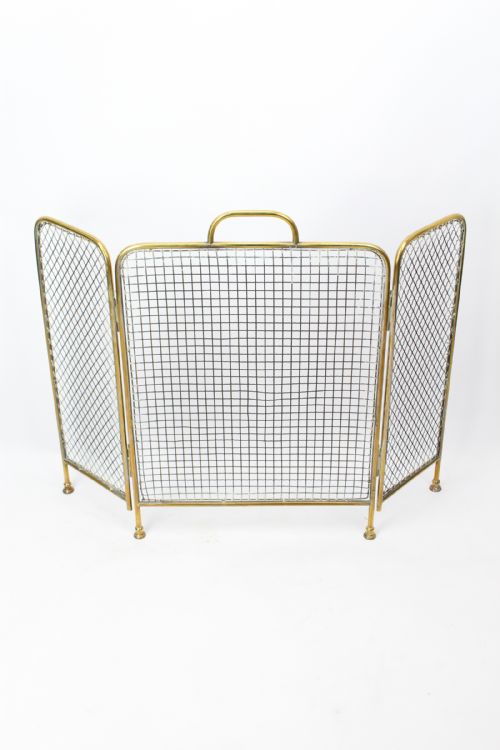
When you search for an antique hearth panel, you encounter an array of items designed for the fireplace, ranging from folding brass spark guards to framed needlework screens and cast iron fire backs. The examples you meet on this page span the Georgian, Regency and Victorian periods up through the early twentieth century.
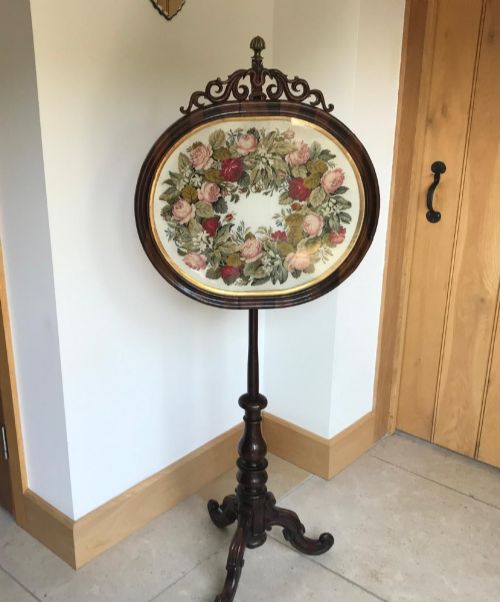
The objects take several distinct physical forms, including pole screens on slender stands, tripartite folding guards in gleaming brass or copper, and heavy floor-standing screens constructed from oak, walnut or mahogany.
Many incorporate decorative inserts such as woolwork panels, Berlin work, embroidered silk or oil paintings, serving both a functional role before the hearth and a decorative purpose within the principal rooms of the house.
Materials and construction methods
Makers utilised a combination of hardwoods like mahogany, rosewood, oak and walnut for the structural frames, often carving them with period motifs or turning the central columns of pole screens.
Metalwork forms a significant portion of the evidence, with brass, copper and iron beaten, cast or assembled into mesh spark guards, folding panels and decorative frames.
Textile arts complete the construction of many pieces, featuring hand-stitched needlepoint, woolwork, Berlin work and silk embroidery stretched securely within the wooden or metal borders.
Distinctions in craftsmanship and materials
The quality of an antique hearth panel rests upon the integrity of its joinery and the weight of its metal components, where thicker gauges of brass and copper endure repeated heat exposure without warping.
Finely executed needlework, detailed hand-carving in the wooden frames, and sophisticated patination set finer examples apart from simpler utilitarian guards.
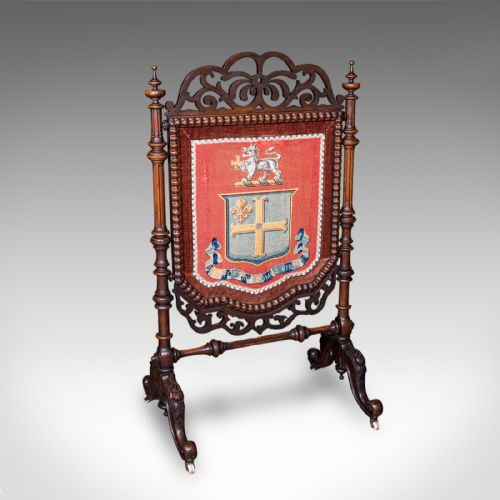
The harmony between the primary frame and its internal panel - whether a finely embroidered armorial crest or a robust cast iron plate - determines the overall coherence and desirability of the piece.
The Antique Hearth Panel Glossary
- Pole screen
- A standing firescreen featuring an adjustable panel mounted on a vertical wooden pole with a tripod base. This design allowed occupants to slide the screen up or down to shield their faces from the direct heat of the fire.
- Needlework
- Hand-stitched textile work utilised for decorative panels within firescreens. Such needlepoint often depicts floral arrangements, coats of arms or pastoral scenes.
- Spark guard
- A protective screen, frequently constructed from folded brass or fine wire mesh, placed directly in front of the fireplace opening. Its primary function is containing stray embers while permitting heat to enter the room.
- Berlin work
- A popular mid-nineteenth-century style of needlepoint worked in coloured wools over charted grid patterns. It produced vibrant, highly detailed pictorial panels often seen mounted in Victorian frames.
- Fire back
- A heavy cast iron plate positioned at the back of a fireplace hearth. It radiates heat forward and protects the rear masonry wall from intense flames.
Antique Hearth Panel: Frequently Asked Questions
How did people use pole screens?
Occupants positioned pole screens between their seating and the fireplace to deflect excessive radiant heat from their faces and complex hairstyles.
The height of the panel was adjusted manually along the vertical shaft as the fire burned down or the room temperature shifted.
What materials make up these screens?
Frames typically employ cabinet timbers such as mahogany, walnut, rosewood and oak, alongside polished metals like brass, copper and iron.
Internal panels incorporate textiles including woolwork, silk embroidery and needlepoint, or occasionally painted metal and glass.
How do I date a brass fire screen?
Stylistic indicators help identify the period, with Rococo Revival and elaborate floral embossing pointing to the mid-nineteenth century.
Simpler geometric lines, patinated copper and unadorned folding sections more frequently suggest later Arts and Crafts or Edwardian manufacture.
Where should I place a screen at home?
These pieces fit naturally before an unused or seasonal fireplace hearth to introduce texture, colour and period character to a room.
Folding brass guards and heavy wooden frames also function well freestanding against walls or empty chimney breasts as decorative focal points.