


Antique Heart Charm Bracelet
An antique heart charm bracelet is a treasured piece of jewellery that combines a substantial link chain with a secure padlock fastening, offering both sentimental weight and enduring style.
Antique Heart Charm Bracelet
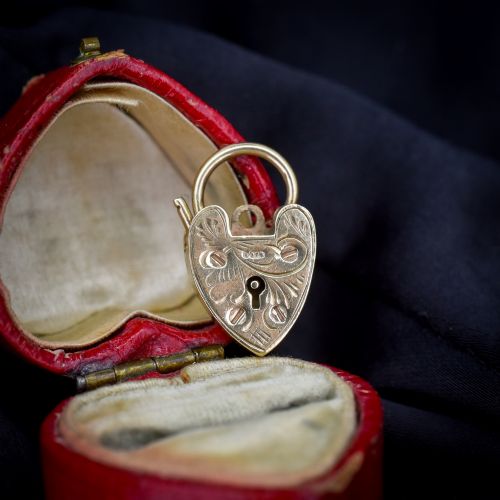
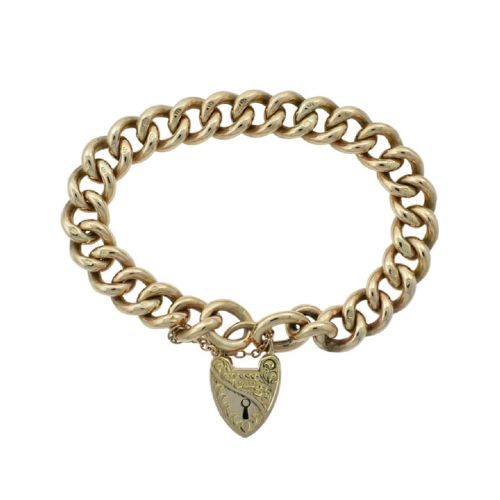
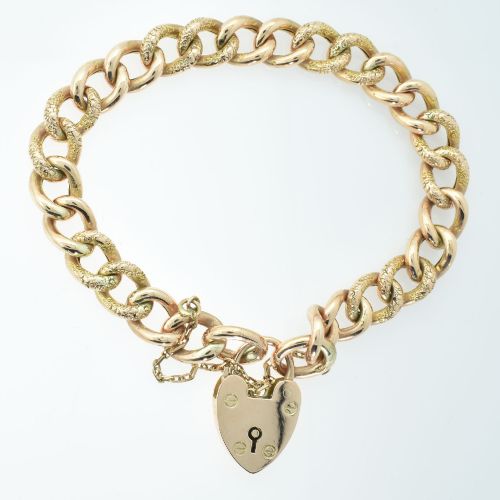
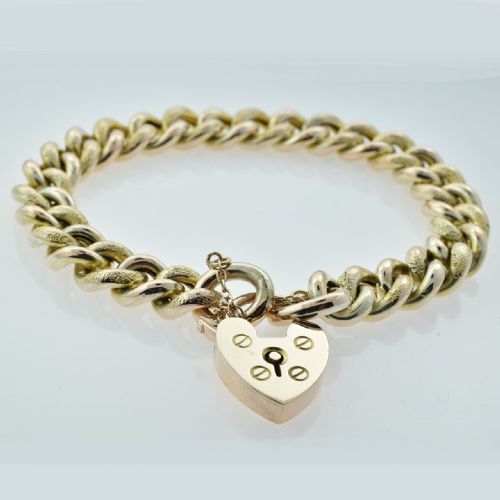
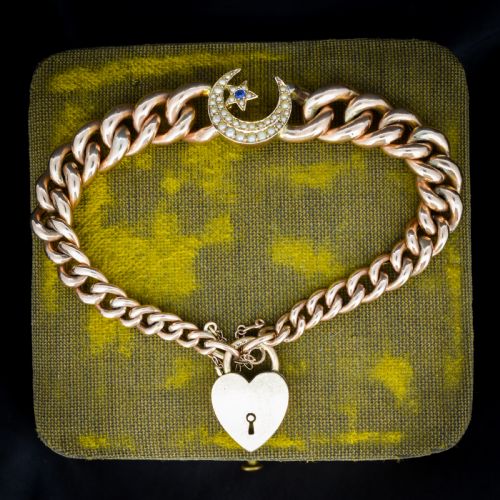
When you search for an antique heart charm bracelet, you are looking at intricate gold and silver link chains from the Victorian, Edwardian and later periods. The most common configuration on this page pairs a robust curb, gate or fancy link bracelet with a distinct heart-shaped padlock clasp that acts as the centrepiece.
Many of these bracelets feature charms and pendants attached directly to the links or integrated into the fastening mechanism. Designs range from plain polished gold to heavily engraved surfaces, occasionally accented with diamonds, pearls, rubies or rock crystal.
The periods represented span from the late nineteenth century through the Edwardian era and into the mid-twentieth century, including later revival styles. Each piece reflects the jewellery craftsmanship of its specific decade, from Victorian gate links to 1960s yellow gold pendants.
Materials and construction methods
These bracelets are constructed primarily from nine-carat gold, appearing in yellow, rose and occasionally higher carat weights like fifteen-carat gold, alongside sterling silver and niello work. Metal smiths formed interlocking links such as curb chains and gate links by hand or using period machinery, ensuring flexibility and strength.
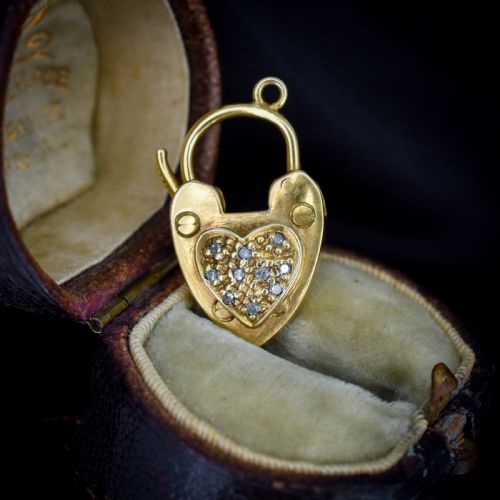
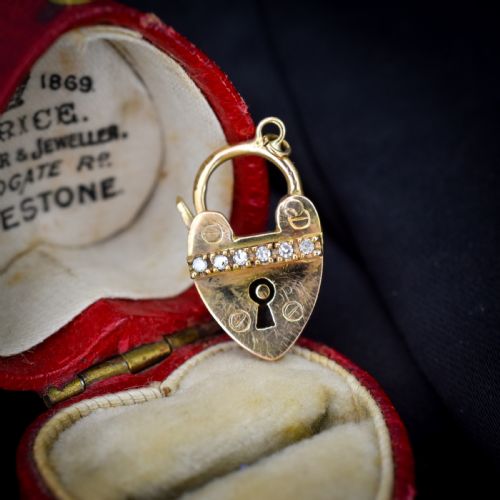
Surface decoration relies heavily on hand engraving, creating floral or geometric patterns across the metal links and padlock fronts. Gemstones including diamonds, seed pearls, rubies and rock crystal are flush set or mounted in delicate bezels to embellish the heart padlocks and associated pendants.
Listings feature nine-carat rose gold, nine-carat yellow gold, silver, and fifteen-carat gold across Victorian, Edwardian, and nineteen-sixties periods.
Assessing craftsmanship and condition
Quality in these pieces is dictated by the crispness of the hand engraving and the structural integrity of the individual links. Superior examples retain deep, sharp chasing on the heart padlocks and secure, well-fitted hinges that click firmly into place.
The integration of gemstones also separates items within the range, as well-matched seed pearls or clean diamonds securely set into gold work require a higher degree of bench skill than plain polished metal versions.
The Antique Heart Charm Bracelet Glossary
- Curb chain
- A type of jewellery chain consisting of identical flat, interlocking links that lie flat against the wrist. This form provides the sturdy foundation required to hold heavy padlocks and charms securely.
- Gate bracelet
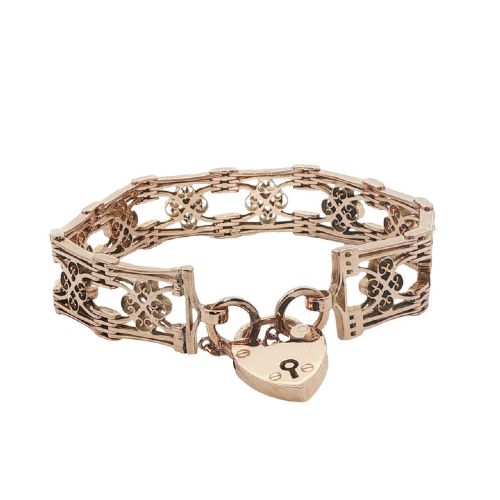
- A wide bracelet design formed of parallel rectangular metal bars connected by vertical links, reminiscent of traditional country gates. They are frequently fitted with a heart padlock clasp.
- Padlock charm
- A functional or decorative clasp shaped like a small padlock, often heart-shaped, used to secure the bracelet ends. In many pieces, it doubles as a removable pendant.
- Niello
- A black metallic alloy of sulphur, silver, lead and copper used as an inlay on engraved metal. It highlights intricate patterns by creating a sharp contrast against the bright silver background.
- Witches heart
- An asymmetrical heart shape with a looped tail twisting to one side, traditionally given as a token of love. This specific silhouette appears in select antique pendant and bracelet designs.
Antique Heart Charm Bracelet: Frequently Asked Questions
What is a heart padlock bracelet?
A heart padlock bracelet is a traditional link chain secured by a distinctive padlock shaped like a heart. These clasps often double as decorative charms on curb or gate link foundations.
Originating largely in the Victorian and Edwardian eras, they were frequently given as tokens of affection and security. The padlock mechanism usually opens via a small hidden button or a spring-loaded shackle.
How do I date my bracelet?
Dating these bracelets involves examining the hallmarks stamped on the metal components, the style of the links and the mechanics of the padlock. Victorian pieces often feature heavy curb or gate links, while Edwardian versions may incorporate finer filigree or gemstone accents.
Later mid-century pieces from the 1960s typically show a brighter yellow gold tone and simpler manufacturing techniques. Comparing the engraving style and clasp type to known period examples helps narrow down the decade of production.
Can I wear these bracelets daily?
These bracelets are generally robust enough for regular wear, particularly sturdy nine-carat gold curb and gate link designs. However, antique pieces require mindful care to preserve their historical integrity and delicate engravings.
It is advisable to remove the bracelet during strenuous physical activities, swimming or sleeping. Regular inspection of the jump rings and padlock latch ensures the clasp remains secure on the wrist.
Are the heart padlocks removable?
In many configurations, the heart padlock acts as the primary clasp connecting the two ends of the bracelet together. Some designs allow the padlock to be unclipped and worn separately as a pendant on a chain.
Whether a padlock is permanently attached depends on how the connecting jump ring was soldered by the original maker. Owners often switch between wearing the padlock on the wrist and on the neck depending on the bracelet's construction.