





Antique Harvest Painting
An antique harvest painting captures the agricultural labours of past centuries, bringing rustic charm and historical depth directly to your walls.
Antique Harvest Painting
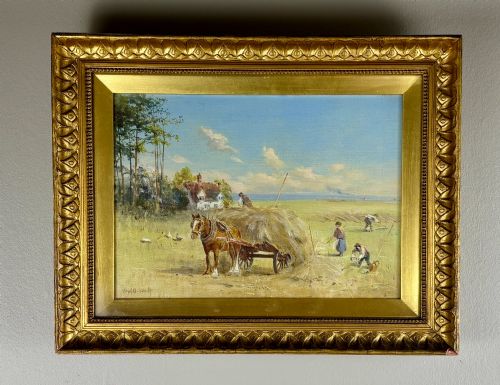
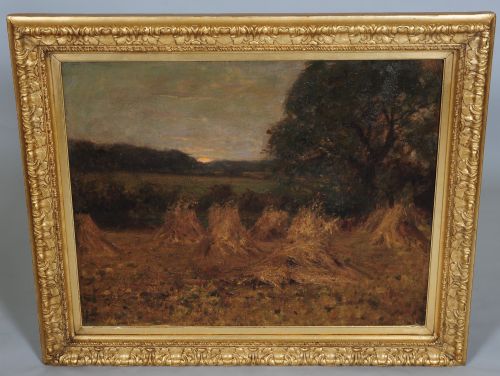
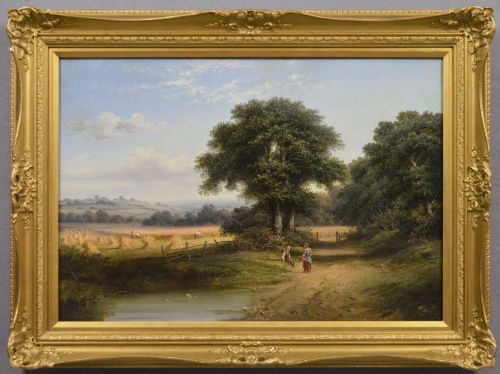
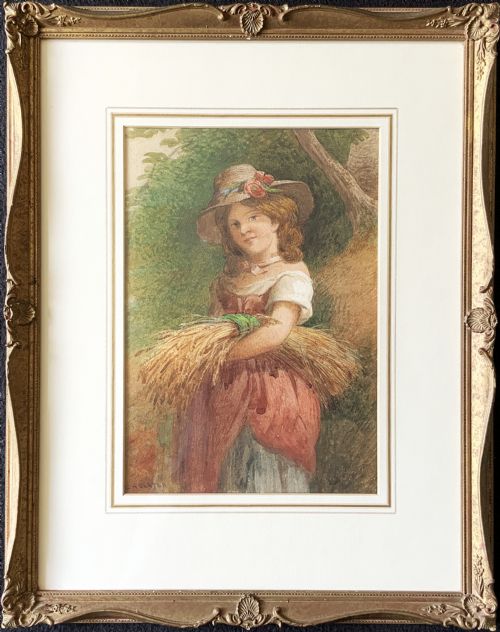
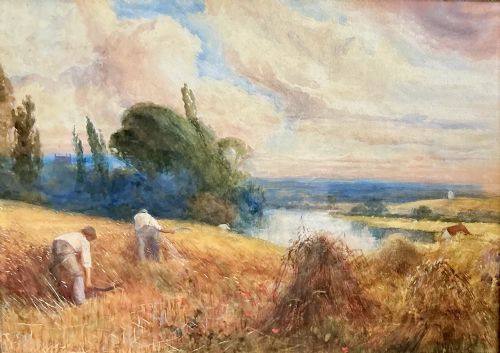
An antique harvest painting depicts rural scenes of agricultural toil, haymaking, and cornfields from the nineteenth and early twentieth centuries. These artworks frequently record figures labouring in the countryside, capturing a vanished rhythm of rural life on canvas or paper.
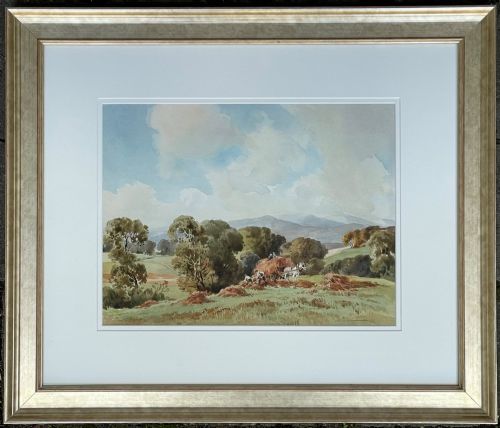
The examples most commonly met on this page date from the Victorian and Edwardian eras, executed in oil paint or watercolour. Artists of these periods observed the seasonal gathering of crops with careful realism and atmospheric detail, reflecting a deep interest in traditional rural landscapes.
How They Were Made
Makers applied oil paint or watercolour onto prepared canvas, wood panels, or paper supports using traditional brushwork techniques. Many nineteenth-century works utilised rich oil pigments to build deep landscape tones, while watercolours relied on translucent washes over paper.
Framing often involved carved and gilded wood embellished with gold leaf, protecting the picture surface while enhancing the visual weight of the composition.
Antique Harvest Painting Retail Price Guide 2026
Typical asking prices for harvest painting among the pieces listed under this phrase on Sellingantiques today, from the lower quarter to the upper quarter. They describe what is for sale here now, not the wider market.
The collection spans various artistic movements including Victorian Realism, British Impressionism, and traditional British styles.
What Varies in Quality
Quality depends heavily on the artist's ability to handle light, atmospheric perspective, and anatomical proportion within the landscape. Superior works demonstrate accomplished brushwork that brings movement to figures and horses, whereas simpler pieces rely on more rigid or formulaic compositions.
The condition of the original canvas, pigment stability, and the presence of contemporary framing also contribute to the standing of an individual piece.
Hugh Barry Scott·William Manners·Percy Lancaster·Walter Heath Williams·Charles Henry Slater·Frederick Hines·James William Booth·Henry John Boddington·William Grant Murray·J C Grey·Henry H Parker·Herbert Royle·Arthur Walker Redgate·Rowland Henry Hill·Frederick J Knowles·Joseph Paulman·Henry John Kinnaird·Frederick William Jackson·Walter Duncan·George Hamilton Constantine·George Cole
The Antique Harvest Painting Glossary
- Canvas
- A heavy woven fabric stretched across a wooden frame to serve as a support for oil paintings. It provides a durable and textured surface for layered pigment.
- Watercolour
- A painting method in which the paints are made of pigments suspended in a water-based solution. Artists apply these transparent washes onto absorbent paper.
- Victorian Realism
- An artistic style prevalent during the nineteenth century focused on depicting everyday subjects and working people with truthfulness and accuracy. This movement avoided theatrical idealisation in favour of genuine rural labour.
- British Impressionism
- A late nineteenth and early twentieth-century movement characterised by visible brushstrokes and an emphasis on the shifting qualities of natural light. Painters recorded outdoor harvest scenes with looser, more spontaneous handling.
Antique Harvest Painting: Frequently Asked Questions
What periods do these paintings come from?
Most of these works date from the nineteenth and early twentieth centuries, spanning the Victorian and Edwardian eras. Artists during this time frequently documented traditional rural practices before mechanisation transformed farming.
Collectors will find pieces created across several decades, reflecting shifting artistic styles from precise realism to looser impressionistic interpretations of the countryside.
What mediums were used by the artists?
The majority of these artworks are executed in oil paint on canvas or wood, alongside watercolours on paper. Artists selected these materials to achieve varying degrees of texture, luminosity, and atmospheric depth.
Gold leaf is also occasionally found on period frames, complementing the warm tones of the rural scenes within.
How do I care for an antique painting?
Protect the artwork by hanging it away from direct sunlight and significant fluctuations in household temperature and humidity. These precautions prevent the canvas from sagging and keep oil or watercolour pigments from fading.
Dust the surface gently with a soft, dry brush and avoid using liquid cleaners or chemical solutions on the painted area or frame.
How can I identify the artist?
Many pieces feature signatures, monograms, or dates inscribed directly by the artist into the lower corners of the canvas or paper. Examining the reverse of the work can also reveal historical labels, inscriptions, or studio stamps.
Comparing stylistic traits, subject matter, and period details helps confirm the attribution of unsigned or indistinctly signed rural compositions.