





Antique Hardwood Sideboard
An antique hardwood sideboard brings solid timber presence and centuries of craft to a room, offering practical storage with distinct period character.
Antique Hardwood Sideboard
When you search for an antique hardwood sideboard, you encounter substantial storage furniture fashioned from dense timbers like elm, padouk, teak, and rosewood. These pieces serve primarily as functional storage units, combining cupboards, drawers, and console surfaces.
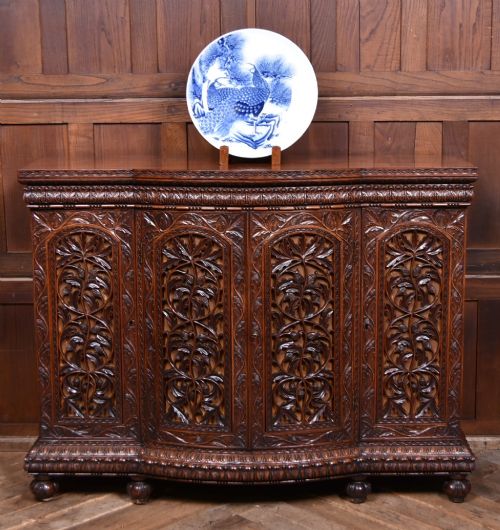
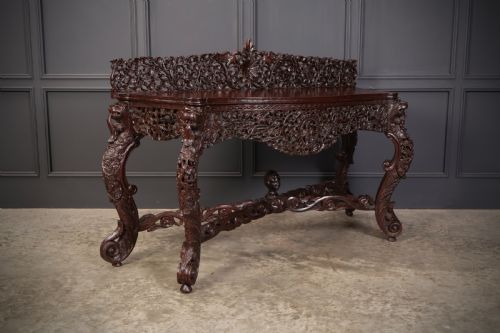
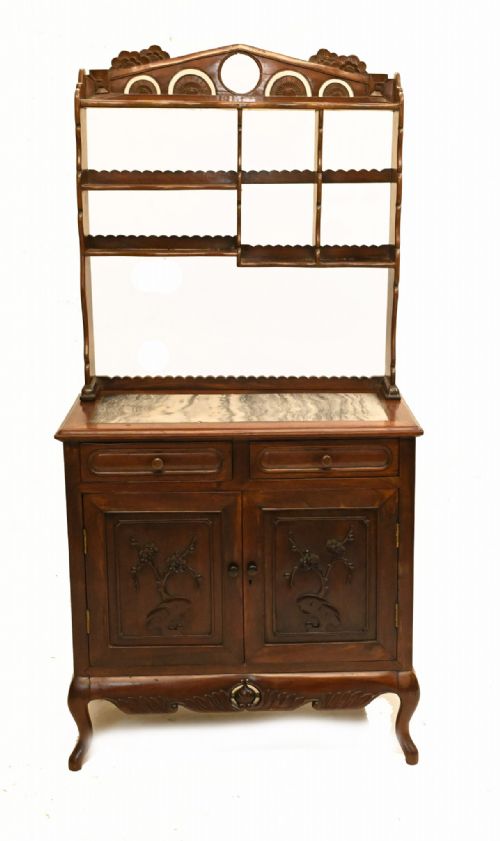
The versions you meet most frequently on this page span the nineteenth century, including Victorian examples alongside pieces created in traditional Chinese and Anglo-Indian colonial styles. Forms range from low console tables and hall tables to large dressers, specimen chests, and tall carved cupboards.
Makers from various traditions employed durable hardwoods to construct these items, resulting in distinct regional aesthetic choices. A buyer finds both ornately carved colonial forms and restrained nineteenth-century Chinese designs represented among the selections.
How they were made
Craftsmen utilised heavy tropical and domestic hardwoods such as padouk, teak, rosewood, and elm to build these sturdy sideboards and cabinets. The density of these timbers required specialised joinery and carving techniques to shape panels, drawers, and structural frames.
Many pieces incorporate elaborate hand-carving alongside brass fittings to secure doors and drawers. Artisans in regions spanning nineteenth-century China, Burma, and India shaped these durable materials into functional storage solutions designed to withstand tropical climates and heavy daily use.
Antique Hardwood Sideboard Retail Price Guide 2026
Typical asking prices for hardwood sideboard among the pieces listed under this phrase on Sellingantiques today, from the lower quarter to the upper quarter. They describe what is for sale here now, not the wider market.
Some old cupboards arrive with ten distinct drawers, perfect for hiding small mysteries.
What varies in quality
The calibre of a sideboard rests upon the crispness of its hand-carving and the stability of its hardwood construction. Pieces featuring deep, well-defined relief work on dense timbers like padouk or teak demonstrate superior craftsmanship compared to simpler surfaces.
Quality also appears in the integrity of the joinery and the selection of timber figures. A well-constructed cabinet retains smooth operation in its drawers and proper alignment in its doors, reflecting the skill of the original workshop.
The Antique Hardwood Sideboard Glossary
- Hardwood
- Dense timber derived from broad-leaved trees such as teak, elm, padouk, and rosewood. These materials provide the primary structural substance for nineteenth-century storage furniture.
- Padouk
- A heavy, reddish-brown tropical timber frequently utilised in Anglo-Indian and Burmese furniture. It is prized for its durability and suitability for intricate carving.
- Console table
- A table designed to stand against a wall, often functioning as a side table or serving surface. Several nineteenth-century examples appear in regional colonial styles.
- Elm
- A tough, interlocking-grained timber commonly found in traditional Chinese furniture. It offers significant strength for large storage pieces and hall tables.
- Specimen chest
- A specialised cabinet containing numerous small drawers for organising collections. These items highlight fine interior joinery and compact storage design.
Antique Hardwood Sideboard: Frequently Asked Questions
What is an antique hardwood sideboard?
An antique hardwood sideboard is a robust storage piece constructed from dense timbers like teak, padouk, elm, or rosewood. These items include cupboards, console tables, and cabinets originating from nineteenth-century workshops.
They provide practical surface area and enclosed storage while displaying distinct regional design characteristics from Chinese and colonial traditions.
How do I identify the period?
Identifying the period involves examining the timber selection, construction methods, and stylistic cues such as Victorian Gothic Revival or Qing Dynasty influences. Nineteenth-century examples often display hand-carved details specific to their region of origin.
Looking closely at the hardware, such as brass fittings, helps confirm the era of manufacture.
How should I care for hardwood?
Caring for antique hardwood involves maintaining stable humidity levels to prevent the dense timber from splitting. Regular dusting with a soft cloth preserves the natural finish of woods like teak and rosewood.
Avoiding direct sunlight protects the colour and grain integrity of the antique surface.