





Antique Handmade Carpet
An antique handmade carpet brings the rich patterns of Persian, Caucasian and Central Asian weaving directly to your floor.
Antique Handmade Carpet
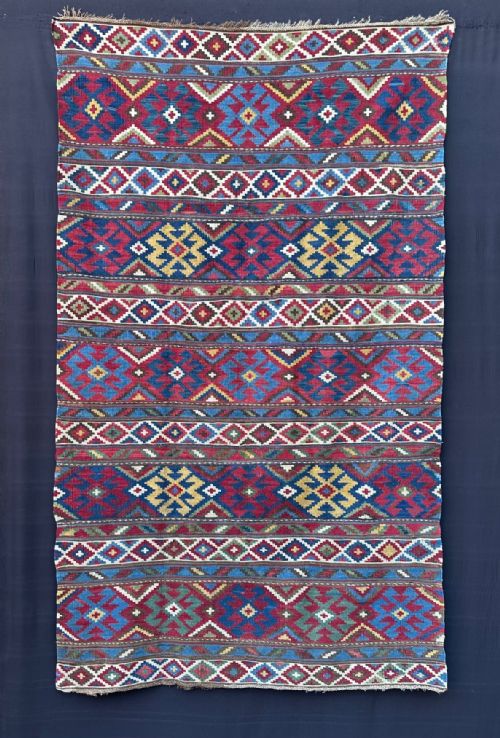
An antique handmade carpet encompasses tribal rugs, village carpets, dowry bags, and flat-woven kilims originating from regions such as Persia, the Caucasus, and Central Asia. When you search for an antique handmade carpet, you encounter nomadic and village work spanning the mid nineteenth century through the early twentieth century.
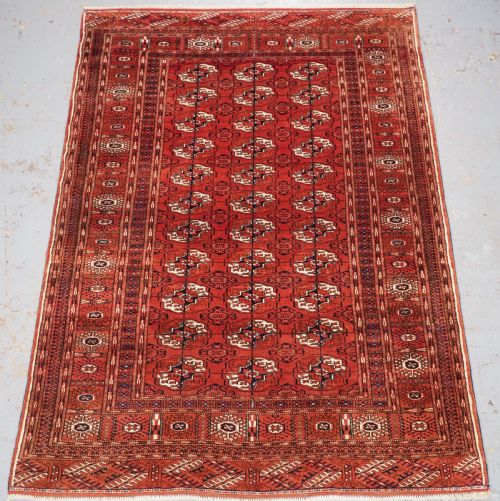
The selections on this page lean heavily towards tribal and village pieces, including Turkmen ensis, Heriz rugs, Baluch weaves, and Qashqai kilims. These textiles served functional roles within tribal tents and village homes before finding their way into the collector market.
Each piece represents traditional regional motifs, from Tekke guls to Mina Khani designs and geometric medallions. The variety covers everything from small torbas and chuval faces to room-sized rugs and runner formats.
Materials and construction methods
Weavers utilised local wool, often hand-spun, combined with cotton warp threads and occasionally goat hair for structural resilience. Uzbek yurt rugs illustrate specific structural techniques like weaving in separate strips before joining.
Materials dictate the handle and drape of each textile, with wool pile providing a soft yet durable surface. Cotton elements appear in specific design areas, such as the white highlights found in Saryk Turkmen ensis.
Antique Handmade Carpet Retail Price Guide 2026
Typical asking prices for handmade carpet among the pieces listed under this phrase on Sellingantiques today, from the lower quarter to the upper quarter. They describe what is for sale here now, not the wider market.
Listings span periods from the mid-nineteenth century through the 1920s, featuring wool, cotton, goat hair, and hand-spun wool across Persian, Caucasian, and Turkmen tribal styles.
What separates the finest examples
Quality rests upon the fineness of the weave, the clarity of the traditional design, and the vibrancy of the dye work. Pieces with tightly packed knots and precise geometric drawing command greater attention from experienced collectors.
The integrity of the wool and the preservation of original formats also define the upper tier. Chuval faces, salt bags, and dowry rugs retaining their complete borders and structural edges demonstrate superior craftsmanship.
The Antique Handmade Carpet Glossary
- Gul
- A primary repeating octagonal medallion motif frequently found in Turkmen and Central Asian tribal weaving. This design element forms the compositional anchor for many traditional rugs.
- Chuval
- A large nomadic storage bag face woven by Turkmen tribes for domestic utility and household storage. These panels are often preserved and mounted as independent collector pieces.
- Ensi
- A specific carpet type traditionally hung as a door hanging at the entrance of a yurt. They feature characteristic quartered field designs and specialised border systems.
- Torba
- A smaller storage sack produced by nomadic groups across Central Asia. They mirror the patterns of larger utilitarian bags in a compact format.
- Kilim
- A flat-woven textile produced without a pile using interlocking or slit-weave techniques. These pieces serve as floor coverings or utility covers across the Caucasus, Persia, and Anatolia.
Antique Handmade Carpet: Frequently Asked Questions
How do I care for an antique carpet?
Vacuum gently using suction alone without a rotating brush roll to protect the wool pile and delicate foundation threads. Keep the textile away from direct sunlight to prevent colour fading over time.
Rotate the rug periodically to ensure even wear patterns across high-traffic areas. Professional cleaning should be handled exclusively by specialists experienced in antique tribal textiles.
Where were these tribal rugs made?
These textiles originate from nomadic tribes and village communities across Persia, the Caucasus, and Central Asia. Specific groups include the Tekke, Yomut, Saryk, Baluch, Qashqai, and Heriz weavers.
Each weaving group utilised distinct palettes, wool qualities, and geometric symbol systems passed down through generations. Geography directly dictates the structural traits and motifs seen on the loom.
How can I date an old carpet?
Dating relies on assessing the structural materials, dye characteristics, and stylistic conventions specific to known weaving periods. Natural dyes and hand-spun wool generally point towards nineteenth-century or early twentieth-century production.
Structural details such as wool warps versus cotton foundations provide further chronological markers. Comparing motif execution against documented tribal examples helps narrow down the decade of creation.