


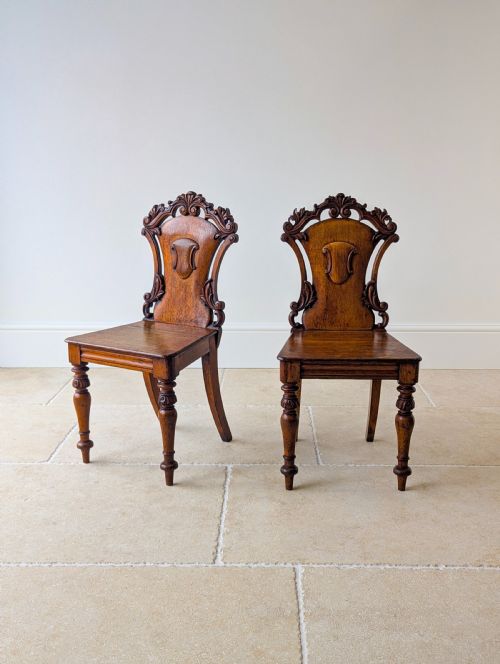

Antique Hallway Side Chairs
These antique hallway side chairs offer solid timber construction and carved detail, serving functional and decorative roles in traditional interiors.
Antique Hallway Side Chairs
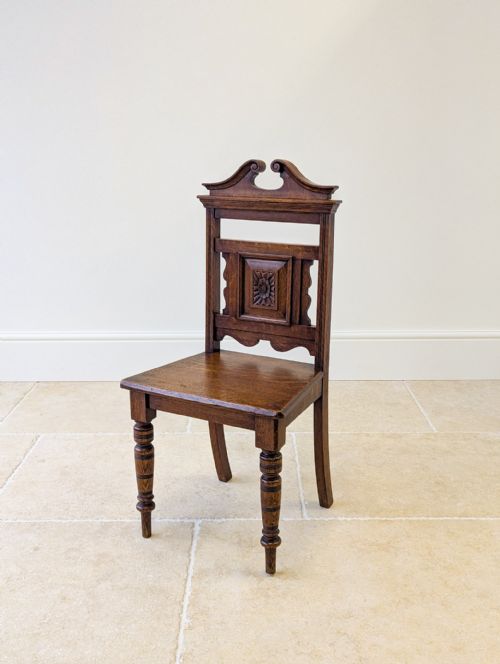
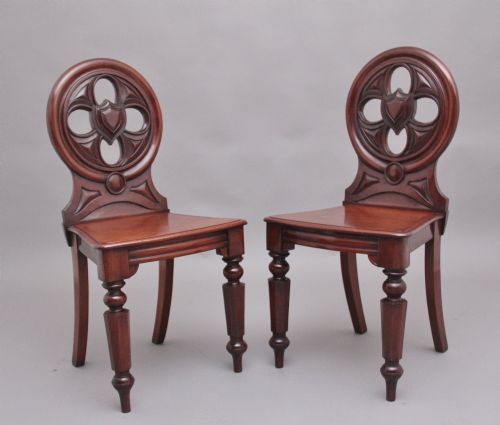
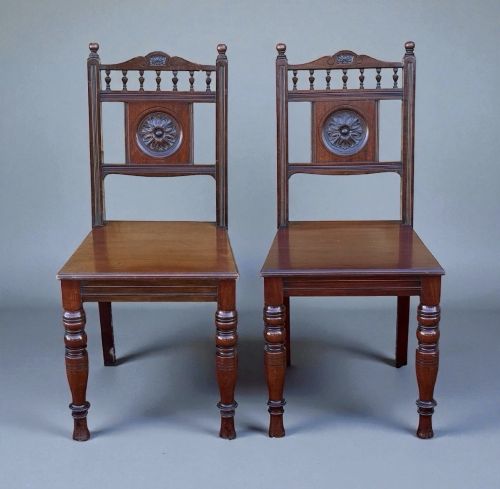
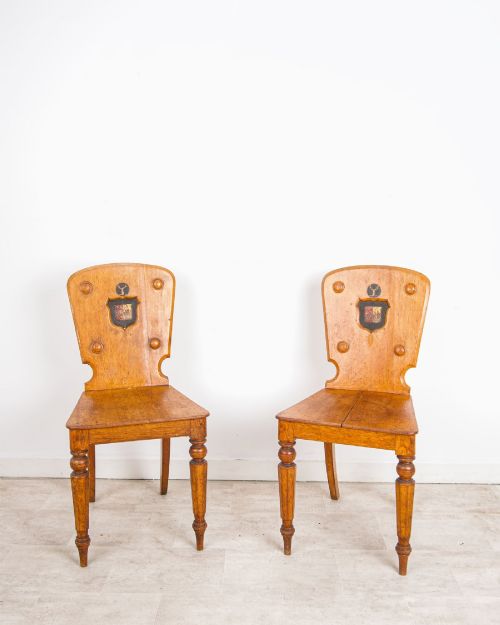
These antique hallway side chairs comprise seating forms designed primarily for entrance spaces and reception areas during the eighteenth and nineteenth centuries. They appear frequently in pairs or sets, constructed to stand against walls and display carved timber decoration rather than prioritise deep squab comfort.
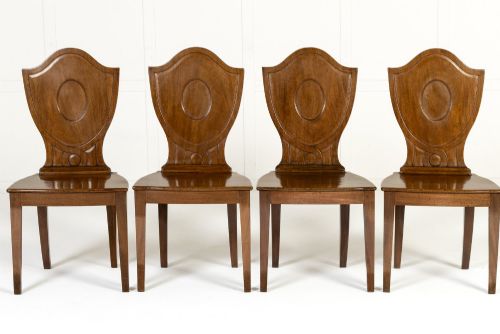
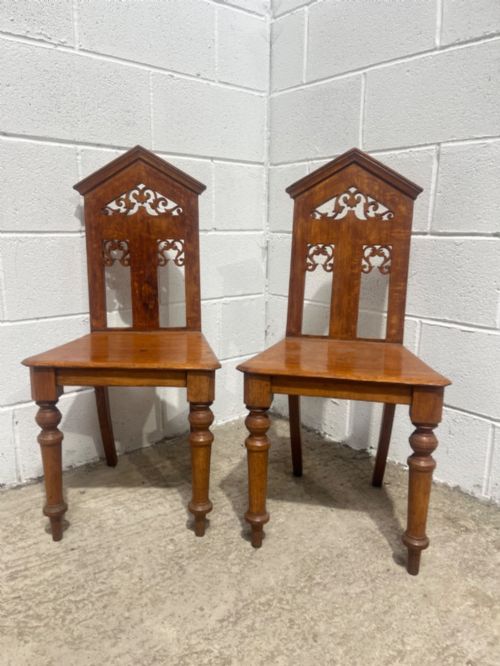
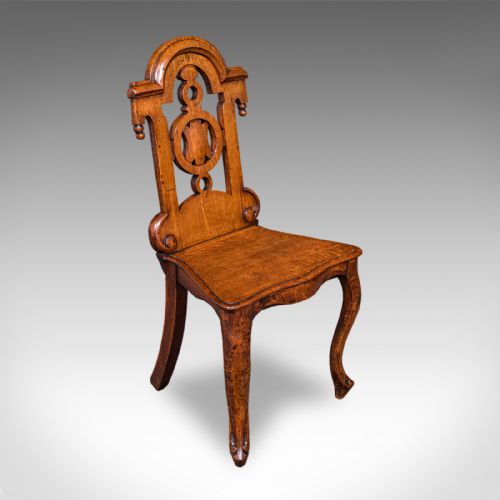
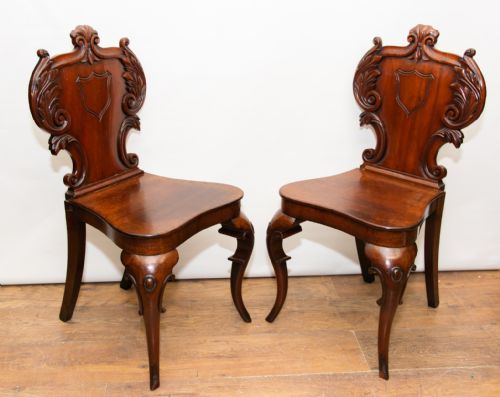
The pieces present on this page date predominantly from the Victorian era and the nineteenth century, alongside examples from the Regency period and the eighteenth century. Oak and mahogany form the vast majority of these frames, often featuring solid wood seats and upright backs.
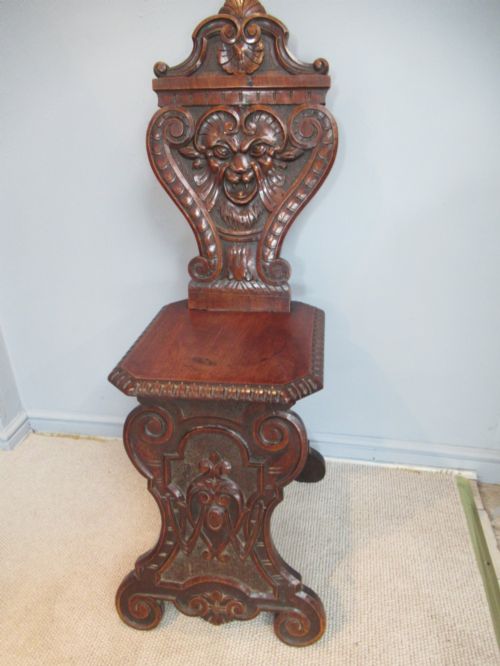
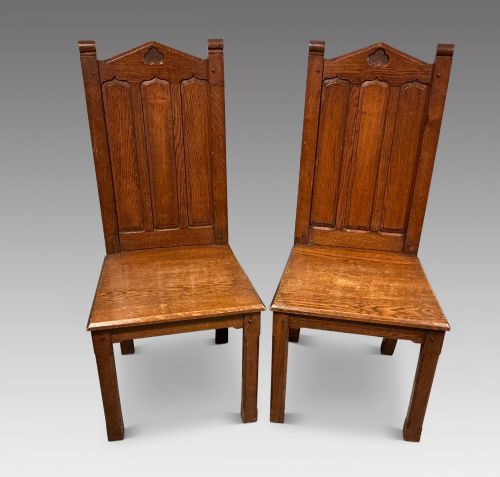
Makers and regional workshops produced diverse regional interpretations, including Scottish, English and Italian examples. Styles range from plain Regency designs to heavily carved Victorian Gothic Revival and Jacobean Revival pieces.
How they were made
Cabinet makers utilised dense hardwoods, chiefly mahogany and oak, to construct these rigid seats. These timbers endured heavy use in busy hallways while allowing deep relief carving on shield backs and crests.
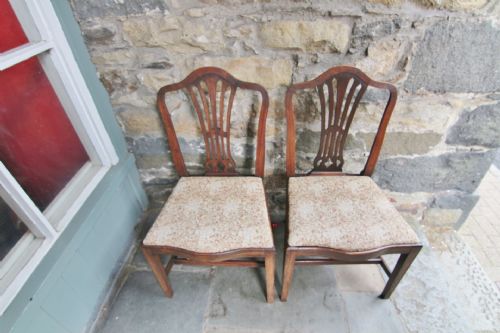
Joinery techniques relied on mortise and tenon joints to secure uprights to solid timber seats. Selected examples incorporated brass fittings or brief upholstery elements to complement the carved woodwork.
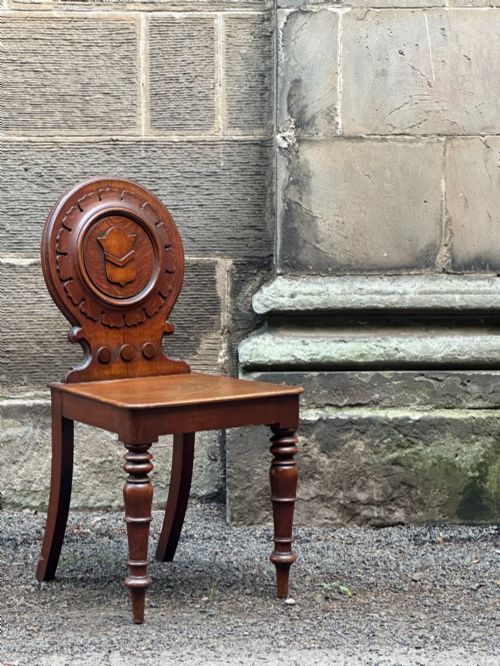
Heraldic shield backs allowed Victorian visitors to contemplate their host's imagined lineage before taking off their wet coats.
What varies in quality
The depth and sharpness of the timber carving separate standard production items from superior examples. Crisp heraldic shield backs and well-defined mouldings reflect greater skill in the workshop.
The choice and figure of the timber also define standard grades, with dense grain matching and solid construction maintaining structural integrity over generations.
Holland and Sons
The Antique Hallway Side Chairs Glossary
- Hall chair
- A rigid wooden seat designed for an entrance hall, typically featuring a solid timber seat and a carved back. These items often display family crests or heraldic shields.
- Side chair
- A light, moveable chair without arms intended for placement against a wall or around a perimeter when not in use. They form matching pairs or larger sets for formal rooms.
- Gothic Revival
- A nineteenth century design movement drawing inspiration from medieval architecture and pointed arch motifs. Furniture in this style displays heavy tracery and pointed crests.
- Regency
- A style period spanning the early nineteenth century defined by classical restraint and clean lines. Pieces from this era often employ mahogany with subtle brass or incised decoration.
Antique Hallway Side Chairs: Frequently Asked Questions
Where should I place these chairs?
These chairs suit entrance halls, corridors and landings where floor space is limited. Their upright posture and shallow depth allow them to sit flat against walls without obstructing pathways.
They also function effectively as occasional seating in reception rooms or bedrooms when paired with a matching table or console.
Were they meant for sitting?
Hall chairs served primarily as formal furniture to project status to visitors rather than for lounging. Guests or callers sat on them briefly while waiting to be received.
Because they lack padding and feature rigid wooden seats, they were built for posture and display rather than extended relaxation.
How do I identify a Regency chair?
Regency pieces typically display classical restraint, clean geometric lines and darker mahogany timbers. They avoid the heavier ornamentation found on later Victorian Gothic designs.
Look for subtle reeding, saber legs and simpler crest rails that reflect early nineteenth century neoclassical tastes.
What woods were used?
Cabinet makers relied heavily on oak and mahogany for these frames. Mahogany offered a fine grain suited to sharp carving and dark polish, while oak provided sturdy durability for rustic or Gothic revival forms.
Some examples also incorporate walnut or mixed hardwoods depending on the regional workshop and period.