


Antique Hallway Brolly Holder
An antique hallway brolly holder corrals damp canes and wet umbrellas with proper Victorian or Edwardian utility.
Antique Hallway Brolly Holder
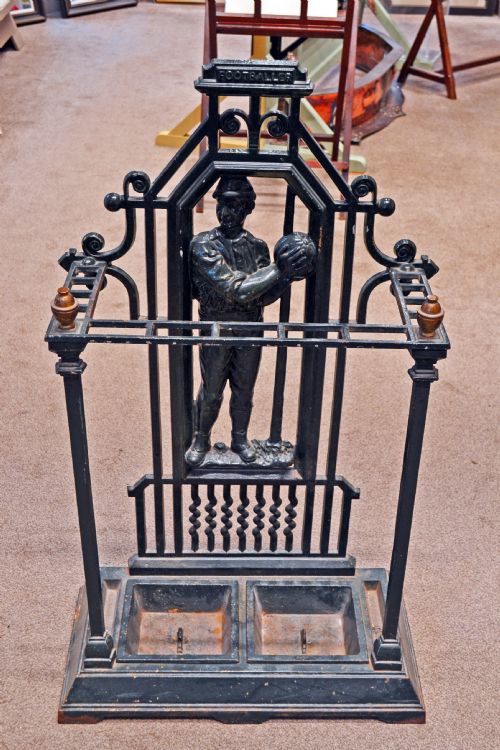
Every antique hallway brolly holder on this page functions as a dedicated vestibule receptacle for wet sticks and umbrellas. These hall items appear across Victorian, Edwardian, and Arts and Crafts periods, taking the form of umbrella stands and stick stands.
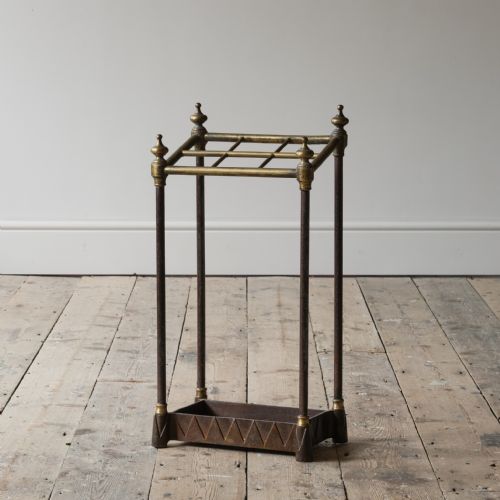
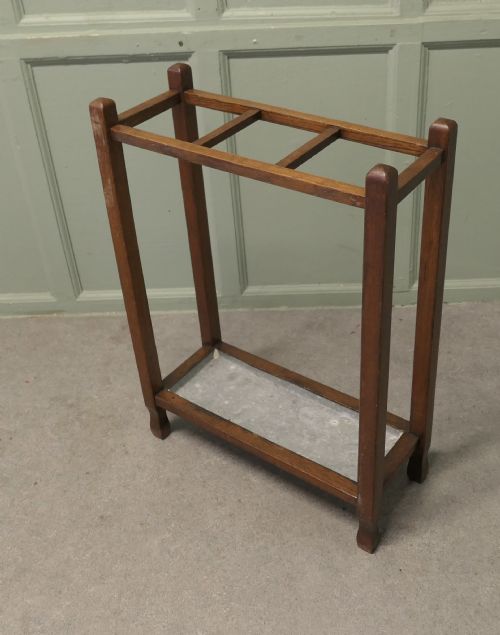
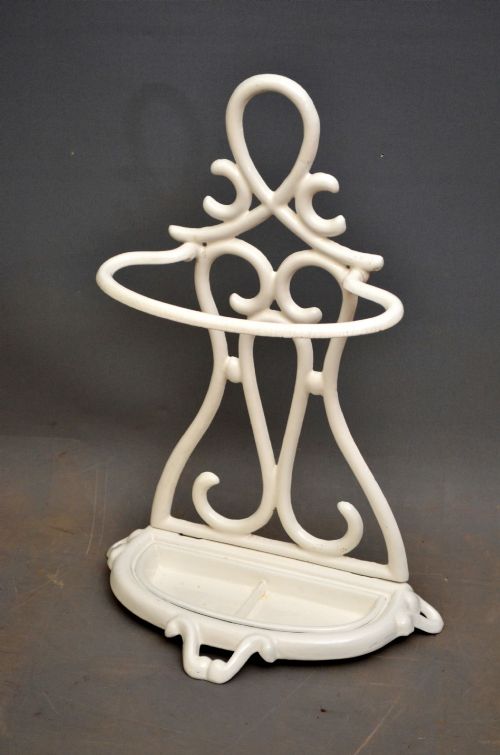
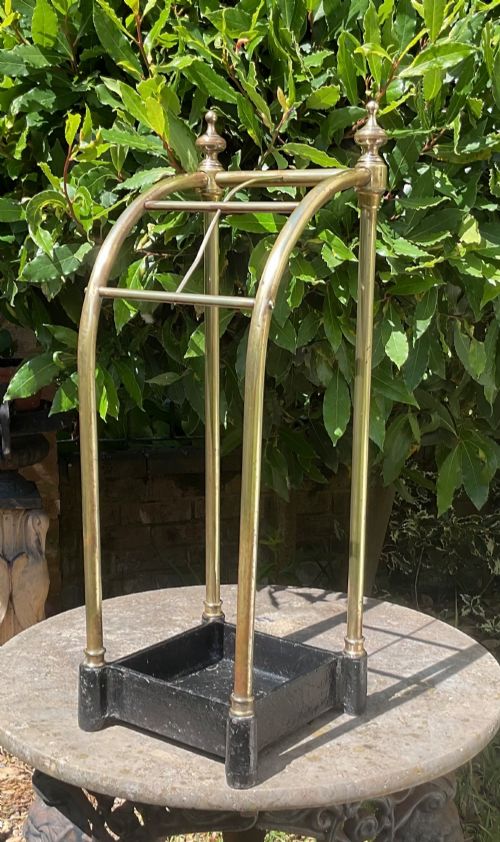
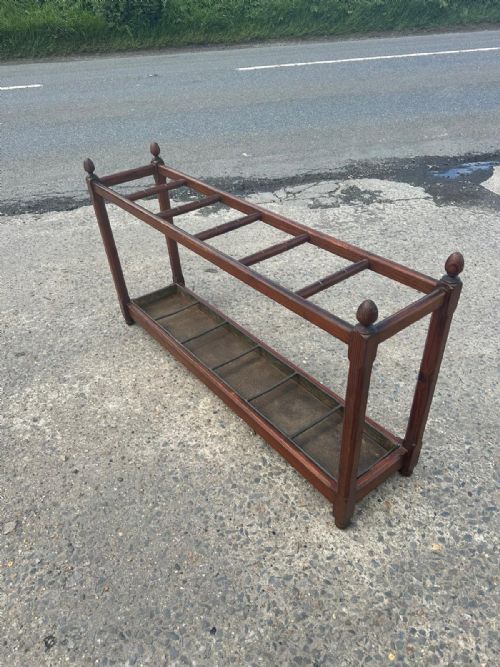
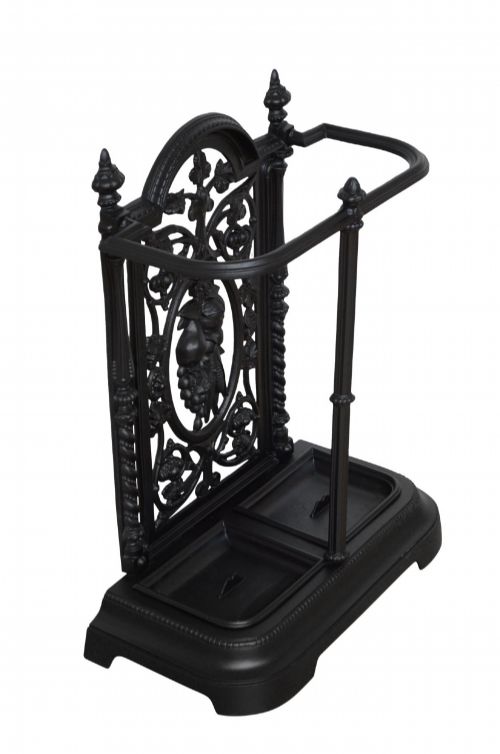
The most common examples you will meet here are cast iron floor pieces, often finished in black or featuring a white enamel drip pan. Oak, pitch pine, and brass versions also turn up regularly, spanning the nineteenth century through to the 1920s.
Makers and designers responded to domestic needs by producing sturdy metal frames and timber furniture designed specifically for hallway corners. Whether styled with French Art Nouveau curves or plain country house utility, each piece serves its original purpose.
Construction and materials
Foundry work dominates the selection, utilising heavy cast iron and brass to form rigid frameworks that resist tipping under the weight of damp timber shafts and metal tips. Zinc and enamel liners catch the runoff water to protect the floor beneath.
Joinery and carpentry define the timber examples, utilising golden oak and pitch pine to build sturdy enclosures with slatted or panelled sides. Metal components are bolted or cast as single units, combining industrial techniques with domestic design.
Listings feature oak, pitch pine, cast iron, and brass across nineteenth-century and early twentieth-century periods.
Judging build quality and design
The distinction between ordinary production and superior work lies in the crispness of the cast iron ornamentation and the integrity of the original drip pans. Finely detailed French Art Nouveau motifs or substantial brass tubing elevate a piece above standard utilitarian foundry output.
Proportion and material selection dictate the presence of a better grade, such as solid golden oak construction or heavy-gauge cast iron with intact enamel finishes. Simple metal forms contrast with architectural portico designs that demonstrate thoughtful nineteenth-century hallway furnishing.
The Antique Hallway Brolly Holder Glossary
- Cast iron
- A strong, hard iron-carbon alloy produced by pouring molten metal into a mould. It forms the heavy, decorative frames of many nineteenth-century stands.
- Pitch pine
- A durable, resinous North American pine used in country house furniture. It provides a robust timber body for larger hallway pieces.
- Drip pan
- A removable metal tray placed at the base of the stand to catch water. Zinc and enamel versions prevent moisture from rotting the floor.
- Art Nouveau
- An international style of art and architecture characterised by serpentine lines and plant-inspired motifs. It influences the curving metalwork of French umbrella stands from around nineteen hundred.
Antique Hallway Brolly Holder: Frequently Asked Questions
What is an antique hallway brolly holder?
An antique hallway brolly holder is a dedicated piece of furniture designed to store wet umbrellas and walking sticks in an entrance hall. These stands keep hallways tidy by containing dampness and preventing water from damaging floors.
Most examples date from the Victorian and Edwardian eras, utilising heavy materials like cast iron, brass, and oak to remain stable under daily domestic use.
How do I clean a cast iron brolly holder?
Cast iron stands require gentle dusting and occasional cleaning with a dry or lightly oiled cloth to preserve the metal surface. Avoid harsh chemical cleaners that might strip original paint or enamel finishes.
Check the removable drip pan regularly and dry it out to prevent rust accumulation from wet umbrella tips.
Where should I place a stick stand?
These stands belong in a hallway, vestibule, or boot room where people enter the house with wet coats and umbrellas. Placing the stand near the main entrance ensures wet items are stored immediately upon arrival.
Ensure there is enough clearance around the stand for walking sticks and umbrella handles to be retrieved easily.
How do I date a brass umbrella stand?
Dating relies on examining construction methods, tubing thickness, and stylistic clues from periods like the Edwardian era or the 1920s. Heavier cast brass components and specific fastening techniques often indicate earlier nineteenth-century manufacturing.
Comparing the design against documented pieces helps place the stand within a specific stylistic decade.