



Antique Hall Coat Pegs
These antique hall coat pegs bring practical utility and period character to an entranceway, offering robust hanging solutions formed in rich timbers and metals.
Antique Hall Coat Pegs
When searching for antique hall coat pegs, buyers encounter a diverse selection of wall-mounted racks, freestanding stands, and individual hooks designed for entrance halls and cloakrooms. The options span the nineteenth century through the early twentieth century, encompassing Victorian, Edwardian, and Art Deco designs alongside regional interpretations.
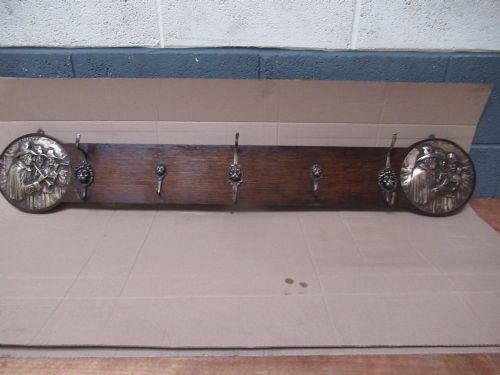
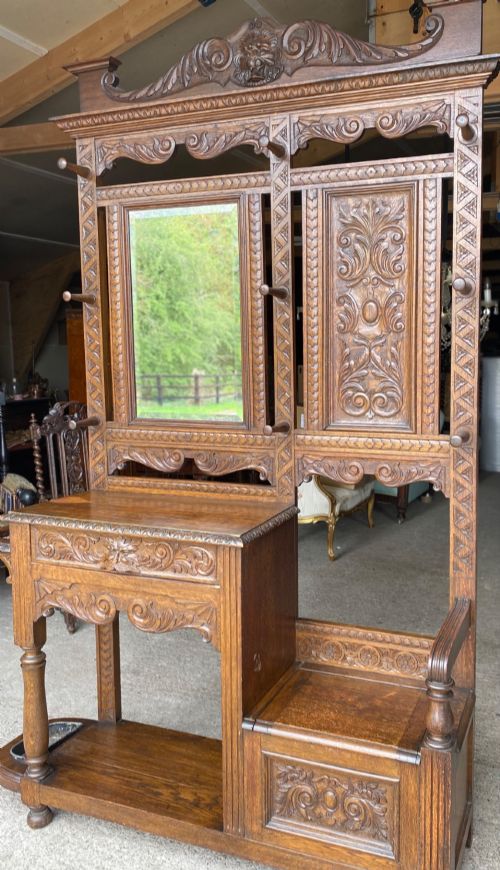
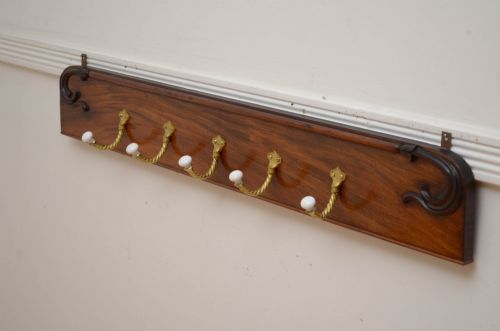
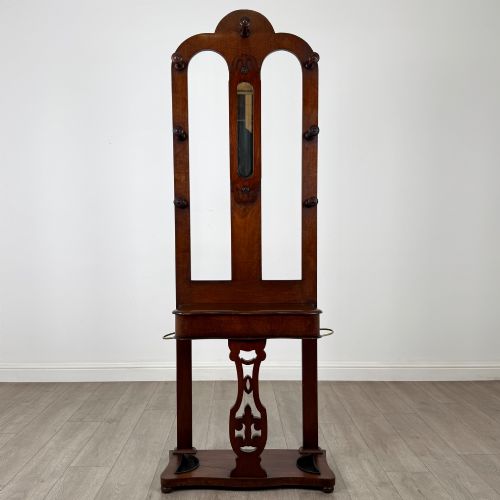
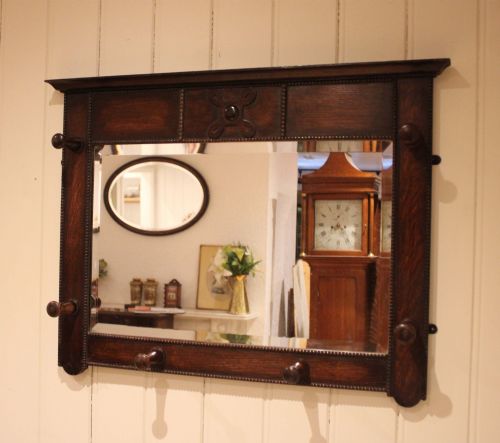
Wall-mounted oak and mahogany racks fitted with brass or ceramic hooks appear most frequently on this page. These functional pieces range from simple wooden boards carrying rows of hooks to elaborate mirror-backed hall stands incorporating umbrella holders and drip trays.
How they were made
Construction relies heavily on traditional cabinet-making timbers such as oak, mahogany, and walnut, often shaped through sawing, turning, and carving. Bentwood techniques also appear in utilitarian hat and coat racks from the turn of the twentieth century.
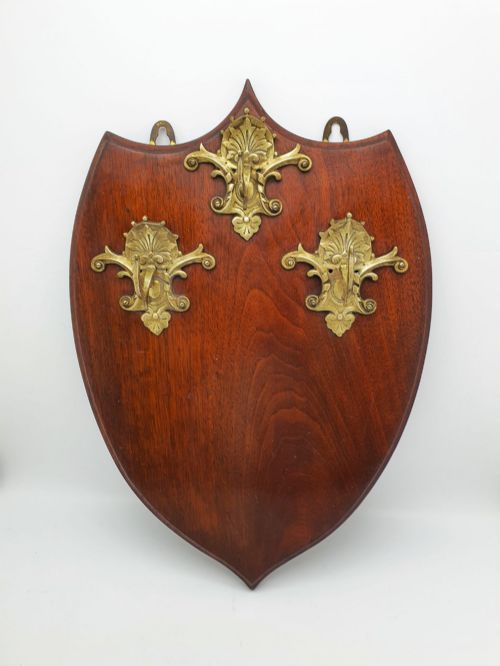
Metal elements, predominantly brass, bronze, and iron, are cast or forged to create durable hooks and brackets. These metal fittings frequently combine with ceramic inserts or wooden backplates to form sturdy fixtures intended for daily domestic use.
Antique Hall Coat Pegs Retail Price Guide 2026
Typical asking prices for hall coat pegs among the pieces listed under this phrase on Sellingantiques today, from the lower quarter to the upper quarter. They describe what is for sale here now, not the wider market.
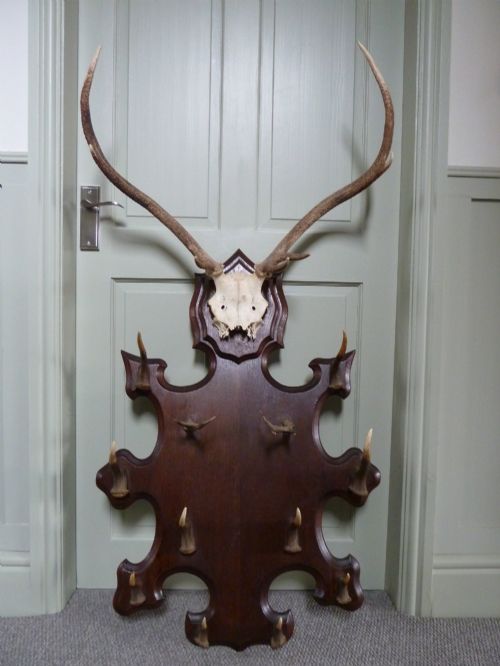
Stags' horns and carved chamois goat heads appear as eccentric Victorian hall mounts, bringing alpine wildlife directly into the entrance hall.
What varies in quality
The standard of a piece depends on the integration of materials and the crispness of any carved or cast detail. Superior examples display substantial timber boards secured with robust hardware, whereas simpler iterations utilise lighter woods and basic stamped metal hooks.
The retention of original hooks and mirror plates contributes significantly to the integrity of a piece. Altered fixtures or replaced hardware alter the original character, distinguishing standard utilitarian items from finer examples of period craftsmanship.
The Antique Hall Coat Pegs Glossary
- Bentwood
- Wood steamed and bent into curved shapes. This technique created lightweight yet resilient frames for coat stands and wall racks during the nineteenth century.
- Hall Stand
- A composite entrance hall item. These large pieces typically combine a mirror, coat hooks, a hat shelf, and umbrella storage into a single floor-standing unit.
- Aesthetic Movement
- A late nineteenth-century design style. Objects from this period emphasise artistic visual qualities through ebonised finishes and contrasting brass mountings.
- Arts and Crafts
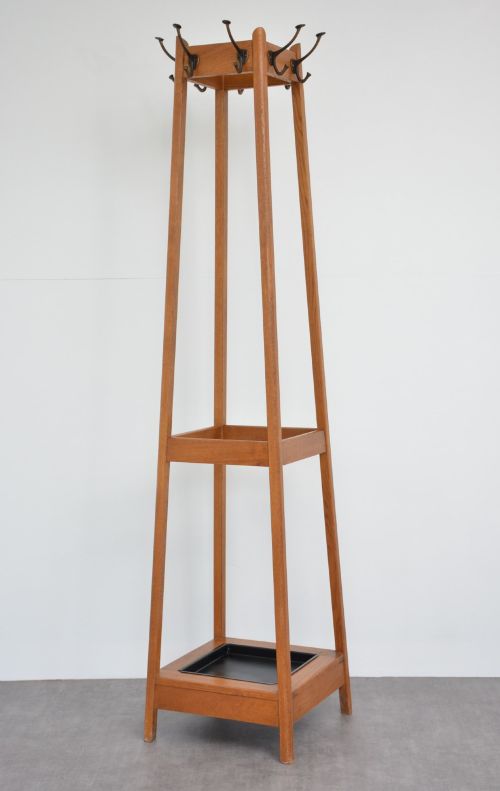
- A design movement valuing handcraft and natural materials. Pieces from this tradition display plain oak construction and visible construction methods.
- Bobbin
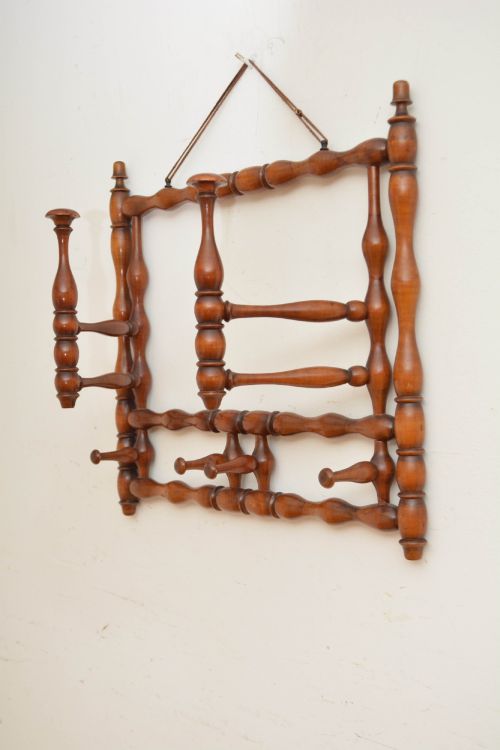
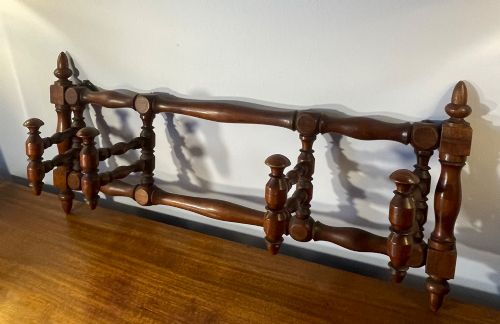
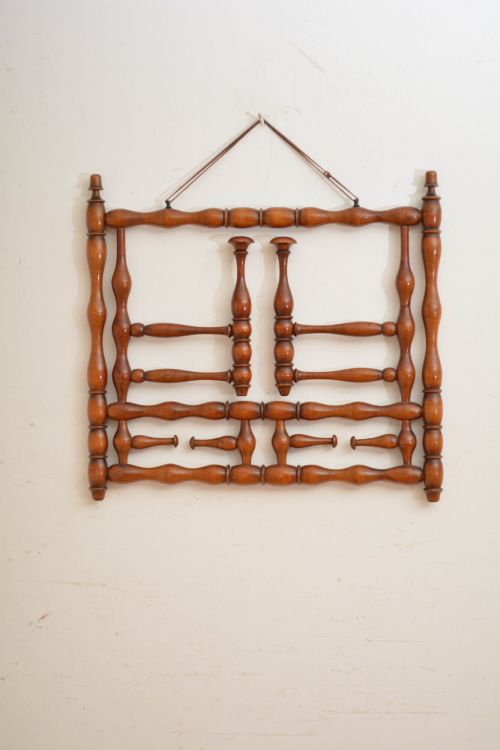
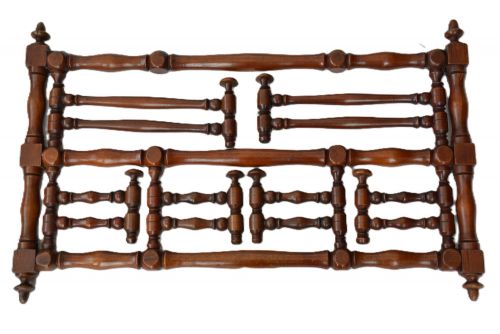
- A turned wooden furniture detail. Rows of spherical or spool-like shapes form the decorative framework of specific French and English coat racks.
Antique Hall Coat Pegs: Frequently Asked Questions
How do I mount a wooden coat rack securely?
Heavy timber wall racks require attachment directly into wall studs or solid masonry using appropriate screws and rawlplugs. This ensures the fixings support the weight of heavy coats and umbrellas.
Positioning the rack at a practical height allows comfortable access for everyday use while distributing weight evenly across the mounting points.
What is the difference between a hall stand and a coat rack?
A coat rack is typically a wall-mounted board carrying a row of hooks, designed to save floor space in compact entranceways. In contrast, a hall stand is a substantial freestanding piece of furniture.
Hall stands incorporate multiple functions, often combining coat hooks, umbrella wells, drip trays, and central mirrors into one integrated unit.
How do I care for antique wood and brass hooks?
Maintenance involves dusting timber surfaces regularly with a dry cloth and applying occasional applications of beeswax to nourish the grain. Avoid using modern chemical sprays that can degrade historic polishes.
Brass hooks benefit from gentle cleaning with a soft cloth to remove surface grime while preserving the natural patination built up over decades of use.
How can I tell a Victorian hall stand from an Edwardian one?
Victorian hall stands tend to feature heavier timbers, deep mouldings, and ornate, dark-finished oak or mahogany carvings. They often incorporate cast iron or heavy brass hardware suited to formal nineteenth-century interiors.
Edwardian pieces generally present a lighter aesthetic with brighter golden oak or inlaid mahogany, reflecting a shift towards airier domestic spaces at the start of the twentieth century.