



Brass Oak Hat Rack
These brass oak hat rack pieces combine timber frames with metal hooks, offering a practical hallway storage solution that buyers seek for traditional interiors.
Brass Oak Hat Rack
A brass oak hat rack provides sturdy hallway storage through a combination of solid wooden backplates and metal hanging fixtures. These items serve to organise entranceways, keeping coats, hats, and accessories neatly arranged against the wall or standing free.
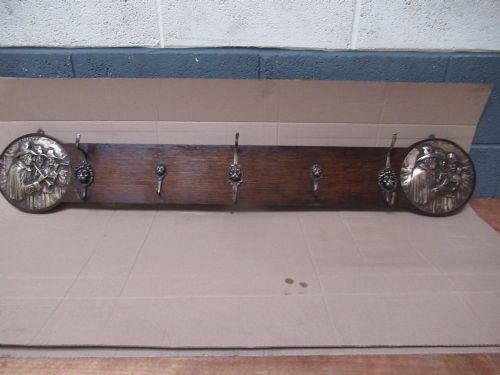
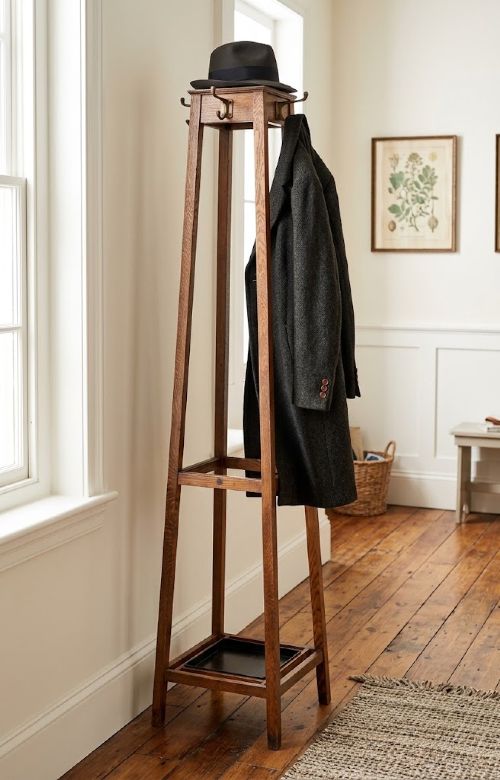
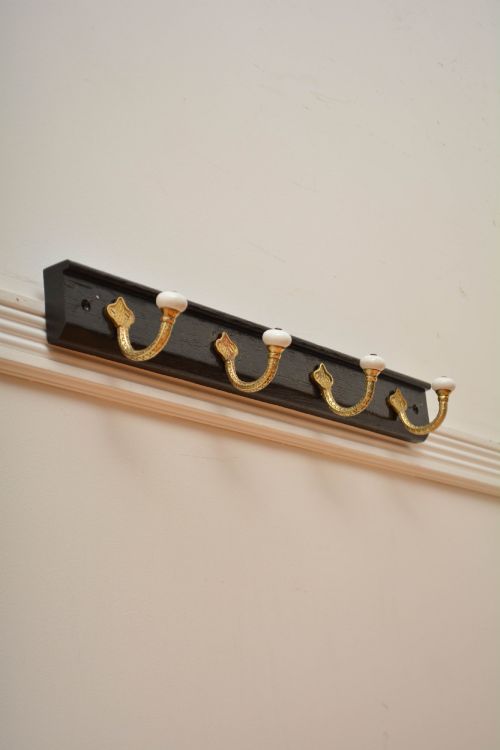
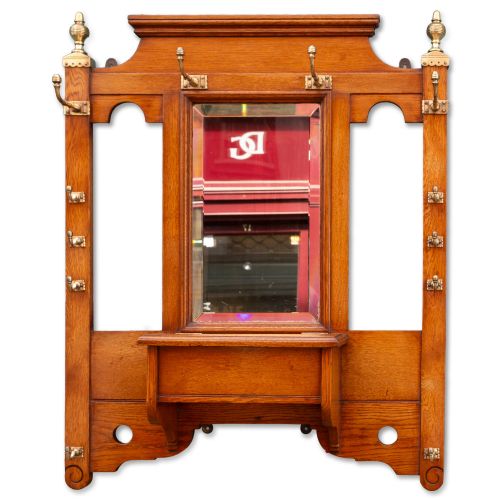
Visitors to this selection will most frequently encounter wall-mounted coat hooks and freestanding hall stands. The forms range from compact boards fitted with ceramic-centred hooks to larger Victorian and Edwardian stands incorporating mirrors and umbrella holders.
The materials span golden oak, ebonised oak, and solid oak frames paired with brass hooks. Additional elements such as glass, marble, and ceramic inserts appear across various pieces from the nineteenth and early twentieth centuries.
How they were made
Craftsmen built these items using solid oak timber for the structural framework and backplates, often applying ebonised finishes for a darker aesthetic. The wood was selected for durability, providing a stable foundation to support heavy garments and mounted accessories.
Brass formed the primary material for the hooks and brackets, shaped through casting and forging to create functional and decorative hanging points. Certain designs integrated ceramic details or horse-head motifs into the metalwork to enhance visual appeal.
Brass Oak Hat Rack Retail Price Guide 2026
Typical asking prices for brass oak hat rack among the pieces listed under this phrase on Sellingantiques today, from the lower quarter to the upper quarter. They describe what is for sale here now, not the wider market.
Keep an eye out for horse-head crop hooks, proving that Victorian gentlemen took their equestrian hobbies right to the front door.
What varies in quality
The standard of timber selection and the weight of the metal components distinguish finer examples from simpler utilitarian items. Solid construction utilising thick oak boards and substantial brass hooks indicates superior manufacture compared to lighter alternatives.
Refinement in decorative detailing, such as carved equestrian motifs or integrated ceramic elements, elevates the craftsmanship of individual pieces. The integration of functional additions like barometers or mirrors further separates standard hall stands from more elaborate designs.
The Brass Oak Hat Rack Glossary
- Hat stand
- A freestanding hall furniture piece designed for hanging coats and hats, often incorporating umbrella wells and mirrors. These items anchored the entrance halls of larger nineteenth-century homes.
- Ebonised oak
- Oak timber treated with a dark stain or finish to imitate ebony wood. This technique gained popularity during the Victorian period for creating formal, contrasting furniture details.
- Wall mounting
- A method of securing furniture directly to structural walls to save floor space. Coat racks of this type rely on sturdy backplates to distribute weight evenly.
- Equestrian hook
- A specialised hanging fixture shaped to resemble horse heads or riding crops. These items reflect nineteenth-century sporting tastes in domestic hardware.
- Hall stand
- A composite hallway furnishing combining coat hooks, umbrella storage, and frequently a central mirror or small shelf. They provided a singular station for outerwear upon entering a house.
Brass Oak Hat Rack: Frequently Asked Questions
How do I mount a wooden coat rack safely?
Secure the backplate directly into wall studs or use appropriate masonry fixings depending on the wall construction. This ensures the timber supports the weight of heavy winter coats.
Check that the mounting screws match the depth and diameter of the pre-drilled holes in the oak board for a flush and stable fit.
What periods do these hall stands date from?
The available pieces span the nineteenth and early twentieth centuries, encompassing Victorian, Regency, and Arts and Crafts eras. Each period displays distinct decorative traits in the woodwork and metal fittings.
Victorian and Edwardian versions often feature carved details or integrated mirrors, while Arts and Crafts examples lean towards simpler, solid oak construction.
How do I clean brass and oak furniture?
Dust the oak timber regularly with a dry cloth and occasionally nourish the grain with appropriate beeswax. Avoid using harsh chemical cleaners that can strip the historic finish.
Polish the brass hooks gently with a specialised metal cleaner, taking care not to let the polish stain the surrounding wooden backplate.
Can I use a hall stand in a small hallway?
Wall-mounted racks offer a space-saving alternative to freestanding stands, keeping the floor clear in narrow entranceways. They provide ample hanging capacity without protruding far into the room.
Freestanding hall stands require more floor clearance but provide additional utility such as umbrella holders and mirrors.