



Antique Green Loveseat
An antique green loveseat brings rich colour and compact seating into a room, offering period charm through carved wood frames and heritage upholstery.
Antique Green Loveseat
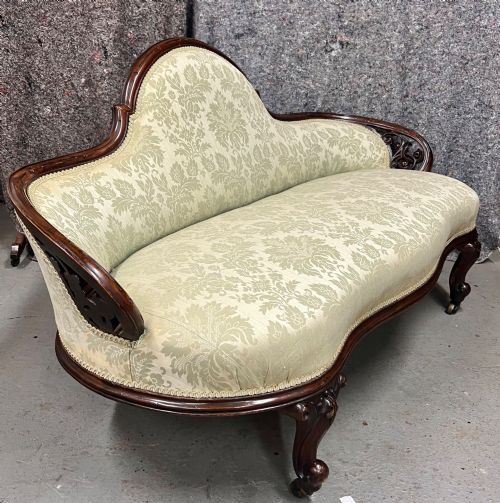
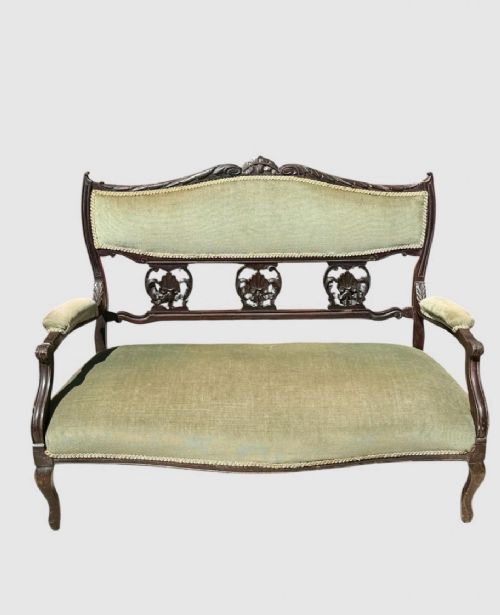
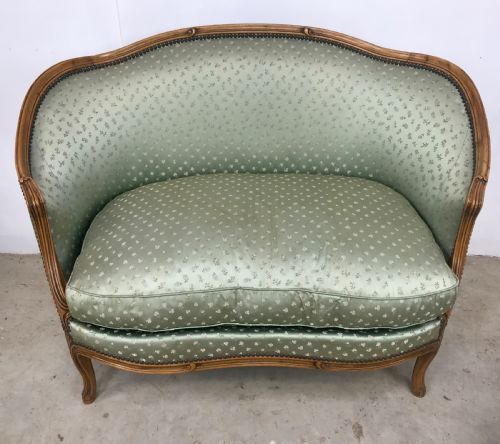
When you search for an antique green loveseat, you encounter compact two-seater settees and sofas spanning the Victorian, Georgian, Edwardian and later periods. The selection encompasses diverse regional interpretations, from English walnut frames to French revival designs.
The most frequent examples on this page are Victorian settees and smaller two-seater sofas upholstered in green fabrics, leather or ticking. These pieces combine timber frames in walnut or mahogany with upholstered seating designed for intimate spaces.
Materials and construction
Frames are constructed from hardwoods such as walnut and mahogany, often featuring carved wooden details. Workshops utilised these sturdy timbers to support upholstered seats and backs.
Upholstery employs traditional textiles including leather, standard fabric, and ticking. These materials are applied over internal padding to create durable two-seater seating.
The listings span multiple periods including Victorian, Georgian, Edwardian, and the 1930s, utilising walnut, mahogany, brass, leather, and various upholstery fabrics.
Judging quality in compact seating
The standard of carving and timber selection separates simpler frames from richly ornamented pieces like Rococo revival or George II revival settees. Finer examples display deliberate woodwork and balanced proportions.
Upholstery finish and fabric choice define the character of each settee. Original or appropriate period textile choices elevate the integrity of the piece compared to later, unsympathetic re-covering.
Howard & Sons
The Antique Green Loveseat Glossary
- Settee
- A small upholstered bench or sofa with a back and arms, designed for two or more people. This form serves as the primary seating style found across these listings.
- Canapé
- An ornamental French sofa style with an upholstered seat and back within a visible wooden frame. These pieces often reflect Louis XVI or general French design influences.
- Ticking
- A durable cotton or linen textile traditionally used to cover mattress springs and heavy upholstery. This tightly woven fabric appears on specific Victorian seating.
- Rococo Revival
- A decorative nineteenth-century style drawing on eighteenth-century asymmetry and scrollwork. Pieces in this taste display fluid carved wooden motifs.
Antique Green Loveseat: Frequently Asked Questions
How do I place a compact settee in a modern room?
A small two-seater sofa fits comfortably in bedrooms, studies or smaller living areas where full-scale furniture overwhelms the floor plan.
Pair the green upholstery with neutral walls to let the wood frame and heritage colour stand out as a focal point.
What is the difference between a settee and a sofa?
Historically, the terms overlap significantly, though settee often implies a lighter, more formal two-seater piece with exposed wooden framing. Both terms describe the compact seating options listed here.
Review the dimensions and frame construction in each listing to understand the physical scale and seating capacity of the specific item.
How do I identify a Victorian green loveseat?
Victorian pieces typically feature walnut or mahogany frames with distinct period carving styles such as Rococo revival or button-tufted upholstery. Look at the timber turning and foot design for chronological clues.
Check the upholstery materials, as Victorian examples frequently utilise heavier fabrics, leather, or specific ticking textiles recorded in the evidence.
Can I use leather or fabric settees daily?
Antique seating upholstered in durable leather or sturdy textiles handles regular use when treated with reasonable care. These materials were built for functional domestic seating.
Maintain the fabric or leather according to its specific textile type to preserve the surface condition over years of sitting.