
Antique Gold Watch Fob
An antique gold watch fob is a decorative pendant once worn with a pocket watch, prized today for its intricate miniature craftsmanship and rich variety of coloured stones.
What these pieces are
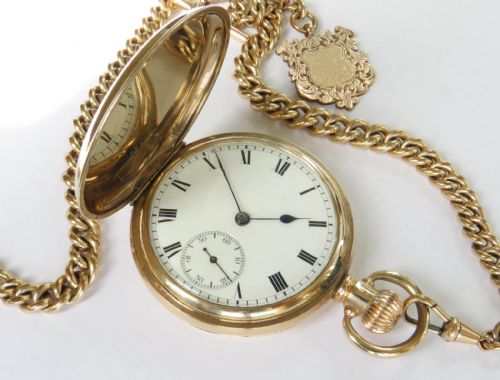
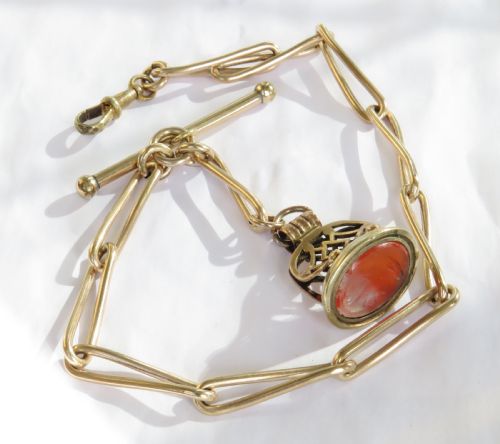
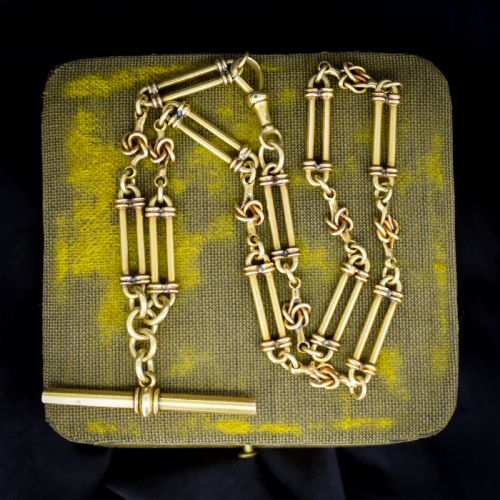
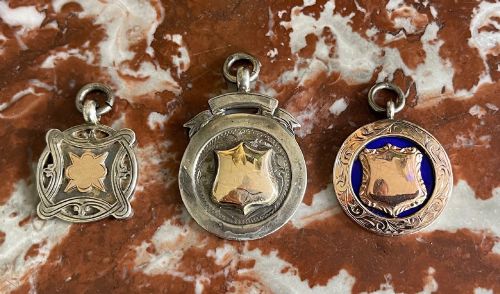
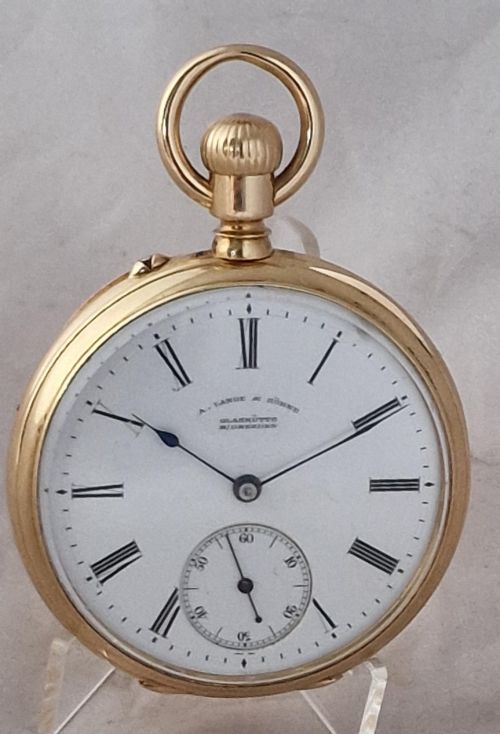
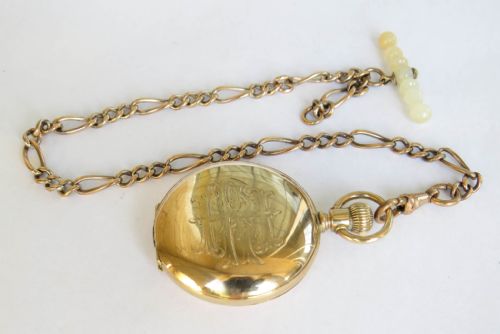
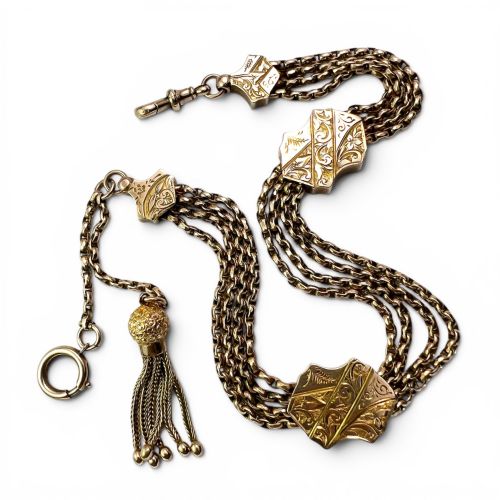
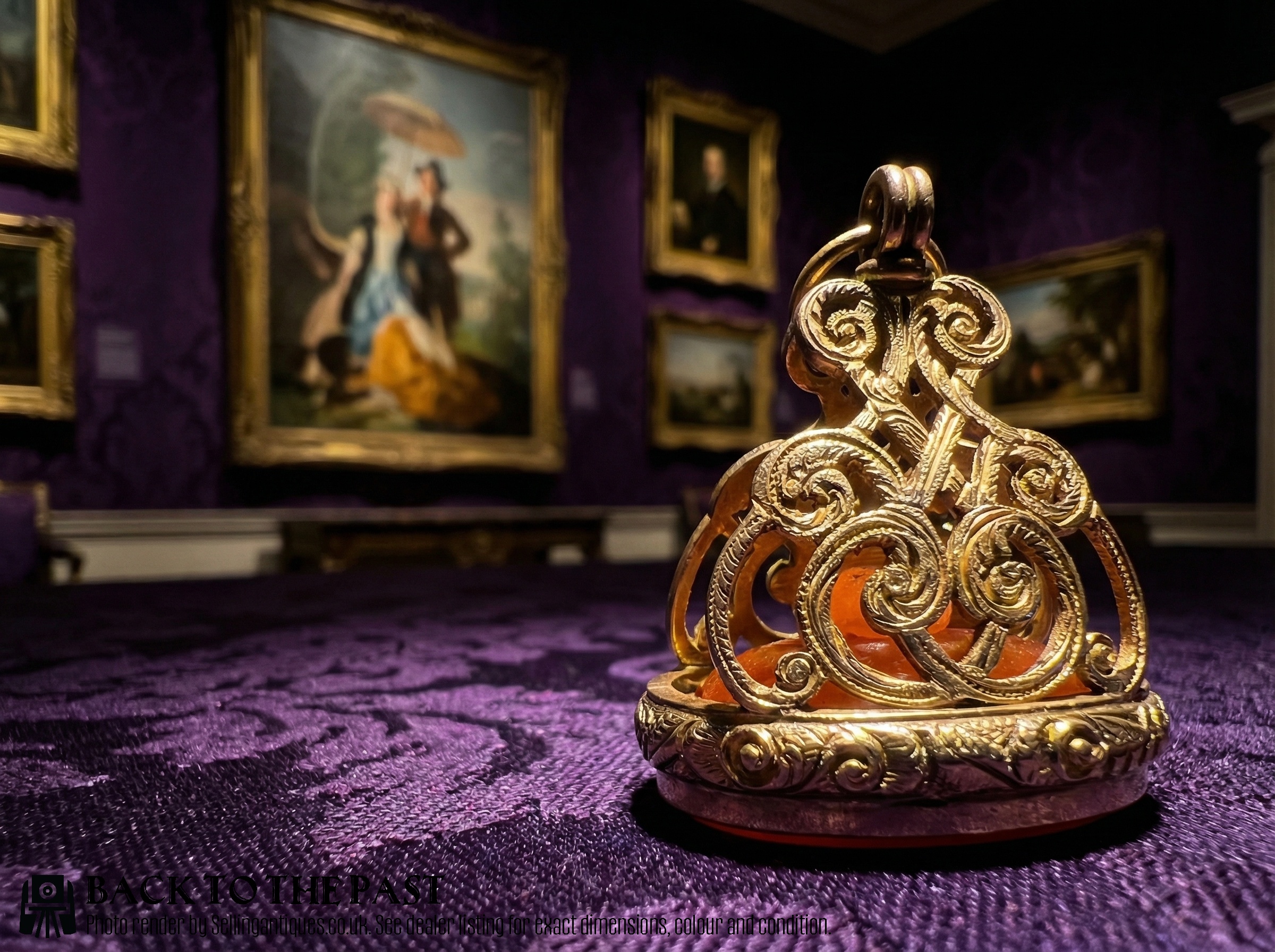
An antique gold watch fob is a small ornamental piece historically suspended from an albert chain or pocket watch. These items range from figural charms and sliding pendants to spinning seals and stationary keys.
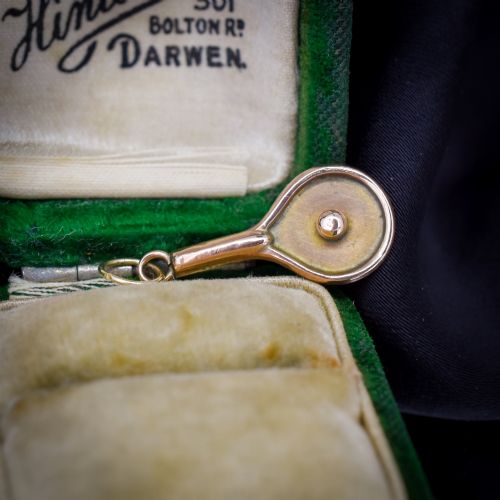
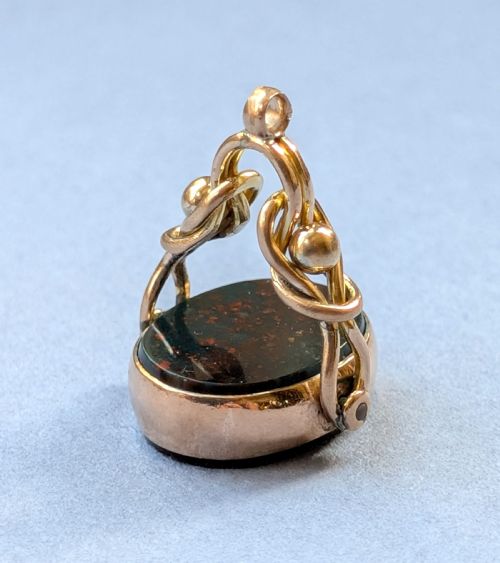
The pieces appearing on this page span the Victorian and Edwardian eras up to the early twentieth century. Common physical forms include revolving carnelian and agate stones, miniature compasses, and novelty shapes such as tennis rackets and theatrical figures.
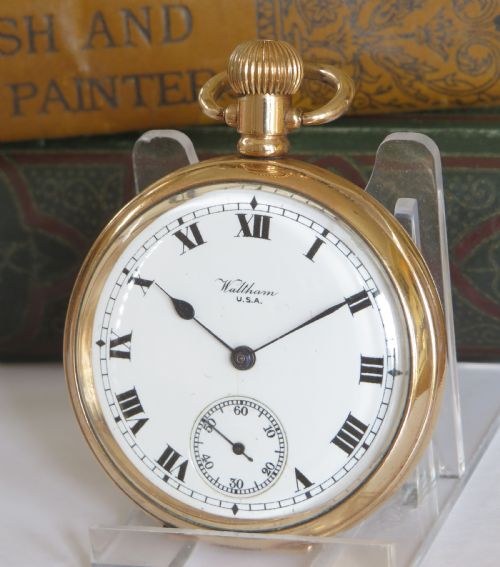
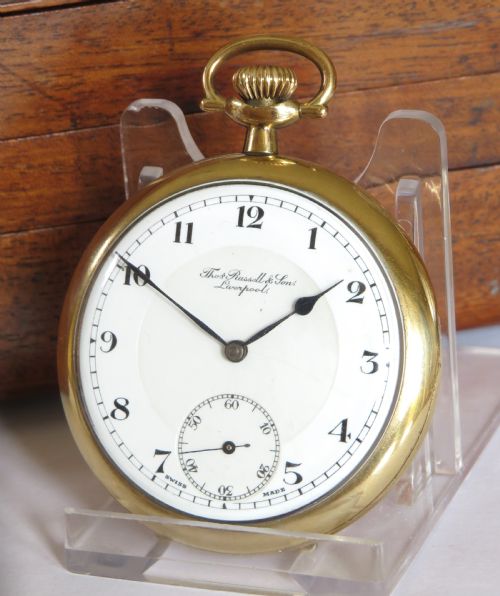
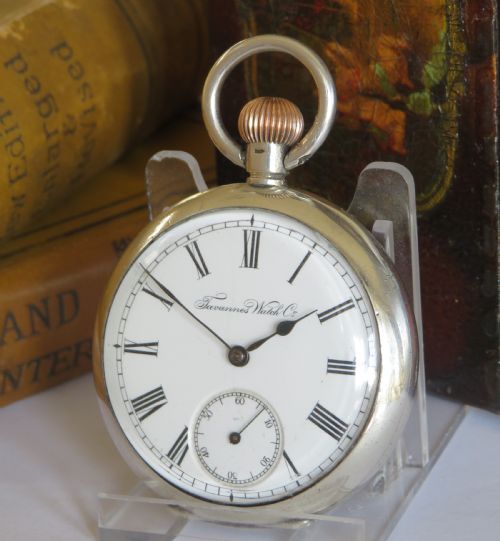
Originating as practical accessories for winding and securing pocket watches, these items transitioned into personal ornaments and charms. Today, collectors typically wear them suspended from chains as pendants or watch chain necklaces.
How they were made
Craftsmen utilised various gold standards including nine carat, ten carat, fourteen carat, and eighteen carat gold, alongside rolled gold, gold filled, and gold cased techniques. Base metals were often encased in thin layers of precious metal or combined with platinum accents.
Lapidary techniques shaped natural minerals such as carnelian, agate, bloodstone, chalcedony, amethyst, citrine, and glass into polished tablets and rotating bezels. These stones were frequently mounted securely into swivel frames or rigid gold housings.
Metalsmiths employed casting, stamping, and hand-engraving methods to create detailed figural subjects like Mr Punch, horseshoes, and sporting equipment. Moving parts such as sliding mechanisms and rotating swivels required precise mechanical fitting by skilled artisans.
Retail Price Guide 2026
Typical UK retail prices for gold watch fob, calculated from the Sellingantiques database of over a million retail prices indexed since 2003. This retail price guide relies exclusively on Sellingantiques data; no external sources or auction records are used, so the figures do not describe the wider market.
What varies in quality
Quality rests upon the weight and purity of the gold metalwork, distinguishing solid gold constructions from rolled or plated alternatives. Solid metal examples retain structural crispness and allow for deeper, sharper hand-engraving on seals and bezels.
The selection and stone-cutting of hardstones dictate visual merit, with deeply saturated carnelian, banded agates, and multi-coloured chalcedony commanding greater attention. Perfectly flush stone settings and smooth, frictionless swivel mechanisms also signal superior workshop production.
The Antique Gold Watch Fob Glossary
- Albert chain
- A decorative chain designed to secure a pocket watch to a waistcoat or garment, often paired with a fob.
- Fob seal
- A small pendant featuring an intaglio carving on the base designed for pressing into hot sealing wax.
- Watch key
- A small winding key fitted to the end of a fob, used historically to wind fusee pocket watches.
- Spinning fob
- A pendant mounted on a central swivel axis allowing the wearer to rotate the stone or seal to display different faces.
- Bloodstone
- A dark green chalcedony flecked with red jasper spots, frequently utilised in Victorian revolving seals.
Frequently Asked Questions
What is an antique gold watch fob?
An antique gold watch fob is a small decorative pendant historically attached to a pocket watch chain. They were designed to hang from the chain and sit outside the waistcoat pocket for visual effect.
Over time, many of these pieces lost their original timepieces and survived as standalone charms, pendants, or necklace components.
How were watch fobs used historically?
Originally, fobs served functional purposes such as winding mechanical pocket watches using integrated keys or stamping official documents with carved stone seals.
As fashion shifted, they evolved purely into decorative accessories that displayed the wearer's personal interests, club memberships, or stylistic tastes.
Can I wear a fob as a necklace?
These pieces transition easily onto modern chains and are frequently worn as pendant necklaces or added to charm bracelets.
Their substantial gold mounts and polished hardstones make them striking focal points when suspended from a simple chain.
How do I identify Victorian fobs?
Victorian examples often incorporate rich rose or yellow gold alongside natural hardstones like bloodstone, carnelian, and banded agate.
Stylistic cues include intricate chased floral motifs, heraldic crests, and figural novelty subjects typical of nineteenth-century manufacturing.