




Antique Gold Virgin Mary
These pieces of antique gold virgin mary jewellery and art encapsulate centuries of devotional craft, offering portable or displayable expressions of faith.
Antique Gold Virgin Mary
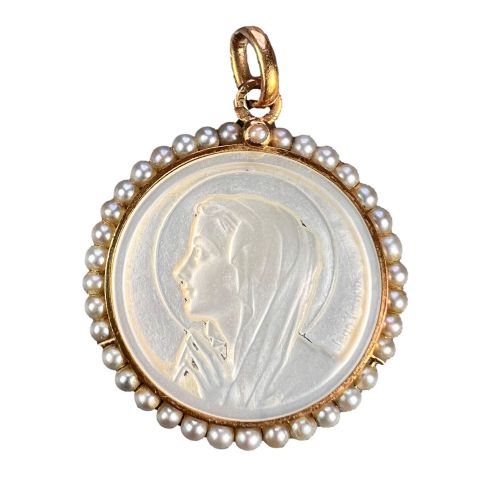
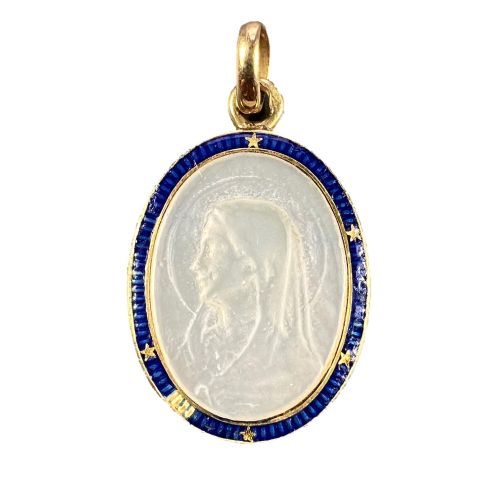
When searching for an antique gold virgin mary, collectors encounter a diverse group of devotional objects spanning small personal medals to substantial canvas paintings. The most frequent discoveries on this page are French pendants and charms cast in yellow and rose gold, often originating from the early decades of the twentieth century and the late nineteenth century.
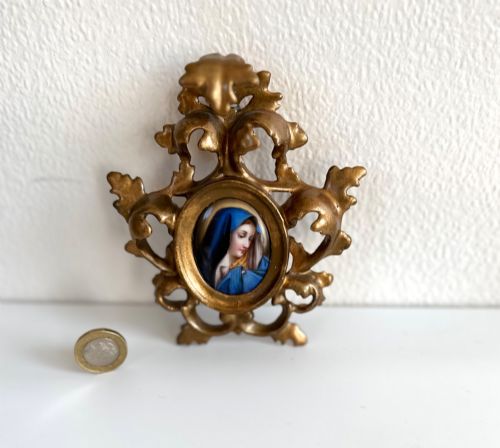
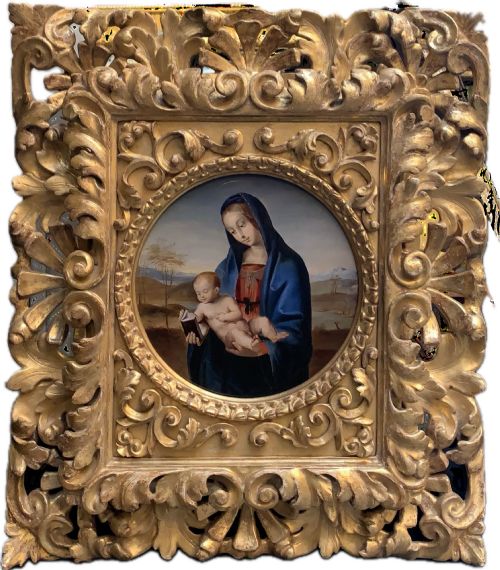
Beyond jewellery, the selection encompasses miniature portraits and oil paintings depicting the Madonna and Child, sometimes drawing directly upon Renaissance compositions. These portable medallions and larger framed works served personal devotion, marking significant milestones or affiliations within Catholic traditions.
Stylistic influences range from classic Victorian interpretations to distinct Art Nouveau expressions, particularly the delicate use of translucent enamel work characteristic of French religious items. Such pieces bridge the gap between wearable ornaments and miniature works of sacred art.
How they were made
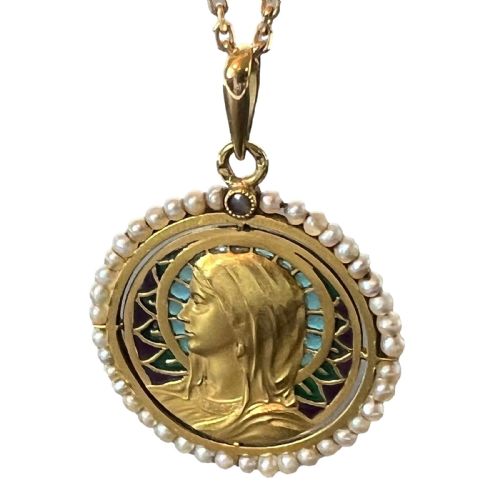
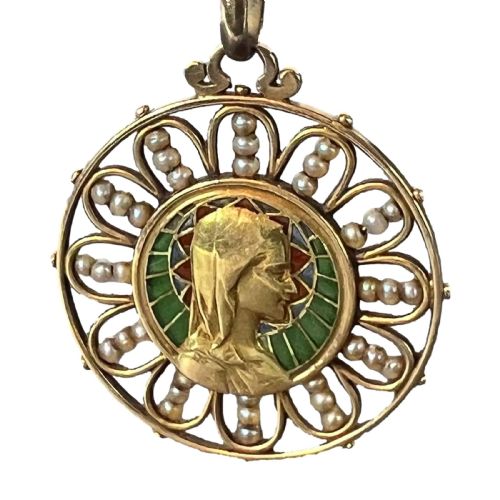
Metalsmiths predominantly utilised 18ct yellow and rose gold to form the bezels, frames, and sculptural reliefs of these pendants and medals. This high karat gold provided a rich warmth that contrasted effectively with the detailed engravings and applied borders often incorporating seed pearls.
Colour and luminosity were frequently introduced through specialised techniques such as plique-à-jour enamel, which suspends translucent coloured glass within a gold wire framework without a backing, allowing light to pass through the depiction of the Virgin Mary.
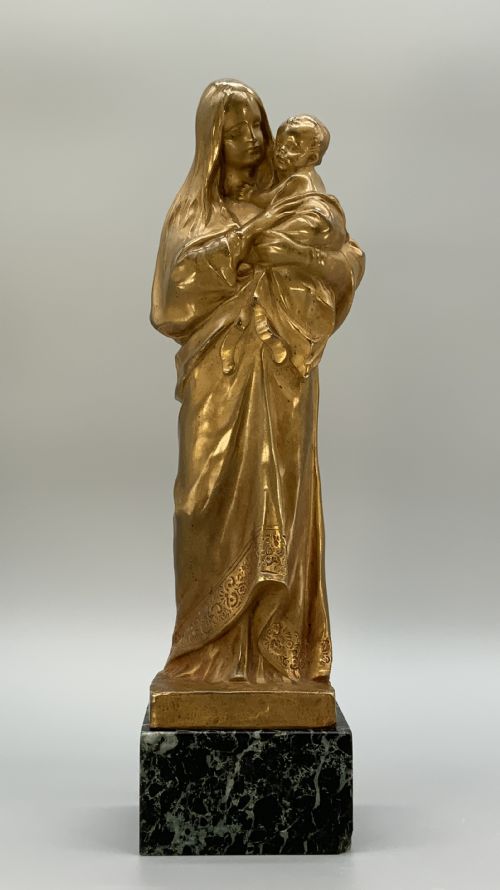
Painted examples relied on traditional media, employing oil on canvas or delicate pigments upon mother of pearl substrates to render facial expressions and drapery with fine precision. Gilt bronze and carved wood occasionally appear in larger sculptural formats within the broader grouping.
Several pieces preserve tiny French hallmarks on their suspension rings, testifying to Parisian workshops that once supplied daily miracles in miniature gold.
What varies in quality
The distinction between standard examples and superior pieces rests heavily upon the finesse of the metalwork and the complexity of decorative embellishments like enamel. Pendants featuring intact plique-à-jour panels and carefully structured pearl borders demonstrate a higher level of artisan skill than simpler stamped medallions.
In painted works, the delicacy of the brushwork and the fidelity of the rendering - particularly in pieces referencing Raphael or traditional iconographic formulas - dictate the artistic merit. Signed works attributed to known medallists or studios command particular attention for their documentary and aesthetic completeness.
Hans Müller·Emile Monier·Emile Dropsy·Sellier·Pageli Perriat·Mazzoni·Becker
The Antique Gold Virgin Mary Glossary
- Plique-a-Jour
- An enamelling technique where enamel is applied in cells without a backing, resembling miniature stained glass. This method allows light to illuminate the translucent colours behind the sacred figure.
- Medal
- A flat, coin-like devotional object struck or cast in metal, designed to be worn on a chain or carried. These items often commemorate specific sanctuaries, jubilees, or miraculous events.
- Madonna and Child
- A traditional representation of the Virgin Mary holding the infant Jesus. This motif forms the central subject for many of the painted panels and gold pendants found in this category.
- Mother of Pearl
- The iridescent internal layer of mollusc shells, frequently carved and used as a luminous background for painted portraits of Mary. Its natural sheen adds depth to small-scale devotional images.
- Renaissance Revival
- A nineteenth-century artistic movement drawing inspiration from the forms, techniques, and compositions of the fifteenth and sixteenth centuries. Pieces in this style often echo classical devotional paintings.
Antique Gold Virgin Mary: Frequently Asked Questions
How were these gold medals worn?
Pendants and charms were typically suspended from fine gold chains around the neck as personal talismans or expressions of religious devotion. Many feature original suspension loops designed for daily wear.
Smaller medals were also attached to chatelaines or rosaries, serving both decorative and practical devotional functions in daily life.
What is plique-à-jour enamel?
Plique-à-jour is an intricate enamelling method where transparent enamel is fired within open gold wire cells. The absence of a solid backing allows light to pass directly through the coloured glass.
In these religious pieces, the technique often frames the figure of the Virgin Mary with stained-glass-like brilliance.
Are the paintings original or copies?
The paintings include both original devotional works and period interpretations or studies after master compositions, such as those by Raphael. These pieces reflect historical traditions of studying and replicating revered religious art.
Each listing details the specific attribution, whether linked to a known circle of artists or created as a devotional interpretation.