

Antique Gold Pearl Drops
Antique gold pearl drops bring together lustrous pearls and rich gold in pendants, earrings, and necklaces shaped by Victorian, Edwardian, and later hands.
Antique Gold Pearl Drops
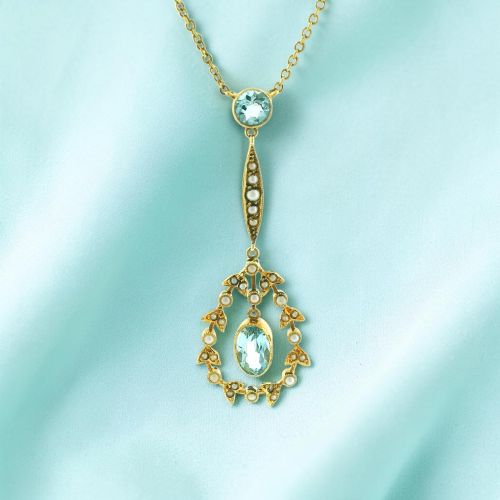
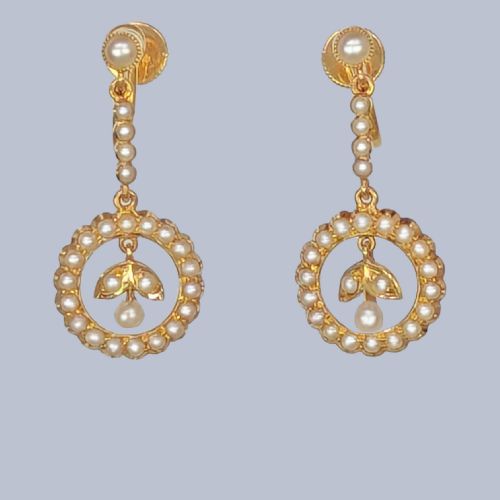
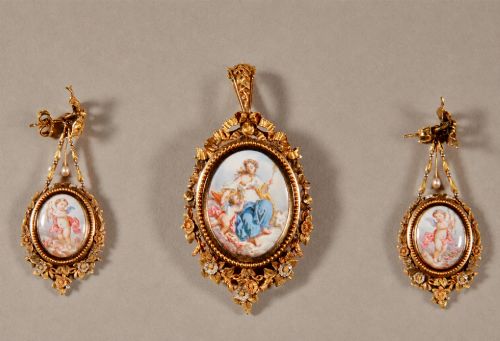
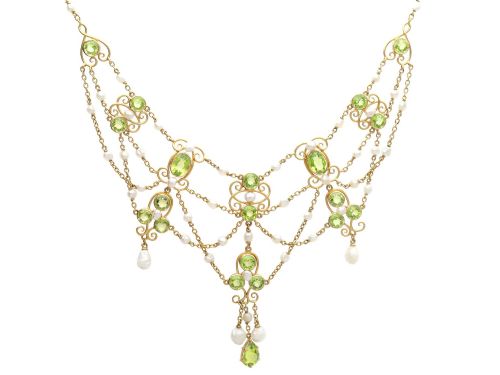
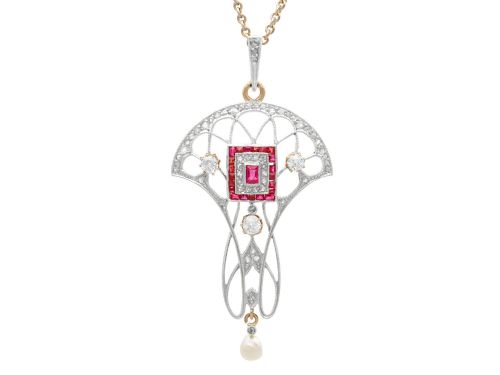
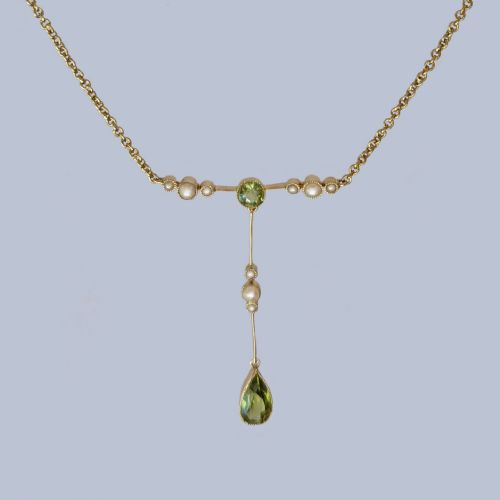
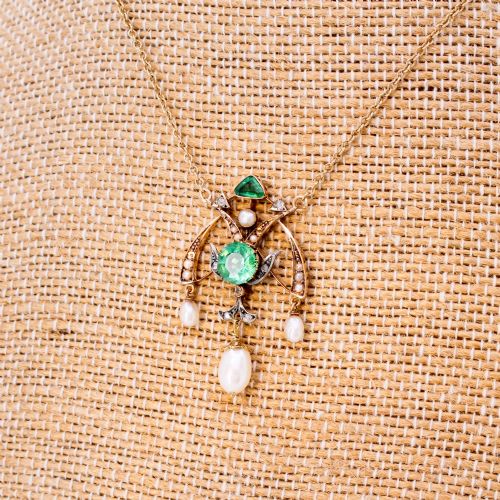
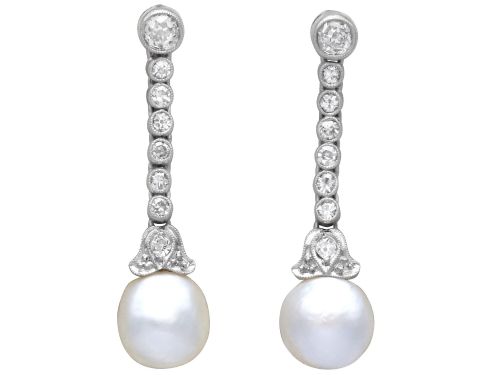
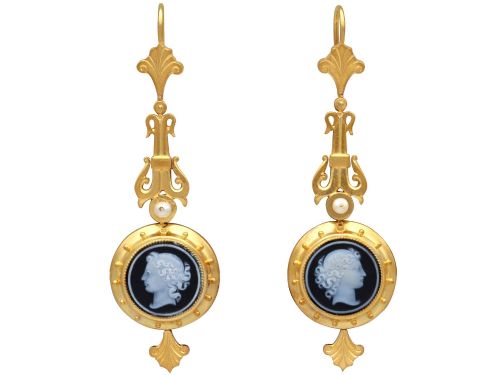
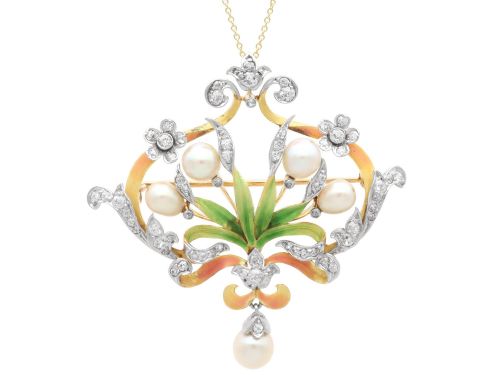
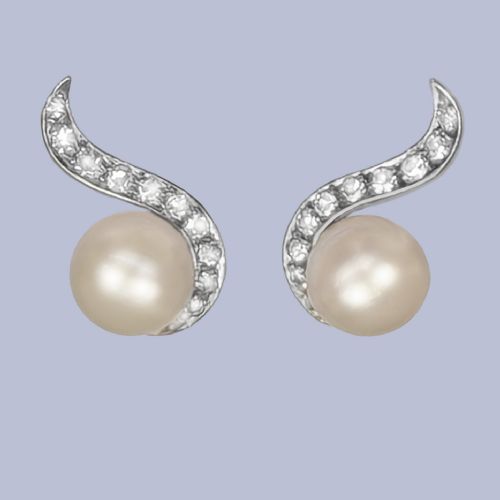
When searching for antique gold pearl drops, buyers encounter pendant necklaces, drop earrings, and brooches featuring suspended pearls set alongside precious stones. The selection spans Victorian, Edwardian, and Art Nouveau periods, alongside occasional mid-century items reflecting earlier styles.
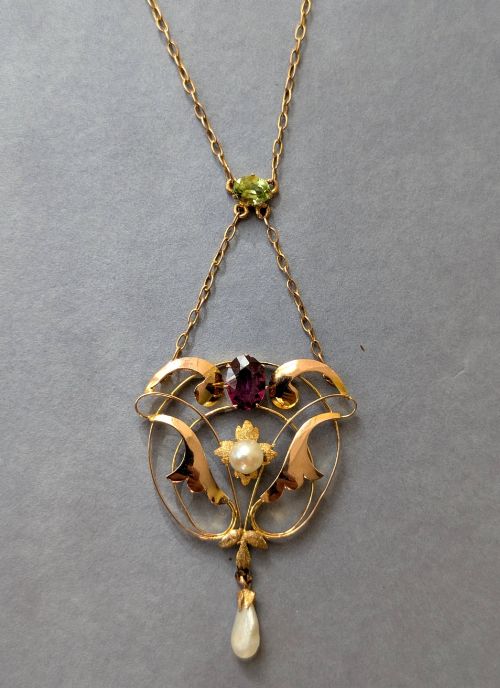
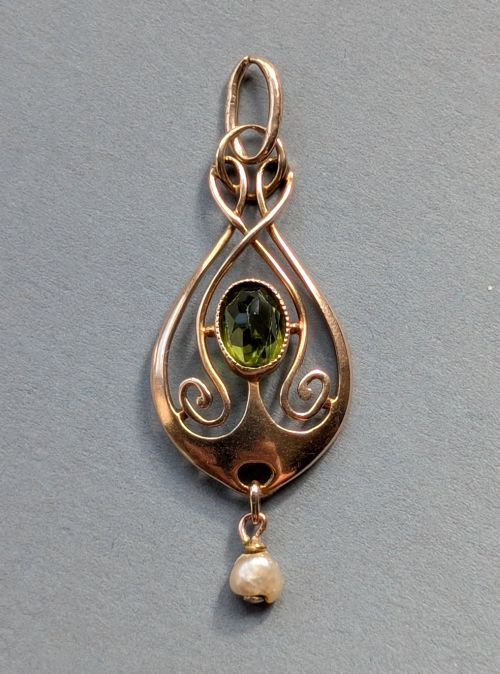
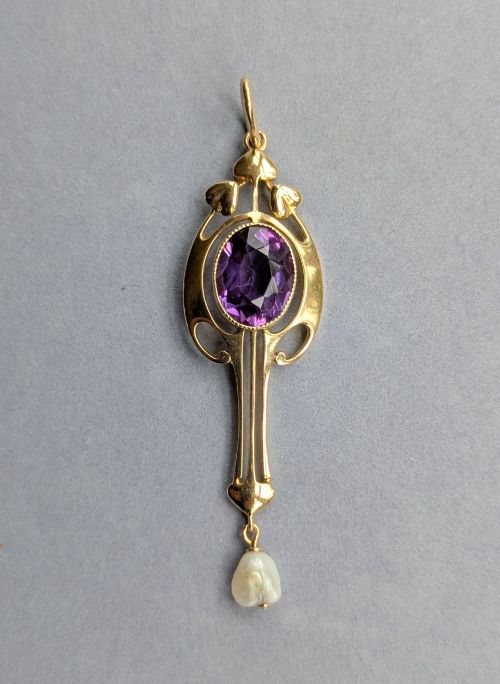
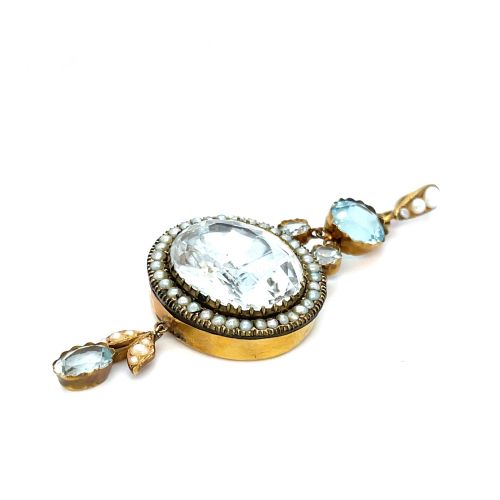
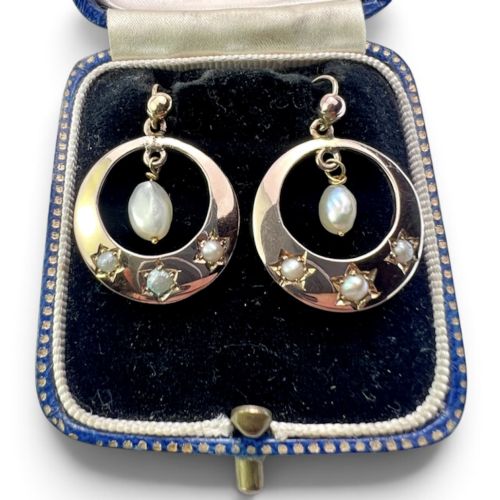
Pendants and lavaliers dominate the offerings, often pairing seed pearls with amethysts, peridots, or aquamarines mounted in nine-carat or fifteen-carat gold. Drop earrings take the form of crescent shapes, flower clusters, and simple articulated stones.
The materials reflect the tastes of the late nineteenth and early twentieth centuries, where yellow and rose gold formed delicate settings for natural and seed pearls. Pieces range from formal Holbeinesque designs to fluid Art Nouveau ribbon and whiplash motifs.
How they were made
Craftsmen utilised nine-carat and fifteen-carat yellow and rose gold, casting and fabricating intricate frames to hold central gems and delicate seed pearls. Stones were secured using collet settings, star-settings, or fine claws that allowed light to pass through transparent gems.
Pearls were typically half-drilled and mounted on gold pins or threaded meticulously onto fine wire frames, particularly in seed pearl clusters and intricate lavaliers. Soldered connections joined articulating drops to main bodies, creating movement in earrings and pendants.
Antique Gold Pearl Drops Retail Price Guide 2026
Typical asking prices for gold pearl drops among the pieces listed under this phrase on Sellingantiques today, from the lower quarter to the upper quarter. They describe what is for sale here now, not the wider market.
Listings span the Victorian and Edwardian periods, extending through the 1920s, 1930s, and 1960s.
What varies in quality
Quality rests in the precision of the metalwork, the matching and lustre of the pearls, and the depth of colour in accompanying gemstones like amethyst, peridot, and aquamarine. Superior pieces display crisp casting, secure stone settings, and minimal glue residue around pearls.
The presence of original components, such as matching chains, fitted boxes, or convertible brooch-pendant fittings, elevates an item's integrity. Balance in design and the delicacy of wirework separate standard production pieces from finer masterwork.
S. Blanckensee & Son
The Antique Gold Pearl Drops Glossary
- Seed pearl
- Very small natural pearls, often half-drilled and adhered to gold backings in clusters or fringes.
- Lavalier
- A pendant featuring a central gemstone with one or more suspended drops hanging below.
- Holbeinesque
- A revivalist Victorian style inspired by sixteenth-century pendant designs, rich in gems and enamel.
- Foil back
- A technique where coloured metallic foil is placed behind a gemstone to enhance its brilliance and colour.
- Star-set
- A setting style where a gemstone is flush with the metal and surrounded by hand-engraved star rays.
Antique Gold Pearl Drops: Frequently Asked Questions
How do I care for antique pearl drops?
Pearls are organic gems that require gentle handling, avoiding harsh chemicals, perfumes, and ultrasonic cleaners.
Store them separately in soft pouches to prevent scratching the gold and softer gemstones.
Are these pearls natural or cultured?
Many pieces from the Victorian and Edwardian periods feature natural saltwater or freshwater pearls, harvested before cultured pearls became dominant.
Seed pearls used in intricate clusters are likewise natural growths of small scale.
Can these pendants be worn daily?
While durable, antique gold pearl drops contain delicate seed pearls and fine wirework that benefit from careful, occasional wear.
Removing them before sleeping, swimming, or rigorous activity preserves their historical settings.
How can I tell the period of a piece?
Stylistic cues such as the flowing asymmetry of Art Nouveau or the geometric symmetry of later decades offer initial clues.
Gold purity marks, clasp types, and accompanying gemstones further anchor the piece to Victorian or Edwardian eras.