

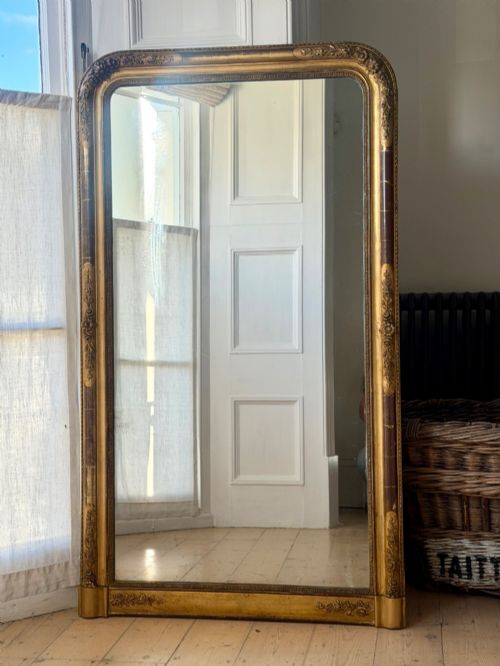
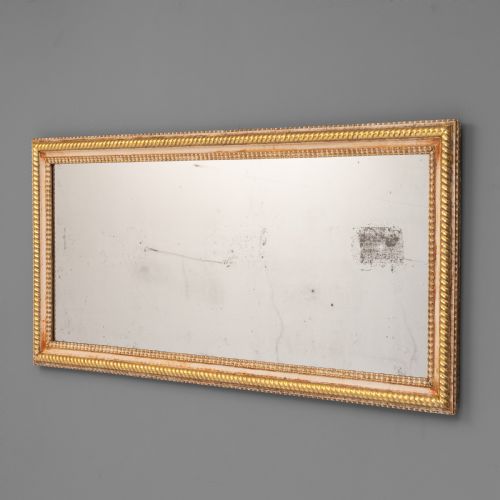
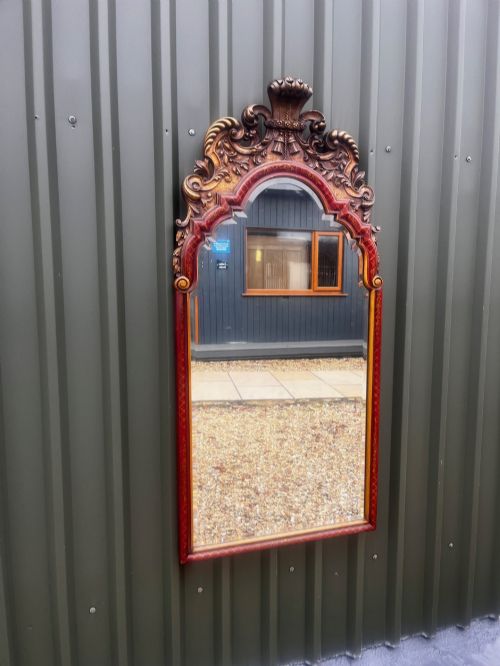
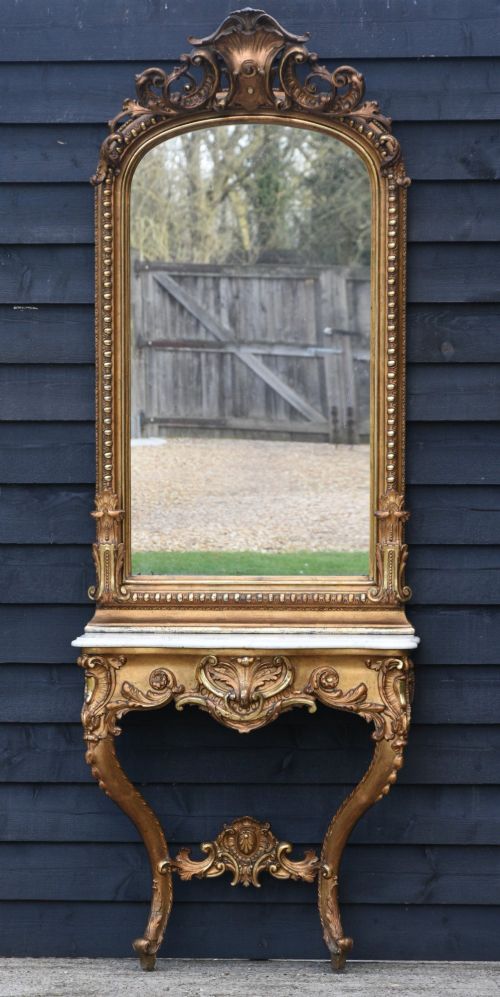
Antique Gold Hall Mirror
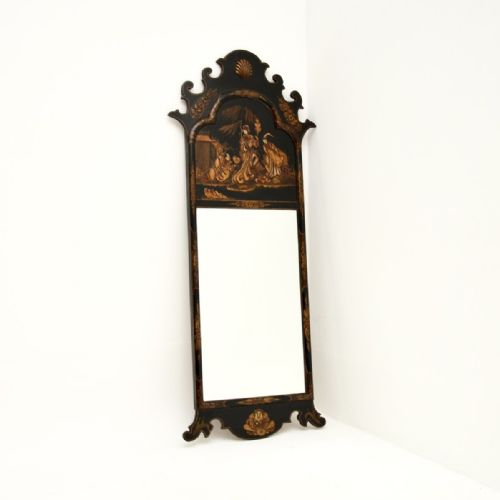
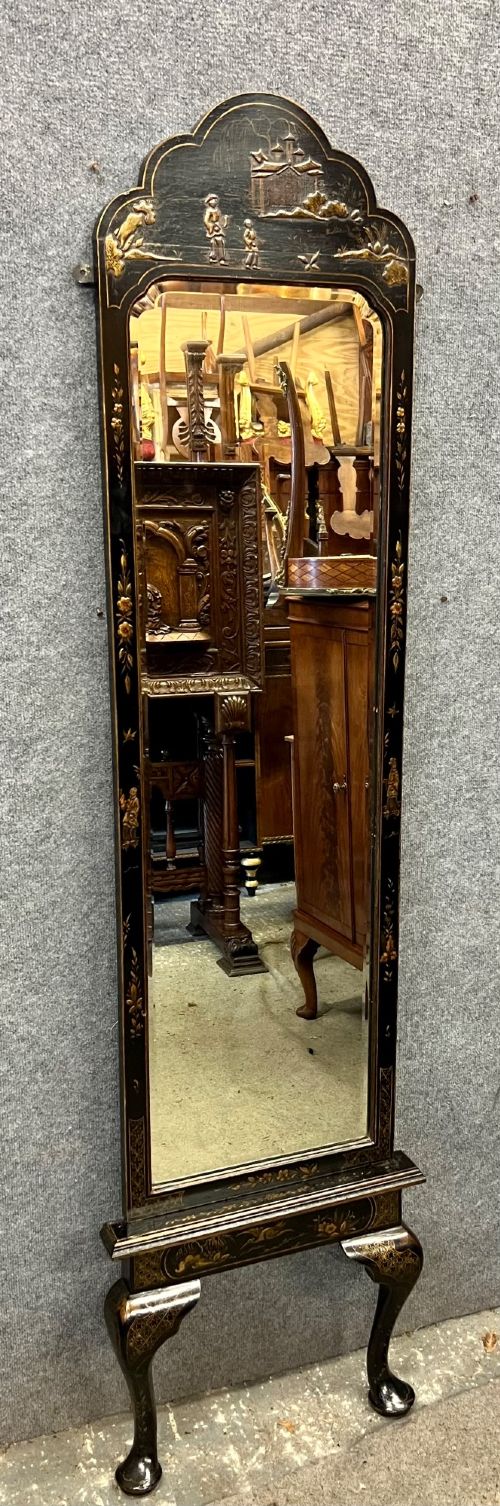
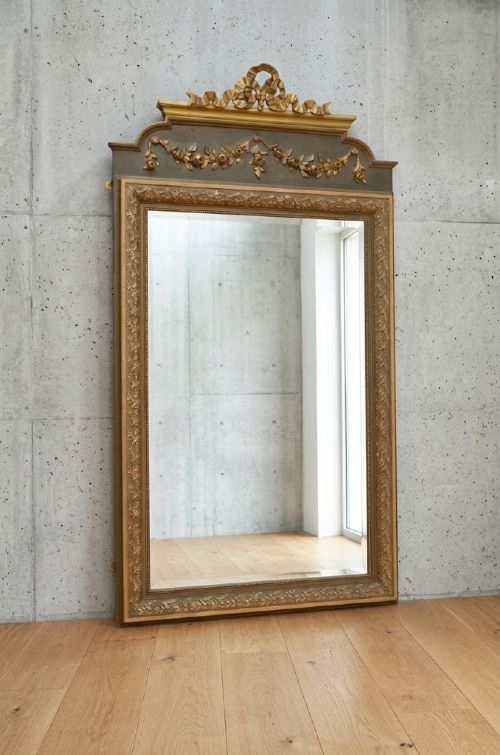
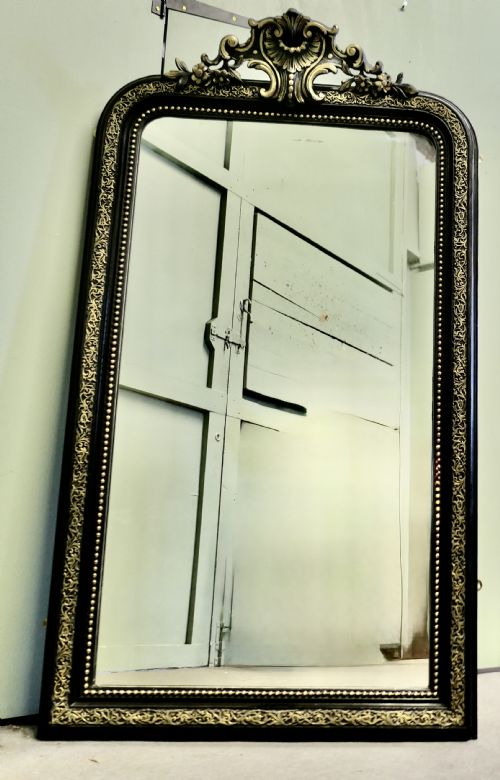
An antique gold hall mirror brings instant light and presence to an entranceway, usually taking the form of a tall pier glass or ornate Victorian wall piece.
Antique Gold Hall Mirror
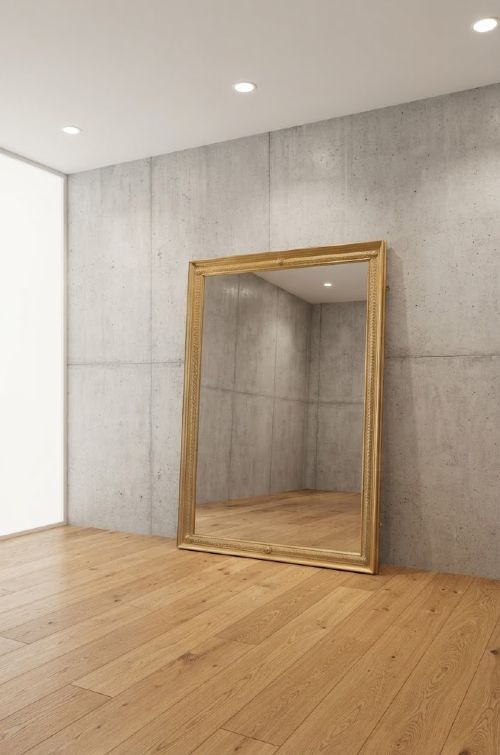
When you search for an antique gold hall mirror, you are looking at tall vertical glasses designed to bounce light into narrow spaces, alongside wider overmantel and pier mirrors adapted for entranceways. The pieces on this page span the nineteenth century, including Georgian and Regency examples, through to early twentieth-century revivals.
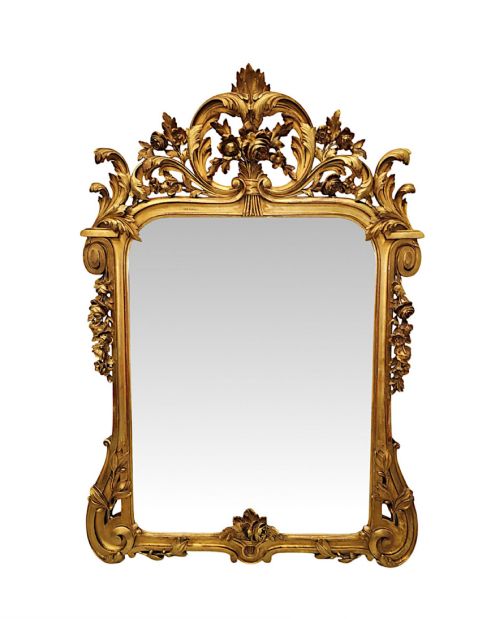
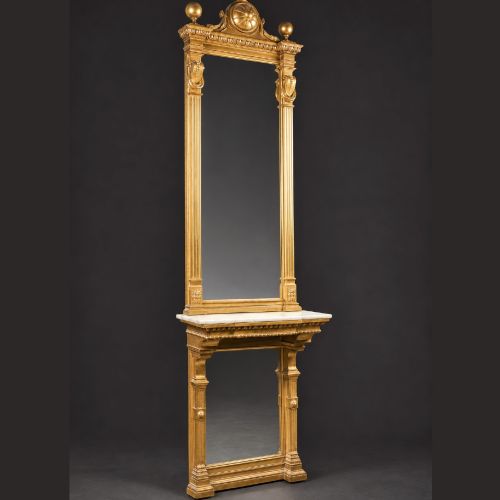
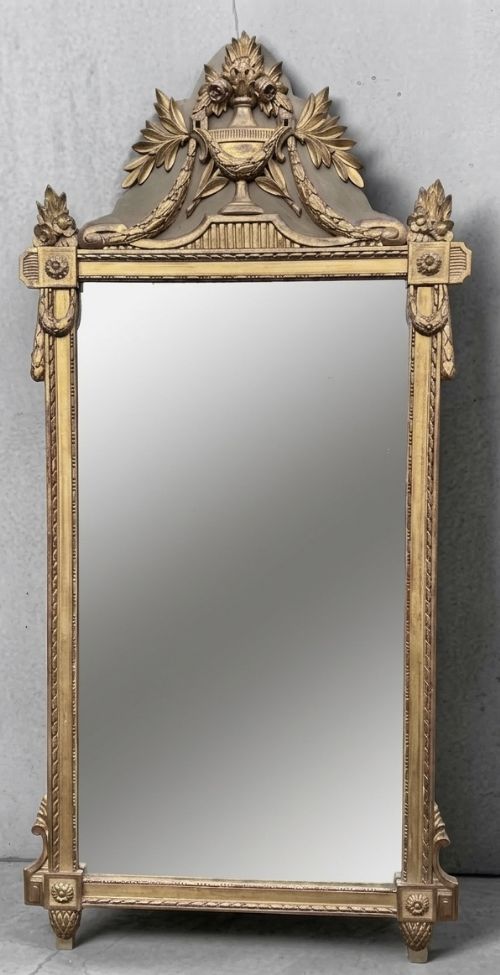
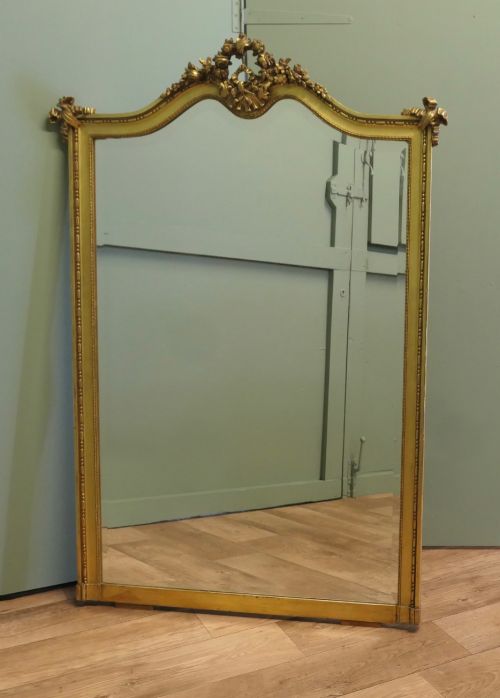
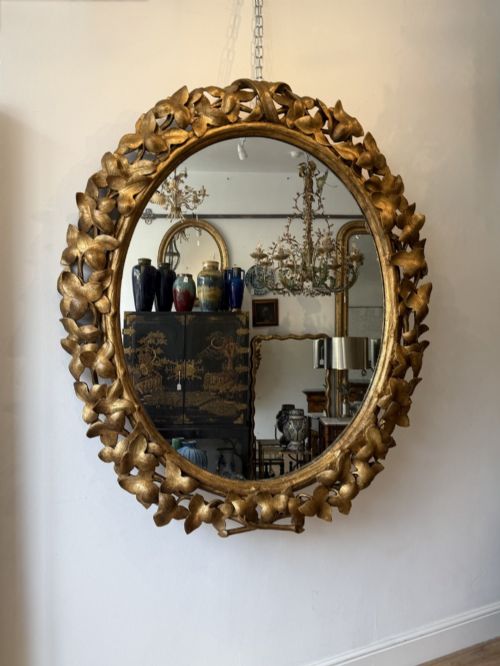
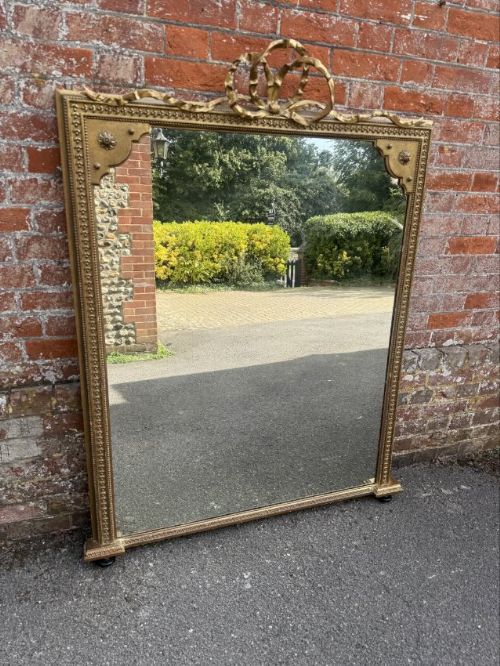
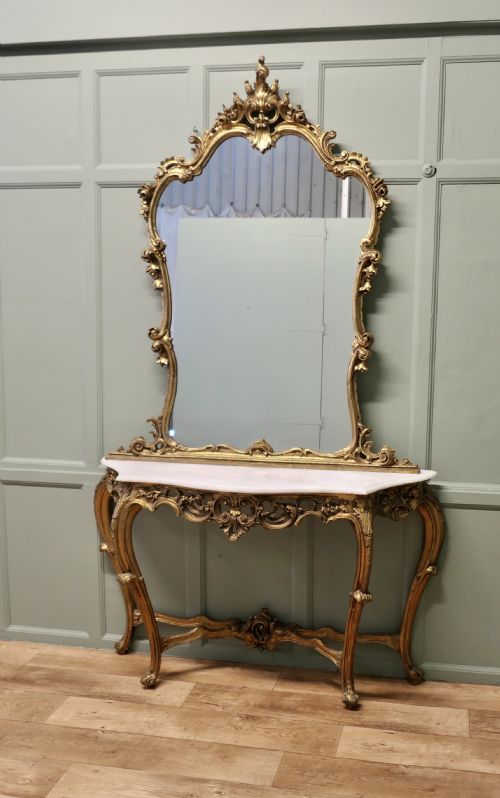
Most entries are carved wood or gesso finished in gold leaf or gilt, occasionally paired with console tables or featuring original bevelled glass. Forms range from restrained rectangular pier glasses to elaborate French Rococo and Italian Florentine frames decorated with floral motifs, cartouches, and ribbon crests.
The originators of these pieces worked within established historical styles, so you will encounter Regency, Louis Philippe, and Baroque revivals alongside simpler carved timber and painted wood frames. Whether modest in scale or enormous, each piece functions primarily to anchor a hallway with reflective depth and gilded surface.
How they were made
Carved wood and gesso form the structural base of the gilded frames, providing a pliable surface for intricate ornamentation before the application of gold leaf or gilt. Timber frames in oak, mahogany, and painted wood provide the underlying strength for taller pier and leaner mirrors.
Glass plates are held within the frames, sometimes preserved as original bevelled mirror glass or featuring specialised panels such as verre eglomise. Bronze and brass elements occasionally appear in repousse work or dedicated bronze hall mirrors, adding metallic variation to the gilt surface.
Antique Gold Hall Mirror Retail Price Guide 2026
Typical asking prices for gold hall mirror among the pieces listed under this phrase on Sellingantiques today, from the lower quarter to the upper quarter. They describe what is for sale here now, not the wider market.
What varies in quality
The depth and crispness of the hand-carving separate standard frames from superior examples, particularly where gesso ornaments meet the underlying wood. Finer mirrors display sharply defined rope twists, floral garlands, and cartouches that retain their original architectural definition.
The integrity of the gilding and the preservation of the original mirror glass dictate the visual weight of the piece. High-quality items maintain authentic gold leaf or rich gilt surfaces alongside period glass that shows honest age rather than loss of proportion.
The Antique Gold Hall Mirror Glossary
- Giltwood
- Wood that has been coated with gold leaf or a gold-coloured gilt finish. This is the primary surface treatment seen on nineteenth-century frames.
- Gesso
- A plaster-like mixture applied to wood frames and carved before gilding. It allows for intricate relief decoration such as flowers and scrolls.
- Pier Glass
- A tall mirror designed to hang on the narrow wall between windows or in a hallway. They frequently incorporate console tables beneath them.
- Verre Eglomise
- A cold decoration technique where designs are painted and gilded on the reverse of glass panels. It appears in specific Regency mirror panels.
- Overmantel Mirror
- A wide mirror traditionally hung above a fireplace mantel but frequently utilised in large entrance halls. They often share the decorative vocabulary of hall mirrors.
Antique Gold Hall Mirror: Frequently Asked Questions
Where should I hang a tall hall mirror?
These tall glasses suit narrow entrance spaces where they can reflect light from adjacent doorways and visually expand the area. Positioning them opposite a light source maximises their impact.
Ensure the wall construction can support the weight of a heavy wood and gesso frame, particularly for large nineteenth-century examples.
Are the mirror plates original?
Many surviving pieces retain their original glass, often identifiable by slight foxing, minor imperfections, or bevelled edges. Some pieces have received new glass over time.
Check the listing details to see if the glass is noted as original or replaced, as this affects the historic character of the mirror.
How do I identify a Regency mirror?
Regency pieces often feature clean neoclassical lines, convex circular formats, or architectural framing elements that reflect early nineteenth-century taste. They tend to be more restrained than later Victorian revival pieces.
Look for proportion, subtle reeded details, and classical motifs rather than heavy floral carving.
What is a console table and mirror set?
This combination pairs a wall-mounted pier mirror with a matching table placed directly below it against the wall. They were designed as a unified furnishing scheme for grand hallways and reception rooms.
The tables frequently feature marble tops and carved giltwood frames that echo the design of the mirror above.