



Antique Gold Entry Table
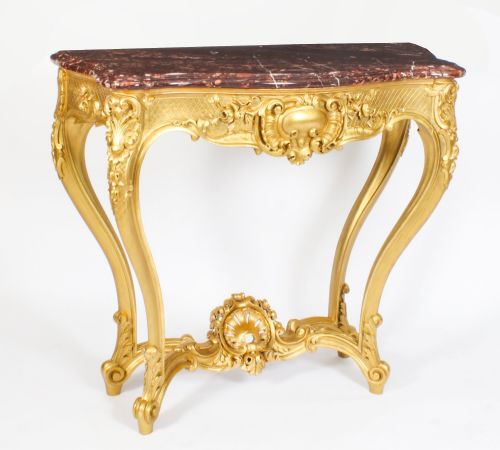
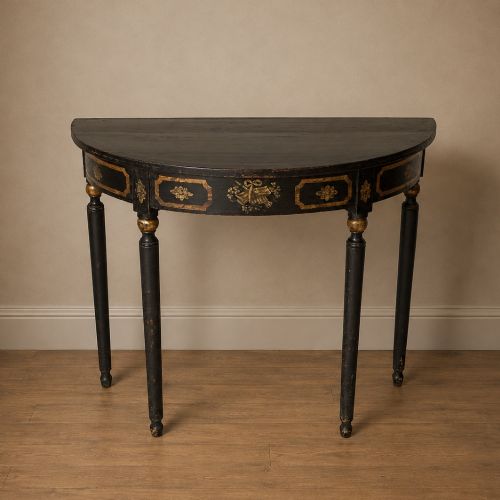
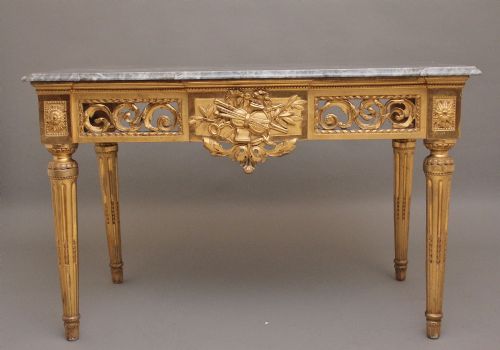
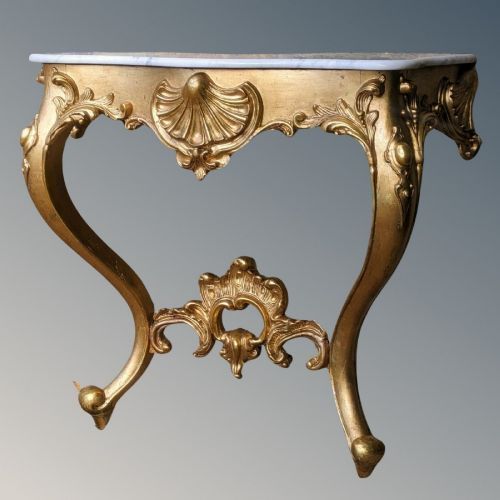
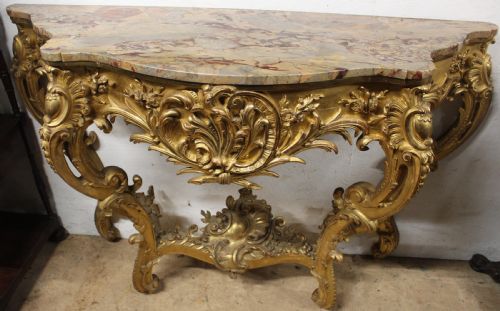
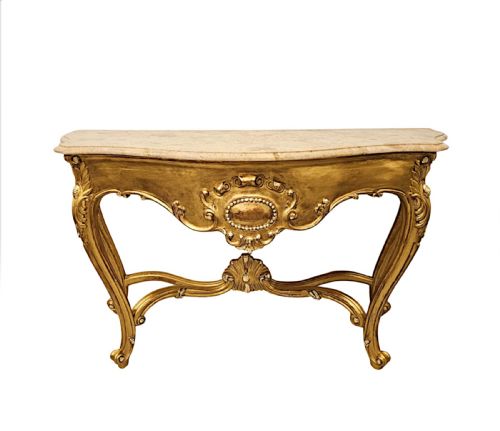
An antique gold entry table commands the hall, combining marble and giltwood to greet visitors with stately proportion.
Antique Gold Entry Table
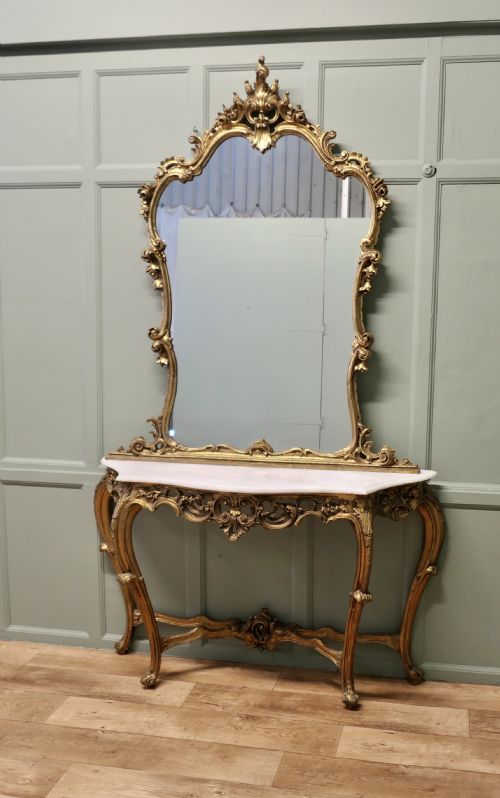
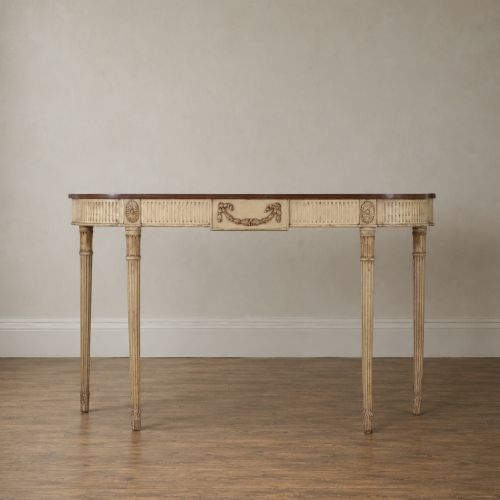
An antique gold entry table typically takes the form of a console table designed to sit flat against a hallway wall, often paired with a matching wall mirror. These pieces originate across the eighteenth and nineteenth centuries, spanning Georgian, Victorian, and Regency periods alongside French and Italian stylistic influences.
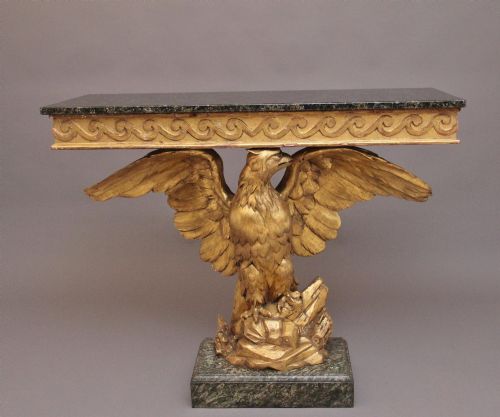
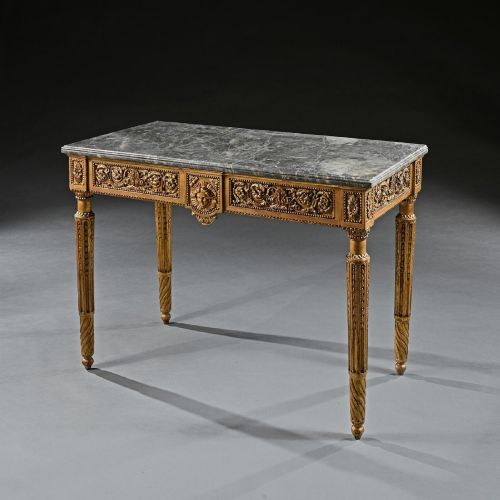
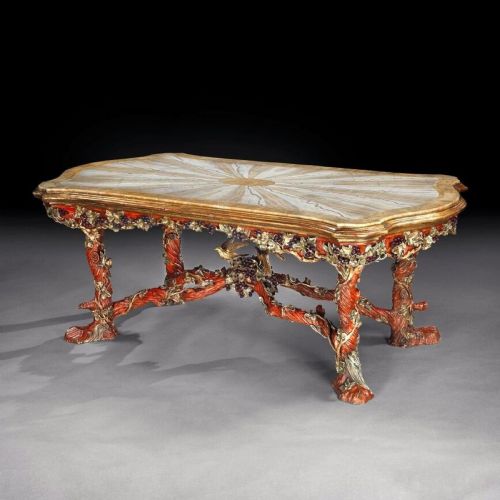
Buyers meet console tables and console table and mirror sets most frequently on this page, alongside occasional centre tables. The surface materials rely heavily on heavy slabs of marble supported by intricately carved wooden frames.
Materials and construction
Carvers shaped the wooden frames from timber such as mahogany or underlying softwood before applying layers of gesso to build up high-relief ornamentation like scrolls, putti, and centaur designs. Artisans then laid gold leaf or paint over the gesso ground to achieve the characteristic gilded surface.
Heavy marble slabs, sometimes featuring coloured stone such as Sienna, rest directly on the carved base to form the functional tabletop. Pier mirrors built to accompany these tables utilise matching gilded wood frames to unify the hallway display.
Antique Gold Entry Table Retail Price Guide 2026
Typical asking prices for gold entry table among the pieces listed under this phrase on Sellingantiques today, from the lower quarter to the upper quarter. They describe what is for sale here now, not the wider market.
Listings span the eighteenth, nineteenth, and early twentieth centuries, featuring French Rococo, Italian Neoclassical, and Regency stylistic influences.
Distinctions in quality
The crispness of the hand-carving in the gesso and wood separates standard production from exceptional work, particularly where figures like putti or maiden heads are modelled with anatomical depth rather than flat simplification. Deeper undercut carving requires considerable skill from the artisan.
The selection and thickness of the marble top also dictate the stature of the piece, with dense, finely figured stone indicating superior workshop output. Original gilding that retains its warm, burnished tone without excessive later intervention holds greater integrity.
The Antique Gold Entry Table Glossary
- Giltwood
- Wood covered with thin gold leaf applied over a prepared gesso ground. This technique creates a luminous metallic finish characteristic of formal European furniture.
- Console table
- A table designed to be fixed against a wall, frequently supported by ornamental brackets or legs rather than four independent vertical posts.
- Gesso
- A plaster-like mixture applied to wood surfaces to provide a smooth base for gilding or painting. Artisans carve fine decorative details directly into this hardened layer.
- Demi-lune
- A half-moon shape characteristic of tables built to fit flush against narrow hallway walls. This curved form softens the transition within an entrance space.
- Pier mirror
- A tall wall glass designed to hang directly above a console table between architectural windows. These mirrors amplify light and complete the decorative scheme of a hall.
Antique Gold Entry Table: Frequently Asked Questions
How are antique gold entry tables used?
These tables function primarily as decorative anchor pieces in hallways and entrance foyers, providing a surface for small items upon entering the home.
Historically, they served to display ornamental objects while establishing an immediate sense of formality for arriving guests.
How do I style a console table in a hall?
Pair the table with a matching wall mirror to balance the vertical space above the marble surface.
Keep objects placed on the marble minimal to allow the carved giltwood and painted details of the frame to remain visible.
How do I tell an 18th century table from a 19th century revival piece?
Eighteenth-century examples often exhibit hand-carving techniques unique to Italian and French Baroque or Rococo workshops, showing natural tool marks on the reverse.
Nineteenth-century revival pieces, including Victorian and Georgian style iterations, frequently utilise heavier gesso applications and machine-sawn timber elements.