


Antique Gold Cuff Bangle
An antique gold cuff bangle wraps the wrist with substantial presence, bringing together rich historical periods and enduring craftsmanship.
Antique Gold Cuff Bangle
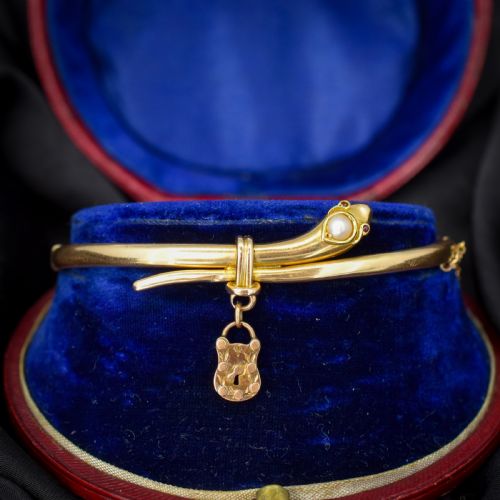
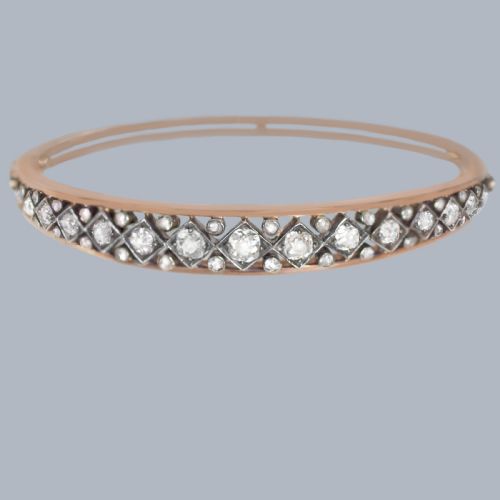
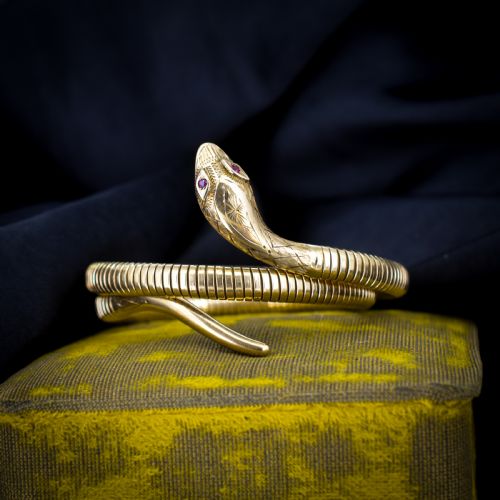
An antique gold cuff bangle combines rigid metal architecture with decorative motifs spanning the Victorian, Edwardian, and mid-century eras. These pieces take the form of hinged bands, wrap-around serpents, and wide engraved cuffs designed to sit securely on the wrist.
The selections on this page draw predominantly from nineteenth-century Victorian workshops, alongside Edwardian creations and later twentieth-century interpretations. Buyers frequently encounter designs incorporating silver-topped gold, floral engravings, and intricate gemstone clusters.
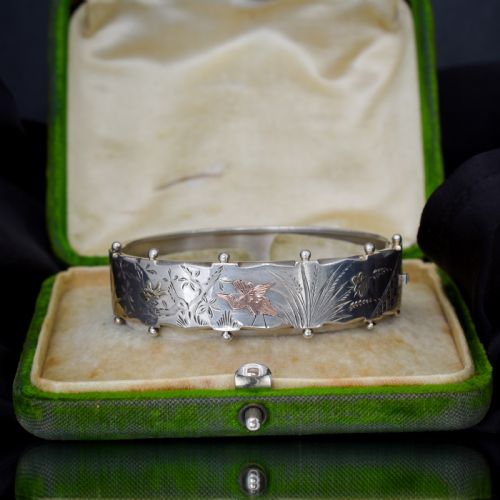
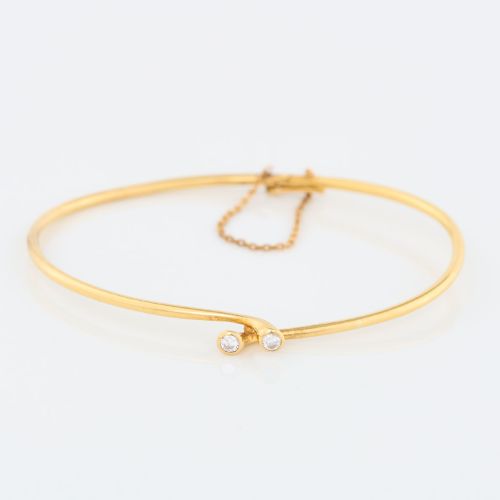
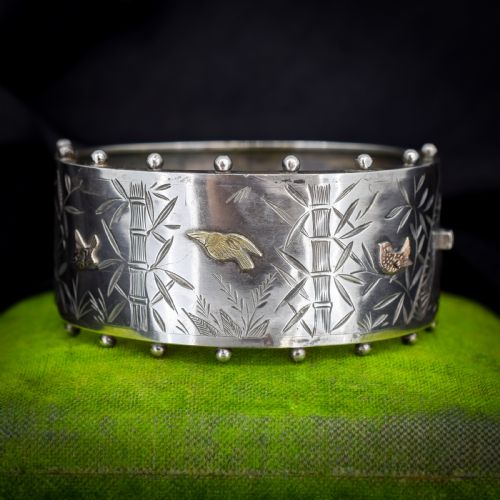
Makers utilised high-karat golds alongside lower alloys and filled metals to achieve varied structural weights. Pieces range from slender gem-set hoops to wide, statement-making cuffs adorned with birds, bamboo, or geometric patterns.
Materials and construction methods
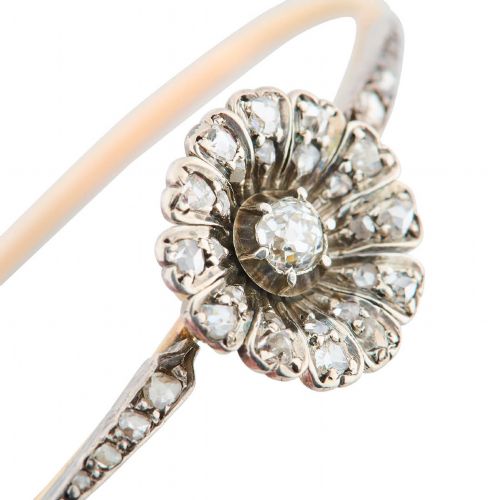
Goldsmiths worked with fifteen-carat and eighteen-carat gold, often combining yellow, rose, and white variations within a single piece. Silver was frequently layered over gold settings to provide a bright, contrasting background for old-mine cut diamonds and seed pearls.
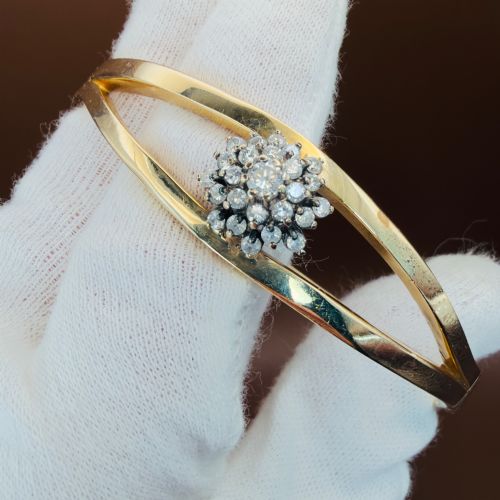
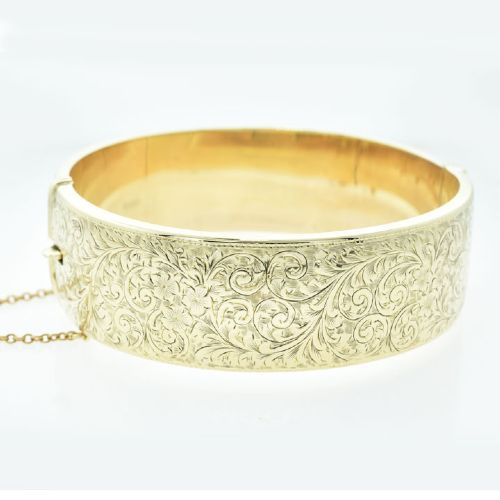
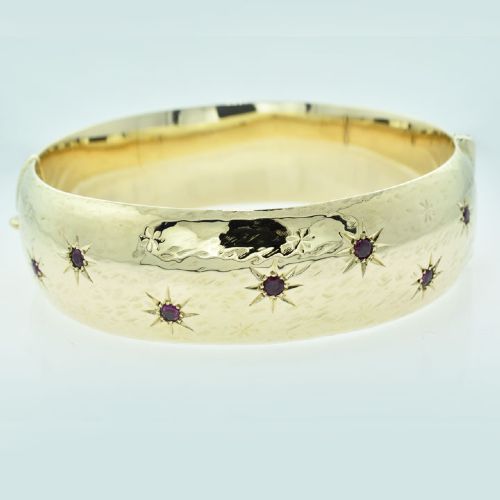
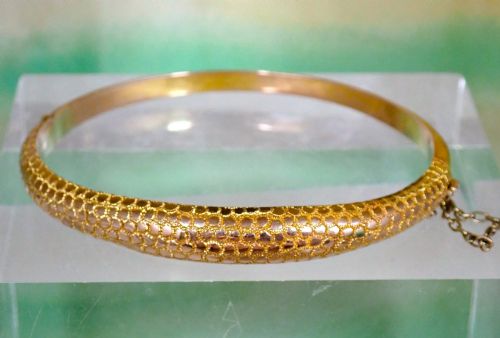
Metals were hand-engraved, chased, and hollow-formed to create substantial volume without excessive weight. Gemstones including rubies, sapphires, garnets, turquoise, and amethysts were securely flush-set, bezel-set, or mounted in raised floral clusters.
Listings feature items from the Victorian, Edwardian, and mid-twentieth-century periods, incorporating gold, silver, diamonds, and rubies.
Factors determining quality and execution
The finesse of the hand-engraving and the structural integrity of the hinge mechanism set superior pieces apart from standard production. Master jewellers ensured that repoussé work retained crisp relief and that stone settings remained uniform under magnification.
The selection of gemstones dictates the upper tier of the range, particularly when old-cut diamonds, natural pearls, or fine rubies are matched for colour and clarity. Original boxes and untouched maker marks further elevate the standing of a bangle.
Ilias Lalaounis
The Antique Gold Cuff Bangle Glossary
- Old Mine Cut
- A diamond cut characterised by a cushion shape, high crown, and small table, typical of nineteenth-century jewellery. This cut catches candlelight effectively due to its deep proportions.
- Repoussé
- A metalworking technique where the design is hammered into relief from the reverse side. It gives bangles dimensional floral and bird motifs.
- Seed Pearl
- A very small, naturally occurring pearl often used in tight clusters or floral arrangements. These delicate pearls add subtle texture to Victorian and Edwardian gold work.
- Silver-Topped Gold
- A method where a thin layer of silver is soldered to the front of a gold mount. This technique allowed jewellers to use a white metal background for diamonds while maintaining the strength of gold underneath.
- Aesthetic Movement
- A nineteenth-century artistic style focusing on beauty and nature rather than narrative. Pieces from this movement often feature stylised flora and fauna engravings.
Antique Gold Cuff Bangle: Frequently Asked Questions
How do I wear an antique gold cuff bangle safely?
Slide the bangle carefully over the narrowest part of your wrist, taking care not to strain the hinge or snap the safety chain if present. Avoid wearing these pieces during physical tasks or while swimming.
Store each bangle individually in a lined box to prevent the metal and gemstones from scratching against other items in your collection.
How do I date an antique gold cuff bangle?
Examine the construction methods, hallmark stamps, and gemstone cuts to determine the likely era of manufacture. Nineteenth-century pieces often feature hand-engraving and silver-topped settings, while mid-century examples display cleaner lines and different alloy standards.
Consulting the specific gold carat marks and stylistic motifs, such as serpent wraps or floral clusters, helps narrow the decade of origin.
Are these bangles suitable for daily wear?
Many historical bangles were built for regular use, but antique hollow-formed gold and delicate gem settings require mindful handling. Reserve them for occasions where they will not experience heavy impacts.
Regular checks by a professional jeweller will ensure that prongs hold stones securely and hinges remain stable over time.
What is the difference between a solid cuff and a hinged bangle?
A hinged bangle opens on a pin joint and fastens with a clasp, allowing a tighter fit around the wrist shape. Solid cuffs slide directly over the hand and rely on a rigid loop structure without mechanical parts.
Both styles appear frequently across Victorian and Edwardian jewellery production.