
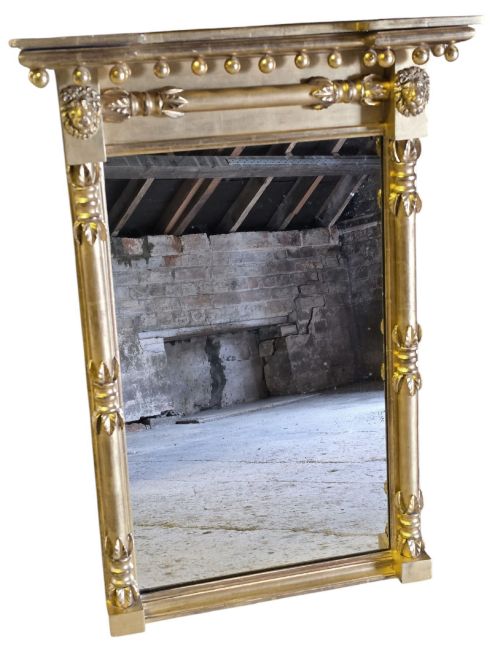
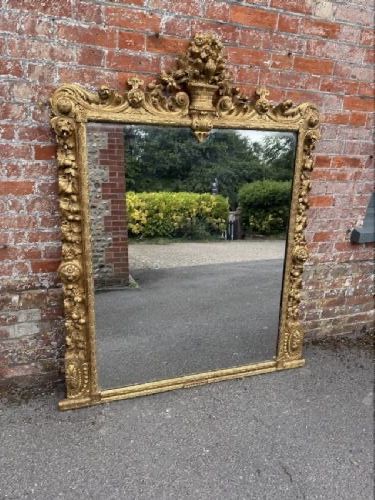
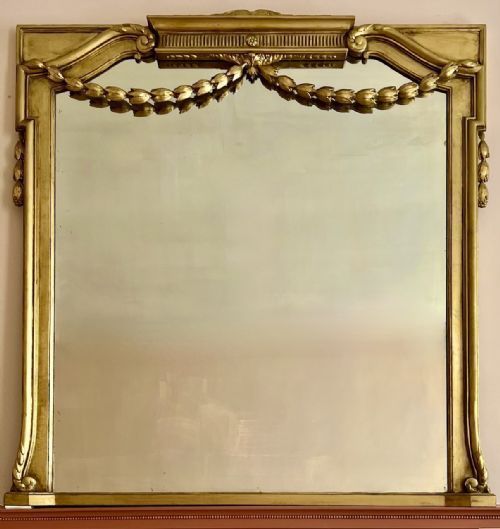


Antique Gold Chimneypiece Mirror
An antique gold chimneypiece mirror anchors a room above a fireplace with grand scale and gilded light.
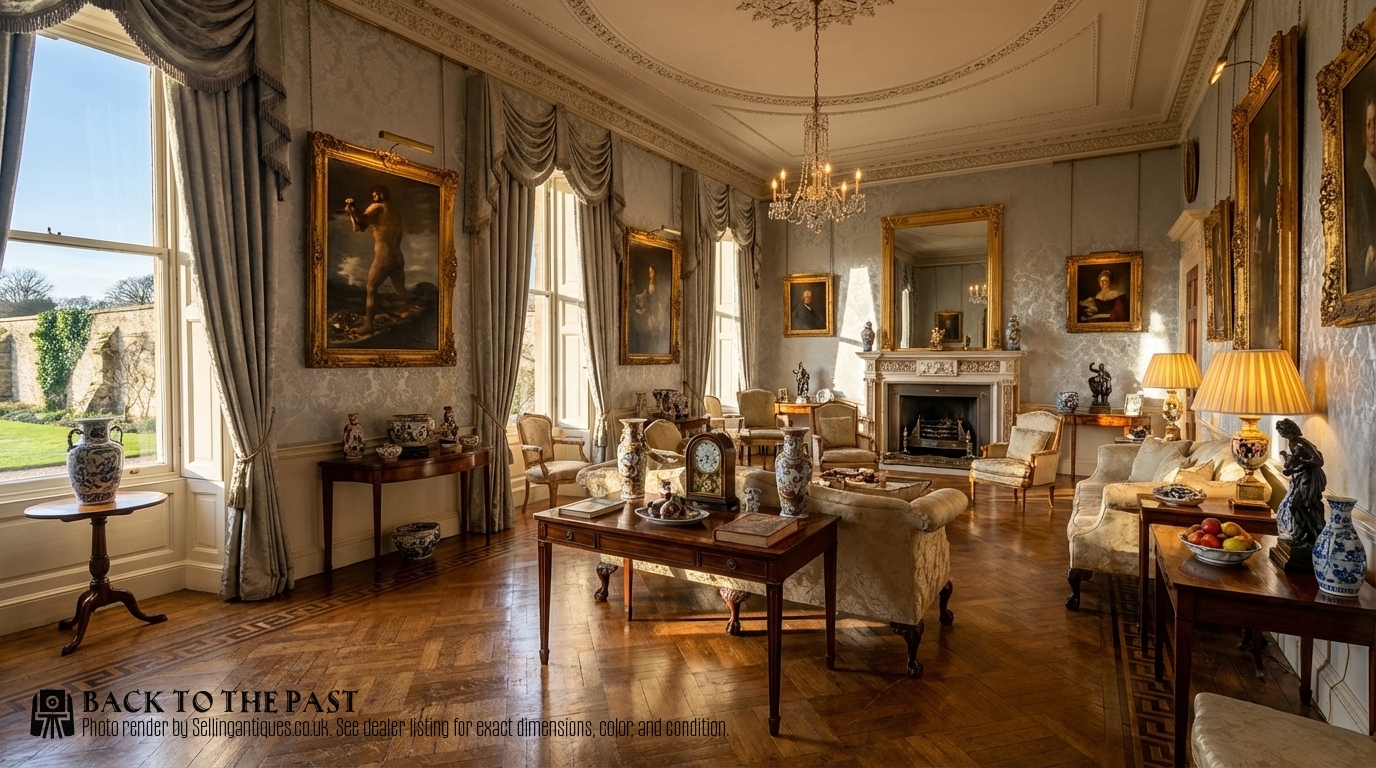
Antique Gold Chimneypiece Mirror
An antique gold chimneypiece mirror sits above a fireplace, taking the form of large overmantel mirrors and wall mirrors. These pieces originate primarily across the nineteenth century, including specific dates from eighteen hundred through nineteen twenty, alongside examples from the eighteenth century.
The styles span Victorian, Regency, Rococo Revival, Neoclassical, French Rococo Revival, George II, and Art Deco. Rectangular, arched top, shaped top, oval, and tryptic forms dominate the selection found on this page.
Buyers look for these mirrors to reflect light and fill large wall spaces above hearths. The most frequent encounters on this page are nineteenth century overmantel mirrors finished in gilt.
How they were made
Carved wood and gesso form the foundational structure for many of these frames, often enhanced with composition ornamentation. Artisans applied gold leaf, parcel gilt, and paint finishes over these substrates to create the characteristic metallic brilliance.
Mirror glass sits within frames built from timber such as ebonised wood and simulated wood. Techniques include carved details, rope twist frames, and painted highlights applied during the eighteenth, nineteenth, and early twentieth centuries.
Listings feature pieces spanning the 18th, 19th, and early 20th centuries, created in styles from Regency to Art Deco using giltwood, gesso, and mirror glass.
What varies in quality
Depth and precision of the carved wooden ornament distinguish finer examples from simpler work. The crispness of the gesso mouldings and the application of gold leaf dictate the visual weight and brilliance of the frame.
Proportion and scale relative to the mirror plate determine the architectural success of the piece. Intricate details such as rope twist borders and well-preserved painted and parcel gilt surfaces indicate superior craftsmanship.
The Antique Gold Chimneypiece Mirror Glossary
- Overmantel mirror
- A large mirror designed specifically to hang on the wall directly above a fireplace mantelpiece. These pieces often feature wide proportions to span the width of the hearth below.
- Gesso
- A plaster-like mixture applied to wood frames to create a smooth surface for gilding or carving. Artisans build up layers of gesso before incising or moulding decorative motifs.
- Parcel gilt
- A finishing technique where only specific portions of an object receive gilding while the rest remains painted or shows natural wood. This method highlights particular carved details against a contrasting background.
- Tryptic overmantel mirror
- A mirror featuring a glass divided into three distinct vertical sections within a single frame. This design reflects light across multiple angles.
- Composition
- A moulded material made from whiting, resin, glue, and linseed oil pressed into decorative ornaments for frames. Makers used composition to achieve ornate relief work efficiently.
Antique Gold Chimneypiece Mirror: Frequently Asked Questions
How do I hang a heavy overmantel mirror?
These large mirrors require secure fixing directly into structural wall studs or masonry using heavy duty brackets. Professional installation ensures the substantial weight of wood and glass is safely supported.
Position the mirror at a height that maintains a balanced visual relationship with the fireplace opening below.
What is the difference between an overmantel and a pier mirror?
An overmantel mirror is designed specifically to sit horizontally above a fireplace mantel. A pier mirror typically hangs vertically on the narrow wall space between two windows.
Both forms utilise giltwood and gesso frames to reflect natural and artificial light around a period interior.
How do I clean antique giltwood frames?
Dust the carved surfaces gently with a soft, dry brush to remove particles without disturbing the delicate gold leaf. Avoid liquid cleaners and moisture entirely, as water strips gesso and nineteenth century gilding.
Professional conservators should handle repairs to flaking surfaces or damaged composition ornaments.
Which periods do these mirrors cover?
The selections span from the eighteenth century George II period through Regency and Victorian eras, up to early twentieth century Art Deco. Nineteenth century dates such as eighteen sixty, eighteen seventy, and eighteen eighty appear frequently.
Stylistic shifts move from classical Neoclassical restraint to exuberant Rococo Revival curves and geometric Art Deco lines.