


Antique Glass Tea Bowl
An antique glass tea bowl is a small vessel designed for blending or serving tea, prized for its clarity and period form.
Antique Glass Tea Bowl
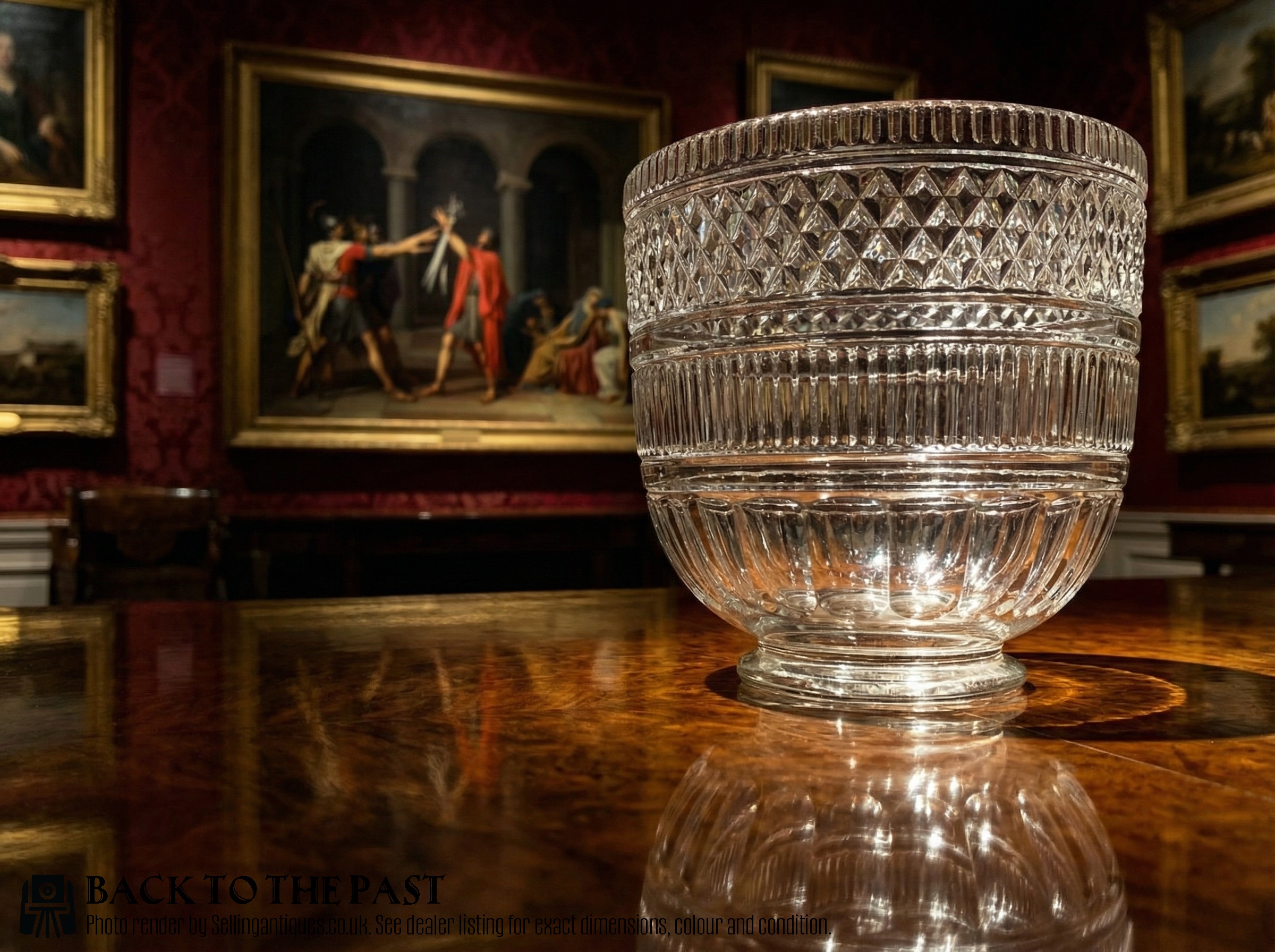
When you search for an antique glass tea bowl, you are looking at small vessels associated with the preparation and serving of tea during past centuries. These pieces appear both as standalone mixing bowls and as fitted components housed inside wooden caddies. On this page, you are most likely to meet cut glass vessels originating from the Georgian, Regency, and nineteenth century periods.
The forms range from large standalone mixing bowls dated around eighteen hundred to smaller liners nestled within mahogany and satinwood tea caddy boxes. Makers of these periods paired translucent and cobalt glass with timber boxes, brass fittings, and silver plate. The selection reflects the domestic tea rituals of Regency and Georgian households.
Materials and manufacture
The manufacture of these pieces centres on heavy-walled glass shaped by cutting or moulding, often featuring deep facets that catch the light. Standalone bowls and liners require precise thermal cooling to prevent stress fractures in the thick material. Alongside the glass, related tea caddy enclosures utilise timbers such as mahogany, rosewood, and satinwood, frequently enhanced with inlaid parquetry or delicate penwork.
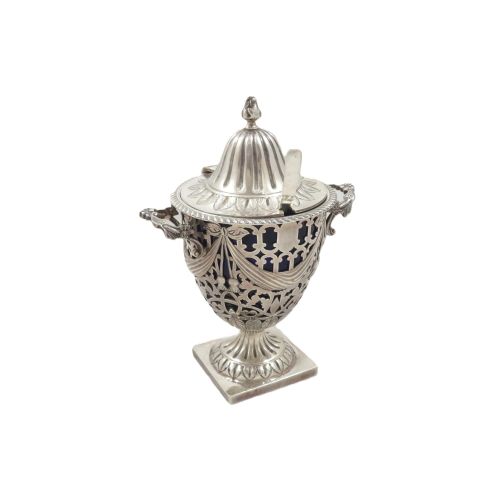
Metalwork components form an integral part of the wider pieces holding these bowls, incorporating sterling silver, silver plate, and brass hardware. Cobalt glass variants demonstrate specialised colouring techniques achieved by introducing metallic oxides to the molten batch. Craftsmen fitted these glass inserts snugly into wooden compartments alongside mixing sticks and silver sifters.
Current listings feature materials including cobalt glass, mahogany, satinwood, sterling silver, and brass across Regency, Georgian, and Edwardian periods.
Distinctions in quality
Quality in these pieces rests upon the crispness of the glass cutting and the weight of the metal components. Deeper, sharper facets and heavier lead content distinguish superior bowls from lighter, moulded equivalents. The preservation of the original fitted wooden caddies and matching mixing sticks elevates the standing of an individual piece.
The integrity of the timber veneer, the precision of any inlay work, and the presence of undamaged rims set the finer examples apart. Cobalt glass liners show variation in the saturation and depth of their blue tone. Overall balance between the glass vessel and its mounting hardware determines the standard of the item.
The Antique Glass Tea Bowl Glossary
- Tea caddy
- A box or chest designed to store loose tea leaves securely under lock and key. These containers often house internal glass bowls used for mixing or serving.
- Cut glass
- Glassware shaped and decorated by abrasive wheel cutting to produce geometric facets. This technique creates brilliant light refraction across the surface of the bowl.
- Cobalt glass
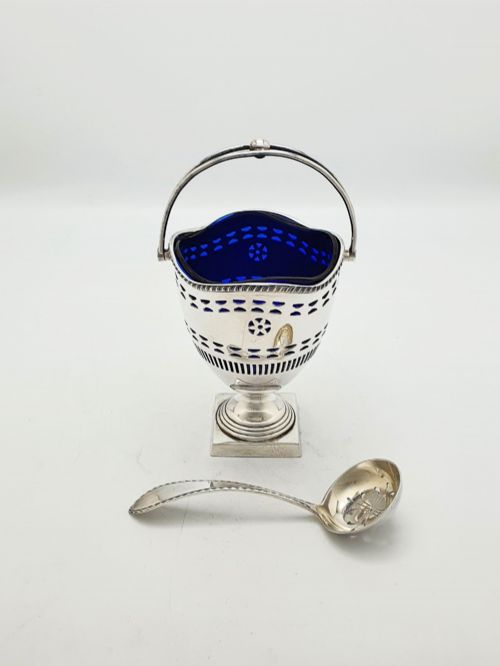
- Deep blue glass coloured with cobalt oxide during the melting process. It frequently appears as a contrasting liner inside silver plate sugar baskets.
- Sarcophagus form
- A stylistic shape for furniture and boxes featuring a stepped, domed lid resembling an ancient stone coffin. This silhouette is typical of Regency cabinetwork.
- Penwork
- A decorative surface technique using ink drawn by hand onto wood to create intricate motifs. It is found on specific nineteenth century tea caddy boxes.
Antique Glass Tea Bowl: Frequently Asked Questions
What is an antique glass tea bowl used for?
These vessels were utilised in historic tea service for blending loose leaves or holding sugar. Standalone versions served as central mixing bowls on the tea table.
Smaller variants rested inside wooden caddy boxes alongside compartments for different tea varieties and mixing sticks.
How do I date an antique tea caddy?
Dating relies on identifying timber choices, construction methods, and stylistic cues such as Regency sarcophagus shapes or Georgian inlay patterns. Hardware like brass escutcheons and hinges also provides chronological markers.
The presence of original cut glass bowls and mixing sticks helps anchor the piece to its specific manufacturing era.
Why are some glass bowls blue?
Blue glass relies on the addition of cobalt oxide to the molten batch during production. This deep coloration protected light-sensitive contents and offered a striking visual contrast.
Cobalt glass liners frequently appear paired with pierced silver plate baskets from the Edwardian period.
Are these bowls always part of a set?
Many surviving glass bowls function independently as large mixing vessels, while others serve as fitted components within double or single tea caddies. Regency and Georgian examples were produced in both standalone formats and fitted configurations.
Individual pieces occasionally survive without their original wooden enclosures or matching silver items.